1 / 3

Understanding Primary and Secondary Sources in Historical Context

This text explores the distinction between primary and secondary sources in history, providing clear definitions and examples for each type. It begins with an overview of what history is and its importance in understanding past events. Additionally, it discusses E.H. Gombrich's metaphorical comparisons of history to "mirrors" and "a bottomless well," highlighting the complexities of historical interpretation and the nature of historical knowledge.

truda
Télécharger la présentation

Understanding Primary and Secondary Sources in Historical Context

An Image/Link below is provided (as is) to download presentation Download Policy: Content on the Website is provided to you AS IS for your information and personal use and may not be sold / licensed / shared on other websites without getting consent from its author. Content is provided to you AS IS for your information and personal use only. Download presentation by click this link. While downloading, if for some reason you are not able to download a presentation, the publisher may have deleted the file from their server. During download, if you can't get a presentation, the file might be deleted by the publisher.

E N D

Presentation Transcript


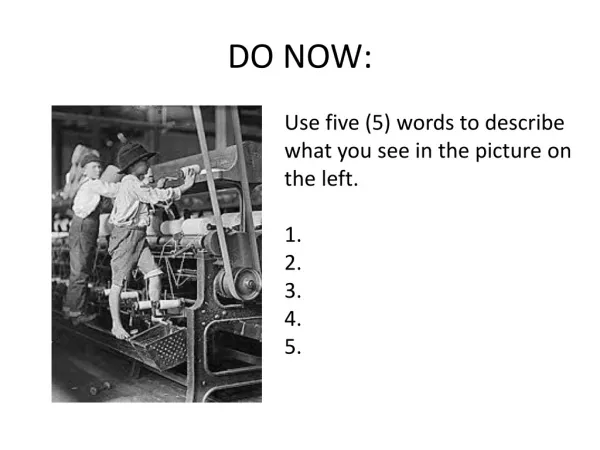
  1. Do Now What is a primary source? What is a secondary source? List examples of each.

  2. Do Now • What is history?

  3. Once upon a time • What do you think E. H. Gombrich intends us to understand about the nature of history when he compares it to “mirrors” and a “bottomless well?”


More Related