Download
1 / 71
710 likes | 826 Vues
Explore the transformative period of the Progressive Era, a time of social activism, reform movements, and political change, striving to improve society through efficiency, education, and morality. Discover key figures, movements, and ideologies that shaped this era of progress and change in the United States.

E N D
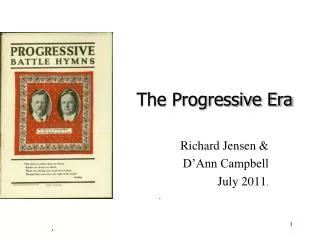
The Progressive Era Richard Jensen & D’Ann Campbell July 2011. . .
What is Progress? • Reform = always possible, always good • the spirit of the age, shared by all • Progress not inevitable; can be blocked by Ignorance and Corruption • Everyone and everything can be improved • traditions = automatically suspect • Experts can ALWAYS find one best way • Education & Purity always = progress. • American mission = Progress for world
Core Values • Republican Virtue • Democracy: duty of citizen to participate • threatened by corruption • Modernity • Efficiency • science, education • threatened by ignorance, tradition, corruption • free enterprise; free labor; free land
Efficiency • Personal--plan your future achievement • compulsory education; “reform” schools • Society: everything can be improved • experts analyze the problem • old ways = wasteful; everything can be improved; ignorance as the #1 enemy • science, technology, medicine • university as research center
Efficiency in Business • F. W. Taylor & Scientific Management • Henry Ford & Assembly Line • Fordism: high wages = high skills, lower turnover, high spending power • Railroad Efficiency: E.H. Harriman
Efficiency in Business • Finance: J. P. Morgan • Heavy Industry: Andrew Carnegie • Judge Gary & U S Steel (1901) • Retailing: Julius Rosenwald @ Sears • “new, improved”; annual model changes • Eliminate waste = higher wages, lower prices, more profit
Experts in Government • Need “disinterested” experts in fairness • Party politics = controlled by special interests • Independent Regulatory Commission • Appointed experts (European model) • Missing: fear that they will become captive
Judiciary • Judges as experts in fairness • Taft (conservative) & Brandeis (liberal): courts & judges = best, final experts • Labor: hates injunctions that stop strikes • Roosevelt: Courts are undemocratic • overrule them by referendum • key reason GOP rejected TR in 1912 • Taft wins: picks 5 Supreme Court justices • active as Chief Justice 1921-30
Efficiency in Local & State Government • Conduct a survey to discover problems • Local: better service, lower taxes • State: Independent Regulatory Commission • sets rates; solves monopoly problem • Missing: fear that they will become captive • Danger: patronage & corruption • Solution: civil service reform • crusading district attorneys • clean elections; reform parties
Religious Activism:Social Gospel • Social Gospel = mainline Protestant • Missions to all world • End evils • Will speed Christ’s Second Coming • End saloons • Prohibition • End prostitution Christ calls on efficiency oriented businessman , who is listening to the devil
Social Gospel appeals Compare Gast 1872, no religion Woman with cross = Christianity Leading man labeled “civilization” carrying tools (= industry) and telescope (= science)
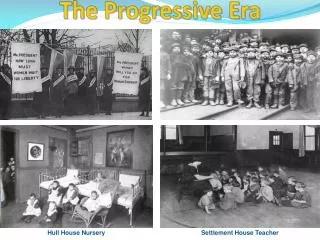
Who was Jane Addams? • Hull House = bring best practices to inner city Chicago • Rally intellectuals • Americanize immigrants • Clean up politics • Woman suffrage • World Peace See Citizendium article
Hull House • "to teach by example, to practice cooperation, and to practice social democracy, that is, egalitarian” • Housing reform • Focus on children • Fight child labor • Music, sports
Crusade Against Evil Corruption: Muckraking journalism • Hidden Evil doers threaten America • actual people, not just social forces • they block reform for own selfish $$$ • Expose Them! Muckraker Journalism • expose boss rule in all major cities • expose corporate wrong-doing; Rockefeller • magazines: Lincoln Steffans, Ida Tarbell • newspapers: Wm R Hearst
Crusade against Corruption • Moralism: strong religious flavor • destroy "saloon power" by prohibition • strong law enforcement; FBI & Hoover • Fear of Evil Escalates 1904-1912 • only antidote = more democracy • Conservatives = Counter-Crusade • “the crusaders are crazy and dangerous” • WWI Crusade against “Huns” (Germans) • Crusades burn out after a couple years
Political Crusaders • Democrats: • William Jennings Bryan, Wm R. Hearst • Woodrow Wilson • Republicans: • Robert LaFollette (Wisconsin) • Hiram Johnson (California) • Teddy Roosevelt (after 1907) • Cities: local crusaders in every big city
Democracy: Let the People Rule! That is The Pure People • Women: needed force for purity in politics, interests in "good housekeeping" & needs of family. America needs their vote • antisuffrage: vote corrupts pure womanhood • Stop corrupt voting; Literacy test; Registration • no votes for “unrepublican” groups • Asians, African Americans • doubts re: Hispanics delays statehood for New Mexico; granted in 1912
How can the people rule? • weaken parties; elect Senators; Primaries; reject party bosses (hard to do) • direct rule: referendum & initiative (California); recall of judges (Arizona) • stunning shock in WWI = people easily manipulated by propaganda; no true "public opinion" at all
States & Cities Take Lead • Wisconsin; Bob LaFollette: tax & spend; university experts • LaFollette machine • Battles conservative anti-tax GOP • California; Hiram Johnson: destroy parties • Numerous independent crusades • New Jersey; Woodrow Wilson (Dem) ruins the bosses
State & Local Issues • Corruption in Politics • Efficiency in Government • Protect women • Regulate working hours & conditions • Attack prostitution • Public Health; Hospitals • Water & sanitation; smoke; TB; milk • High Schools & Colleges • Compulsory education to age 14
Presidential Progressives4 contrasting styles • Roosevelt: the Warrior • strong moral character; call to battle • Taft: the Judge • judicial supremacy, cautious • Wilson: the Priest • moralism; global leadership; inflexible • Hoover: the Engineer • pro-business; poor politician
Teddy Roosevelt (1858-1919) • Media Superstar; middle class hero • Family: wealthy business; Civil War? • The Cowboy; manliness; extreme sports; barbarian & civilized • intellectual in politics; history & biology • 1890s: Navy & Empire; Spanish War 1898 • President 1901-1909 • 1912 “Progressive” 3rd Party split GOP
TR as President 1901-09 • Railroads: mild regulation by ICC & Courts • National Civic Federation • business/union cooperation to avert radicalism; settle 1902 Coal Strike • Conservation: efficient use of resources • Good Trusts (US Steel) Vs Bad Ones (Standard Oil, Northern Securities) • 1907 Panic; he blames big business • Elihu Root modernizes the Army • Modernization in Cuba, Philippines
Railroad Reform • The Problem: monopoly RR as threat to businessmen and to politics • Solution: Federal Regulation • ICC controls rates; no rebates; no secrets • Railway Labor: 1916 Wilson gives in • 1918: Wilson seizes all railroads • 1920: railroads returned to private hands • Long term: regulation helps shippers and hurts RR; can’t compete w highways
Antitrust 1 • Democracy • big business = illegitimate political power • hurts small business • gov’t regulation is even more dangerous • Efficiency • trusts are more efficient & innovative • not true, says Brandeis • trusts raise prices, hurt consumer • trusts reduce innovation
Antitrust 2 • Trust = Monopoly, any big business • illegitimate political power • run roughshod over smaller entrepreneurs • efficient and good for consumers?? • raise or lower prices?
Antitrust 3 • Trust = Monopoly, any big business • illegitimate political power • run roughshod over smaller entrepreneurs • efficient and good for consumers?? • raise or lower prices? • TR & Taft most active • Break up hated Standard Oil (1911) • Supreme Court: “rule of reason” • Fail to break up US Steel • no sense of limits of expertise, or need to limit gov't
Antitrust 4 • 1914: Federal Trade Commission • specifies illegal activities • 1920s: helps business • Fordism: high wages, low prices, efficiency through mass production • Ford a national hero despite monopoly • 1930s New Danger = cutthroat competition • small business needs protection • Today: big mergers need approval
Tariff Debate • GOP high tariff (1890-1913) • GOP: it “protects” industry & high wages • Dems: it is corrupt --> monopoly & inflation • Actually: does neither. It’s a delicate balance of interests inside GOP with little $ impact • 1909 Midwestern GOP insurgents fight new tariff; defeated by Aldrich; they revolt • 1913: Wilson lowers tariff • Debate fades away; income tax more important • 1922, 1930: GOP raises it again
Labor Unions • Grow rapidly 1900-1920, then collapse • Locals = branches of national crafts unions • coal miners, machinists, teamsters, printers, needle trades, carpenters etc • National: AFL & Samuel Gompers • Goals: control trade, higher pay • support technology & modernization • politics: stay loose; lean Democratic • Most oppose Socialism
Union Political Goals • Local: keep police away from strikes (strikers threaten violence to win) • State: no National Guard intervention • problem: judges rule against strike tactics • National: work w both parties • 1916: Wilson get +++ Railroad Labor Law • 1917-18 support war; grow; get $$$ • 1919: strikes, collapse
Public Opinion on Unions • Favor Working Man, high wages, short hours • Oppose Union monopoly • illegitimate use of power • Usually oppose strikes • Strongly oppose strike violence • Street railway strikes test public patience • National Civil Federation = efficient harmony
War with Spain 1898 • Causes: anger at Spain’s treatment of Cubans • Result: “splendid little war” • Insurrection in Philippines • US Empire: Hawaii, Philippines, Puerto Rico • 1905: US gives up expansion plans, looks to Panama Canal
US rebuilds army & navy • Roosevelt • Modern navy • Modern army • But very small
Imperialism Worldwide • Asia, Africa divided up by Europe & Japan • Britain & France: large empires • Germany: stuck with leftovers; resentful • American sentiment: • Empires are evil & cause war • But they also modernize backward peoples • Give up Cuba & Philippines • Keep Hawaii, Puerto Rico
The Far Left attacks Republicanism • IWW overthrow the system! • Reject republicanism for Class Struggle • Reject democracy for Dictatorship of Proletariat (i.e. by left wing leaders like Haywood) • Anarchists: Assassinate McKinley • Lawrence Strike 1912 fails • 1917: oppose the war • Destroyed by Federal Government • 1919: Radicals deported to USSR • Remnant forms Communist party
Socialists are split • Socialist Party: Eugene Debs • capitalism is evil & inefficient • scientific solution = workers own industry • strongly opposed by Catholic Church & by most unions • left: oppose WW1; go to jail • War: right wing supports war (Lippmann) • Debs opposes it & goes to prison
Taft Vs TR Progressives • Tariff battle disrupts GOP • Income tax: constitutional amendment • Purists distrust Taft; he relies on courts and conservative GOP (Senator Aldrich) • Feuds erupt between left and right wings • Crisis of 1910-1912 splits the GOP • Republican Insurgents weaken Speaker • Democrats: sweep 1910 elections
1912: Taft-TR-Wilson • TR breaks with Taft • conservation issue; trusts; personality • TR: recall of judicial decisions • TR challenges Taft for GOP nomination; starts too late; beaten; cries foul • TR forms "Progressive Party" ("Bull Moose" 1912); amateur hour • GOP split 1912-14 elects Democratic Wilson & Dem Congress
Wilson the Priest • Scholar, speaker, superb writer • conservative states righter, moves left 1913 • 1913: tariff lowered (little effect) • 1913: Federal Reserve System created; break the Money Power? efficient management of money? or disaster waiting to happen? • Antitrust laws strengthened • Pro-Labor; 1916 Railroad laws
Private solution fails • The Problem: inadequate financial system • Panic of 1907 solved by one old man, Morgan • need for liquidity • need for international banking • Aldrich Solution: banks form system • Bryan demands more democracy
Wilson & AldrichFederal Reserve System 1913 • Final Plan: 12 regions, Federal oversight
1920s: Efficiency Decade • Democracy Distrusted • propaganda too powerful; H L Mencken • Corruption Issue continues • Teapot Dome; Bootleg Liquor; Cities • Efficiency Stronger than Ever • Business: Age of Henry Ford • Gov't: Age of Hoover • cooperation with Business • End poverty through modernization
Democracy Vs Efficiency • When they work together, irresistible. • Major legislation passed near unanimous • ICC, Antitrust, Income Tax, RR regulation • When they are opposed, deep problems • African American status • Labor unions, violence, anti-trust • Imperialism in Philippines • Woman Suffrage
African Americans • Blacks excluded from power & prestige • Segregation: De Facto & De Jure • Supreme Court approves: Plessy v Ferguson, 1896 • schools, churches, jobs & gov’t service= separate & unequal • geographical separation: “BLACK BELT” in South • Politics: Age of White Supremacy • Disfranchisement, 1890-1915 • Lynchings during transition • Economic Status: very poor • White Racism Vs white paternalism
Segregation continues;ends in 1965 • Supporters • purify politics. Reduce corruption • reduce violence, lynchings • keep White supremacy • Opponents • violation of Constitution • degrades Blacks • degrades Whites
Booker T. Washington, political leader Atlanta speech, 1896 = accept segregation Tuskegee = industrial education W.E.B. DuBois--intellectual leader political rights liberal arts for “talented tenth” NAACP for middle class “Colored People” Marcus Garvey: separate out Black Nationalism; “Back to Africa”; deported Leadership Disputes