World War 2
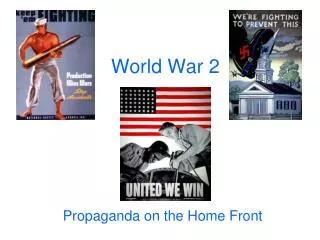
World War II saw the widespread use of propaganda to influence public opinion and promote national unity. Defined as the intentional spread of ideas and information, propaganda aimed to mobilize support for the war effort while encouraging citizen participation. Key figures like "Rosie the Riveter" symbolized women's contributions to the workforce, while posters promoted national security and resource conservation. Through emotional appeals and compelling visuals, these propaganda efforts fostered a sense of duty among civilians, emphasizing the importance of their roles during the war.

World War 2
E N D
Presentation Transcript
World War 2 Propaganda on the Home Front
What is Propaganda?Main Entry: pro·pa·gan·daPronunciation: \ˌprä-pə-ˈgan-də, ˌprō-\Function: noun • 2: the spreading of ideas, information, or rumor for the purpose of helping or injuring an institution, a cause, or a person • 3: ideas, facts, or allegations spread deliberately to further one's cause or to damage an opposing cause; also : a public action having such an effect http://www.merriam-webster.com/dictionary/propaganda
Purpose of Propaganda • deliberately spread one's cause or to damage an opposing cause • appeal to one’s emotions • influence people’s opinions
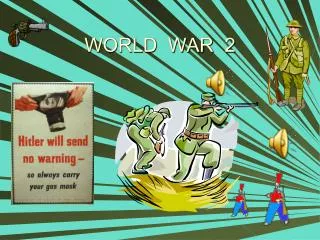
Categories of World War 2 Propaganda Posters • Female Workers • National Security • Citizen Participation
Female Workers • Rosie was the symbol of the female factory worker. With so many men away at war, women were forced into the work force. Rosie was a symbol of strength of Civil Service jobs (such as secretaries).
National Security • Some of the more interesting, and frightening, posters were the ones encouraging the people to be aware of breeching National Security. • The purpose of these posters was to tell people that they had to work to keep the country safe.
Citizen Participation • A third category of war propaganda posters were ones encouraging average people to participate in the war by making good decisions at home. • Families existed on food rations and cut back on gasoline consumption as well so that the government would be able to devote as much money as possible to the war effort.
Additional Propaganda Techniques Appeal to Fear Oversimplification Appeal to Authority Common Man Bandwagon Stereotyping Direct Order Scapegoating NameCalling/Demonizing the Enemy Transfer Glittering Generalities Intentional Vagueness
War Propaganda • Emotional and compelling, the propaganda posters and other media used during World War II stressed such topics as production, conservation of resources and raw materials, and protecting home and loved ones. • The poster message had to be instantly understandable, and poster images had to reinforce text, and vice versa.