1 / 9

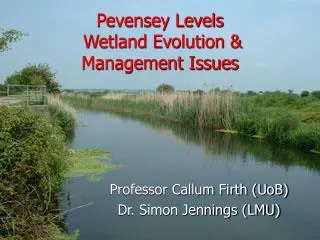
Pevensey Levels Wetland Evolution & Management Issues

This presentation by Professor Callum Firth (University of Brighton) and Dr. Simon Jennings (LMU) explores the evolution of Pevensey Levels over the last 5000 years, focusing on sediment transport dynamics from ancient to modern times. With a special emphasis on the period between the 12th and 17th centuries, the discussion highlights management issues facing Pevensey Beach, which is experiencing instability and retreat. The existing wetlands, formerly open estuaries, are crucially maintained through coastal management strategies.

tyler
Télécharger la présentation

Pevensey Levels Wetland Evolution & Management Issues

An Image/Link below is provided (as is) to download presentation Download Policy: Content on the Website is provided to you AS IS for your information and personal use and may not be sold / licensed / shared on other websites without getting consent from its author. Content is provided to you AS IS for your information and personal use only. Download presentation by click this link. While downloading, if for some reason you are not able to download a presentation, the publisher may have deleted the file from their server. During download, if you can't get a presentation, the file might be deleted by the publisher.

E N D

Presentation Transcript


  1. Pevensey Levels Wetland Evolution & Management Issues Professor Callum Firth (UoB) Dr. Simon Jennings (LMU)

  2. Pevensey Bay

  3. Pevensey Beach

  4. Sediment Transport 5000 Cal yrs BP

  5. Sediment Transport 4000 Cal yrs BP

  6. Sediment Transport 2500 Cal yrs BP

  7. Sediment Transport 12th to 17th Centuries

  8. Management Issues Pevensey beach is unstable and in retreat a managed feature Pevensey wetlands would normally be an open estuary Current wetlands will be maintained by coastal management

More Related