Cross-Cultural Insights: Business Practices in Germany and China
90 likes | 240 Vues
This text explores the cultural dimensions and business practices of Germany and China, utilizing Hofstede's cultural framework. It discusses the significant differences such as power distance, individualism versus collectivism, and uncertainty avoidance. The analysis includes coping strategies for effective communication and collaboration between these two countries. Understanding the importance of relationships (Guanxi), respecting hierarchy, and adapting to local business etiquette is essential for successful cross-cultural interactions.


Cross-Cultural Insights: Business Practices in Germany and China
E N D
Presentation Transcript
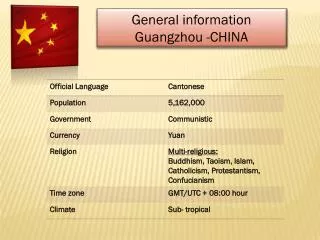
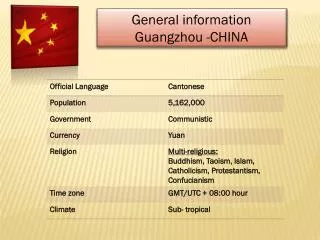
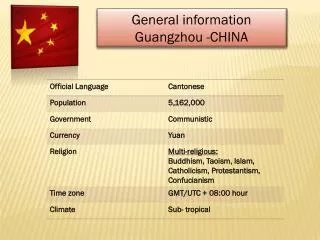
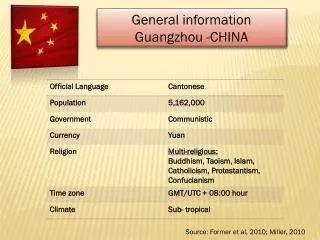
General information Guangzhou -CHINA Source: Former et al, 2010; Miller, 2010
Cross-cultural Analysis Hofstede: culture is the “software of the mind” Source: Hofstede, 2011
Theorists’ observations Hofstede Source: French, 2010; Hofstede, 2011; Kohun et al, 2007, Luthans and Doh, 2009.
Theorists’ observations Hofstede Germany China Small Power Distance Large Power Distance Individualist Collectivist High Uncertainty Avoidance Low Uncertainty Avoidance Long-term Orientation Medium-term Orientation Source: Eurochambres Academy, 2011; French, 2010; Hofstede, 2011; Kohun et al, 2007, Luthans and Doh, 2009.
Germany China Trompenaars Germany China Edward Hall Source: Broda, 2011: Forbes, 2011; Geng, 2010; Hutchings, 2004; Gesteland, 2005.Hutchings et al, 2004; International Business Culture; 2011Luthans, F., and Doh, J., 2009; Medlock Method, 2011
Business Practice Differences GERMANY CHINA Source: Gibson, 2010; Kwintessential, 2011; Lau, 2007; Selmer, 2005; Wang, 2011
Female managers China Germany Source: Gunkel et al, 2007; Krieg, 2006
Top 10 coping strategies • Have patience. • Do not under estimate the importance of “Guan xi” - use group members to introduce yourself to others. • Show modest behaviour and respect to elders - “saving face” is considered more important than the truth. • Ask senior management to make announcements to groups. • Enthuse how the overall group can benefit from change. • Do not single members out, group harmony is key. • Be explicit with your instructionsand check understanding. • Anticipate others are likely to invade your space. • Do not take offence if colleagues seek decisions from males • Source: Bing 2010; Burke, ; Castle, 2008; Chen and Partington, 2003; Dereksy, 2011; Hodgetts et al, 2006; Kwintessential, 2011; Sartor, 2007; WorldBusinessCulture.com, 2011.