Respiratory System
The respiratory system is essential for breathing and includes key components such as the nasal cavity, pharynx, larynx, trachea, bronchi, bronchioles, alveoli, lungs, and pleura. It facilitates external and internal respiration and cellular respiration, while also playing a role in voice production. The system is designed to filter, humidify, and warm the air we breathe. Additionally, it is susceptible to various disorders such as the common cold, laryngitis, sinusitis, pharyngitis, and bronchitis. Understanding these elements is crucial for maintaining respiratory health.

Respiratory System
E N D
Presentation Transcript
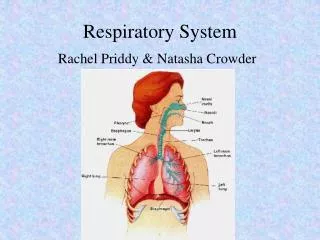
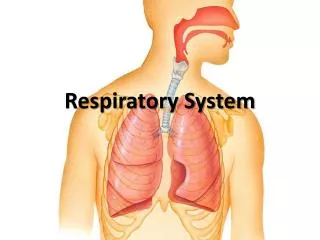
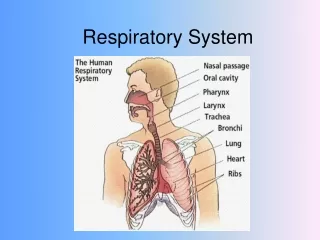
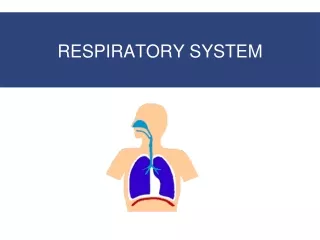
Respiratory System • Includes the nasal cavity, pharynx, larynx, trachea, bronchi, bronchioles, alveoli, lungs, and pleura.
NASAL CAVITY • NASAL SEPTUM = divides nasal cavities into R and L sides • Turbinates are bones that protrude into the nasal cavity – they increase surface area for filtering dust and dirt particles by the mucous membrane. • CILIA – the hairs in your nose, trap larger dirt particles
SINUSES • cavities in the skull, ducts connect them to the nasal cavity, lined with mucous membrane to warm and moisten the air. • Frontal • Maxillary • Ethmoid • Sphenoid • Sinuses give resonance to the voice.
PHARYNX • The throat • Common passageway for air and food • 5” long • When food is swallowed, the EPIGLOTTIS closes over the opening to the larynx, preventing food from entering the lungs.
LARYNX • Voice box • Triangular chamber below pharynx • Within the larynx are vocal cords (GLOTTIS) • Adam’s Apple
TRACHEA • Windpipe • 4 ½ in. long • walls are alternate bands of membrane and C-shaped rings of hyaline cartilage – to keep trachea open • Lined with ciliated mucous membrane • Coughing and expectoration gets rid of dust-laden mucous
BRONCHI and BRONCHIOLES • Lower end of trachea divides into R and L bronchus • As they enter lungs, subdivide into bronchial tubes and bronchioles • Bronchi – similar to trachea with ciliated mucous membrane and hyaline cartilage • Bronchial tubes – cartilaginous plates (instead of C-shaped rings) • Bronchioles – thinner walls of smooth muscle, lined with ciliated epithelium • At the end, alveolar duct and cluster of alveoli
ALVEOLI • Composed of a single layer of epithelial tissue • Inner surfaces covered with SURFACTANT – to keep alveoli from collapsing • Each alveolus surrounded by capillaries • O2 and CO2 exchange takes place between the alveoli and capillaries
LUNGS • Fill thoracic cavity • Upper part = apex Lower part = base • Base fits snugly over diaphragm • Lung tissue porous and spongy – it floats • R lung = larger and shorter (displaced by the liver) and has 3 lobes • L lung smaller (displaced by the heart) and has 2 lobes
PLEURA • Thin, moist slippery membrane that covers lungs • Double-walled sac • Space is pleural cavity – filled with pleural fluid to prevent friction
FUNCTION OF THE RESPIRATORY SYSTEM • External respiration, internal respiration, and cellular respiration • Production of sound (vocal cords) • PULMONARY VENTILATION (Breathing)
INSPIRATION • Intercostal muscles lift ribs outward, sternum rises and the diaphragm contracts and moves downward – this increases the volume of the lungs and air rushes in.
EXPIRATION • Opposite action takes place • Exhalation is a passive process
Respiratory Movements • 1 inspiration + 1 expiration = 1 respiration • Normal adult = 14 - 20 respirations per minute • Increases with exercise, body temperature, certain diseases. • Age - newborn = 40-60/min • Sleep = respirations • Emotion can or rate
Coughing • deep breath followed by forceful expulsion of air – to clear lower respiratory tract.
Hiccups • spasm of the diaphragm and spasmotic closure of the glottis – irritation to diaphragm or phrenic nerve
Sneezing • air forced through nose to clear respiratory tract
Yawning • deep prolonged breath that fills the lungs, increases oxygen within the blood
Control of Breathing • Breathing controlled by neural and chemical factors. Neural Factors Respiratory center located in MEDULLA OBLONGATA • on CO2 or O2 in the blood will trigger respiratory center • PHRENIC NERVE – stimulates the diaphragm Chemical Factors Depends on the levels of CO2 in the blood (respiratory center in brain) • Chemoreceptors in aorta and carotid arteries sensitive to the amount of blood O2
Respiratory Disorders Obj: Discuss diseases and conditions of the respiratory system
COMMON COLD • Contagious viral respiratory infection • Indirect causes - chilling, fatigue, lack of proper food, and not enough sleep • Rx – stay in bed, drink warm liquids and fruit juice, good nutrition • Also called an Upper Respiratory Infection (URI) • Handwashing – best preventative measure
LARYNGITIS • Inflammation of larynx or voice box • Often secondary to other respiratory infections • Symptoms – sore throat, hoarseness or loss of voice, dysphagia (difficulty swallowing)
SINUSITIS • Infection of mucous membrane that lines sinus cavities • Caused by bacteria or virus • Symptoms – headache or pressure, thick nasal discharge, loss of voice resonance • Rx – symptomatic, surgery for chronic sinusitis
PHARYNGITIS • red, inflamed throat
BRONCHITIS • Inflammation of the mucous membrane of the trachea and bronchial tubes, producing excessive mucous • May be acute or chronic • Acute bronchitis characterized by cough, fever, substernal pain and RALES (raspy sound) • Chronic bronchitis – middle or old age, cigarette smoking most common cause
INFLUENZA (Flu) • Viral infection causing inflammation of the mucous membrane • Fever, mucopurulent discharge, muscular pain, extreme exhaustion • Complications – pneumonia, neuritis, otitis media and pleurisy • Rx – treat the symptoms
PNEUMONIA • Infection of the lung • Caused by bacteria or virus • Alveoli fill with exudates (thick fluid) • Symptoms – chest pain, fever, chills, dyspnea • Rx – O2 and antibiotics
TUBERCULOSIS • Infectious bacterial lung disease • Tubercles (lesions) form in the lungs • Symptoms: cough, low grade fever in the afternoon, weight loss, night sweats • Diagnosis – TB skin test • If skin test positive – follow up with chest x-ray and sputum sample • RX – antibiotic
ASTHMA • Inflammatory airway obstruction • Caused by allergen or psychological stress • 5% of Americans have asthma • Symptoms: difficulty exhaling, dyspnea, wheezing, tightness in chest • Rx: anti-inflammatory drugs, inhaled bronchodilator
EMPHYSEMA • Alveoli become over-dilated, lose their elasticity, can’t rebound, may eventually rupture • Air becomes trapped, can’t exhale – forced exhalation required • Reduced exchange of O2 and CO2 • Dyspnea increases as disease progresses • Rx – alleviate the symptoms, decrease exposure to respiratory irritants, prevent infections, restructure activities to prevent need for O2
Emphysema & Cancer Asthma