
SlideServe
Menu
Préférences
© SlideServe · v2026

IMMIGRANTS AND URBANIZATION

umed avatar
16 diapositives · 402 Views · Sep 25, 2014

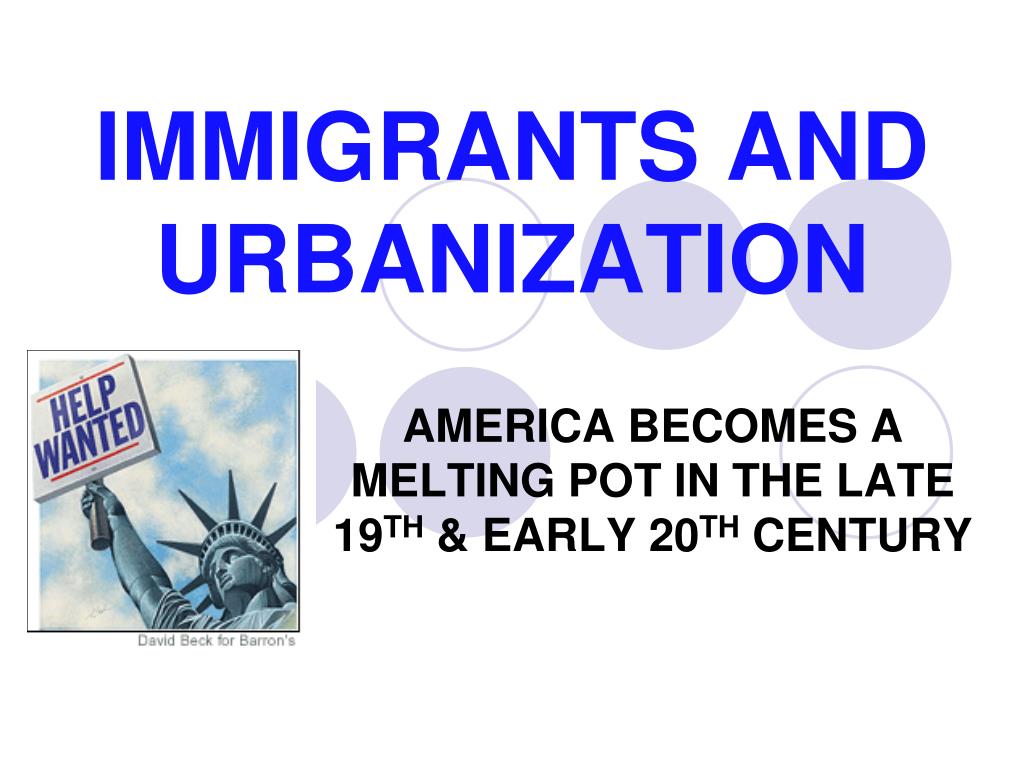
IMMIGRANTS AND URBANIZATION. AMERICA BECOMES A MELTING POT IN THE LATE 19 TH & EARLY 20 TH CENTURY. NEW IMMIGRANTS. Millions of immigrants entered the U.S. in the late 19 th and early 20 th centuries
IMMIGRANTS AND URBANIZATION - slide 1
01 / 16IMMIGRANTS AND URBANIZATION
1 / 17

Télécharger la présentation

IMMIGRANTS AND URBANIZATION
Une image / un lien ci-dessous est fourni (tel quel) pour télécharger la présentation

Politique de téléchargement : le contenu du site vous est fourni TEL QUEL pour votre information et votre usage personnel ; il ne peut être vendu, concédé sous licence ni partagé sur d’autres sites sans l’accord de son auteur.Le contenu vous est fourni TEL QUEL, pour votre information et votre usage personnel uniquement. Téléchargez la présentation en cliquant sur ce lien. Lors du téléchargement, si vous ne parvenez pas à télécharger une présentation, l’éditeur a peut-être supprimé le fichier de son serveur.Pendant le téléchargement, si vous ne parvenez pas à obtenir une présentation, le fichier a peut-être été supprimé par l’éditeur.

F I N

Plus de contenu associé

Transcription de la présentation
  1. IMMIGRANTS AND URBANIZATION AMERICA BECOMES A MELTING POT IN THE LATE 19TH & EARLY 20TH CENTURY

  2. NEW IMMIGRANTS • Millions of immigrants entered the U.S. in the late 19th and early 20th centuries • Some came to escape difficult conditions, others known as “birds of passage” intended to stay only temporarily to earn money, and then return to their homeland

  3. EUROPEANS • Between 1870 and 1920, about 20 million Europeans arrived in the United States • Before 1890, most were from western and northern Europe • After 1890, most came from southern and eastern Europe • All were looking for opportunity

  4. CHINESE • Between 1851 and 1882, about 300,000 Chinese arrived on the West Coast • Some were attracted by the Gold Rush, others went to work for the railroads, farmed or worked as domestic servants • An anti-Chinese immigration act by Congress curtailed immigration after 1882 Many Chinese men worked for the railroads

  5. LIFE IN THE NEW LAND • In the late 19th century most immigrants arrived via boats • The trip from Europe took about a month, while it took about 3 weeks from Asia • The trip was arduous and many died along the way • Destination was Ellis Island for Europeans, and Angel Island for Asians

  6. ELLIS ISLAND, NEW YORK • Ellis Island was the arrival point for European immigrants • They had to pass inspection at the immigration stations • Processing took hours, and the sick were sent home • Immigrants also had to show that they were not criminals, had some money ($25), and were able to work • From 1892-1924, 17 million immigrants passed through Ellis Island’s facilities

  7. THE CHALLENGES OF URBANIZATION • Rapid urbanization occurred in the late 19th century in the Northeast & Midwest • Most immigrants settled incities because of the available jobs & affordable housing • By 1910, immigrants made up more than half the population of 18 major American cities

  8. MIGRATION FROM COUNTRY TO CITY • Rapid improvements in farm technology (tractors, reapers, steel plows) made farming more efficient in the late 19th century • It also meant less labor was needed to do the job • Many rural people left for cities to find work- including almost ¼ million African Americans Discrimination and segregation were often the reality for African Americans who migrated North

  9. URBAN PROBLEMS • Problems in American cities in the late 19th and early 20th century included: • Housing: overcrowded tenements were unsanitary • Sanitation: garbage was often not collected, polluted air Famous photographer Jacob Riis captured the struggle of living in crowded tenements

  10. URBAN PROBLEMS CONTINUED • Transportation:Cities struggled to provide adequate transit systems • Water: Without safe drinking water cholera and typhoid fever was common • Crime: As populations increased thieves flourished • Fire: Limited water supply and wooden structures combined with the use of candles led to many major urban fires – Chicago 1871 and San Francisco 1906 were two major fires Harper’s Weekly image of Chicagoans fleeing the fire over the Randolph Street bridge in 1871

  11. Jacob Riis

  12. Jacob Riis

  13. Jacob Riis

  14. Jacob Riis