Download

1 / 6
60 likes | 195 Vues
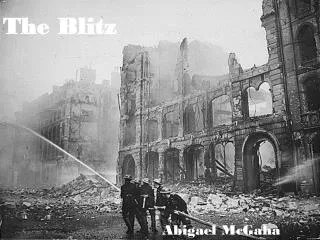
Helen Legg explores the devastating effects of the Blitz, a significant aerial bombing campaign during World War II aimed at reducing morale and destroying critical infrastructure across Britain. From September 1940, nearly 250 tonnes of bombs were dropped nightly, significantly affecting major cities like London. The campaign resulted in over 43,000 fatalities, with 13,000 deaths in London alone. Despite the destruction of homes and lives, the resilience known as the 'Blitz Spirit' emerged, showcasing human determination even amidst chaos and hardship.

E N D
Effects of the Blitz By Helen Legg
Aims of the Blitz Reduce morale Destroy transport Destroy industry
Areas Affected London Docks Ports Power stations Railway lines Major cities all across Britain
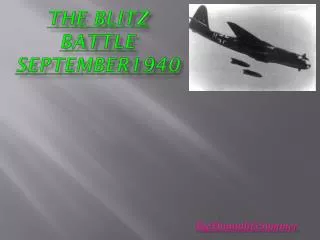
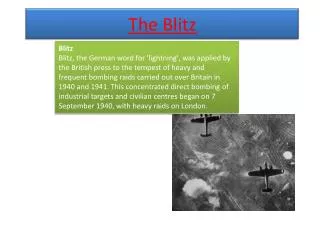
Facts The main bombing was in September 1940 Bombs were dropped every day 250 tonnes each night This was more in one night than the whole of WW1
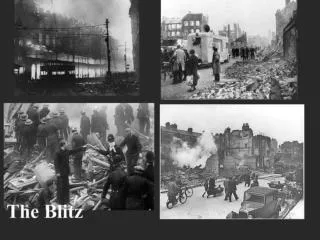
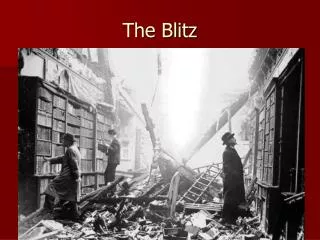
Impact • Destroyed • Homes • Lives • Families • Everyone was affected • 13,000 killed in London • 43,000 killed overall • Royal family bombed • ‘Total War’
Impact People became angry Looting took place Little impact on factories Factories easily missed ‘Blitz Spirit’