Overview of Bone Formation, Development, and Structure in the Human Skeletal System
The skeletal system is vital for body support, protection, and movement, consisting of various bones that develop through two primary phases: ossification. Osteoblasts and osteoclasts play crucial roles in bone formation and destruction. Understanding the structure of bones, including those of the skull (frontal, parietal, temporal, and others) and the spine (cervical, thoracic, lumbar), is essential. This guide also covers arm, shoulder, and leg bones, as well as fracture types and their implications for overall health.

Overview of Bone Formation, Development, and Structure in the Human Skeletal System
E N D
Presentation Transcript
Bone formation & development • Ossification – Bone Development • 2 phases • Osteoblasts – bone forming cells • Osteoclasts – bone destroying cells Bone Remodeling – ability of bones to maintain their shape, strength, & proportions during growth & changes in body weight
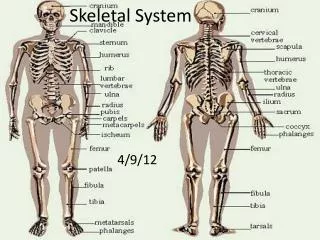
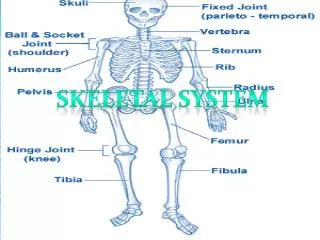
Bones of the Skull • Frontal Bone • Parietal Bones • Temporal Bones • Occipital Bone • Sphenoid Bone • Ethmoid Bone • Sinuses of the skull • Frontal • Ethmoid • Sphenoid • Maxillary
Facial Bones • Maxillary Bones • Palentine Bones • Zygomatic Bones • Lacrimal Bones • Nasal Bones • Vomer Bones • Mandible Bones
Cervical Spine • C1 – Atlas • C2 – Axis • This joint allows you to nod & shake your head • 1 – 7 vertebraes
Thoracic Spine • Consist of 12 vertebrae • T1 – T12 • Vertebrae are larger than cervical
Lumbar Spine • Block – like vertebrae • L1 – L5 • Common back injury
Chest & ribs • Sternum • Xiphoid Process • 12 pairs of ribs • 7 pairs of true ribs • 5 false or floating ribs
Sacrum & Coccyx • Fusion of the 5 vertebrae • Coccyx – also known as the tailbone
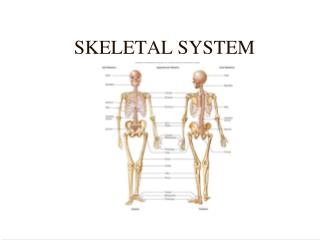
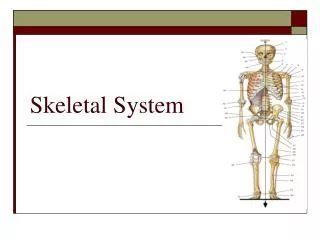
Arm & Shoulder Bones • Clavicle – Collar Bone • Scapula – shoulder blades • Humerus • Radius • Ulna
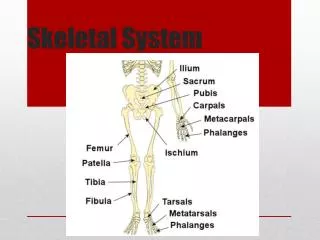
Leg Bones • Femur • Patella • Tibia • Fibula
Pelvis Bones • Illium • Ischium • Pubis
Hands & Feet • Metacarpals • Metatarsals • Phalanges
Fractures • Closed (Simple) – bone breaks but does not come through the skin • Open (Compound) – broken bone that breaks through the skin • Comminuted – bone is broken into several pieces • Greenstick – one side of the bone is broken & other side is bent • Spiral – bone is twisted • Colles – break/dislocation distal radius • www.medterms.com