Catalytic Effects in Physical Reactions: Mentos & Table Salt Explorations
Explore how Mentos and table salt act as catalysts in changing dissolved CO2 to gaseous CO2, influencing reaction rates in experiments and providing insights into energy barriers and nucleation promotion.

Catalytic Effects in Physical Reactions: Mentos & Table Salt Explorations
E N D
Presentation Transcript
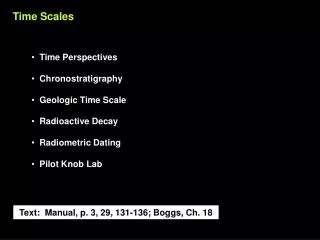
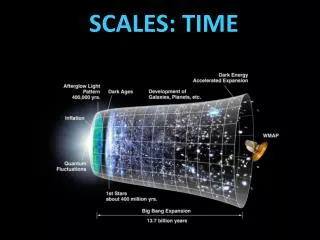
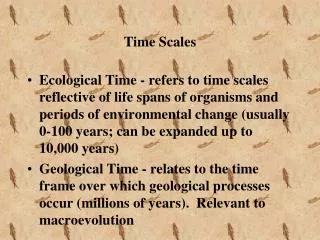
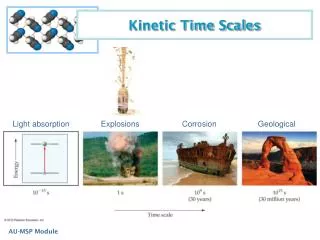
Kinetic Time Scales Light absorption Explosions Corrosion Geological
Energy Barrier in Reactions • Chemical and physical reactions have energy barriers, or an activation energy (Ea), that must be overcome to permit reaction • Unassisted reaction Diet Coke bottle left open for several days • Catalysts act to lower this energy barrier and enhance speed • Mentos (and other additives) can be considered catalysts for the physical reaction in which dissolved CO2 changes to gaseous CO2 • Catalyzed reaction much faster than unassisted reaction (control)
Mentos as a Catalyst http://www.stevespanglerscience.com/experiment/original-mentos-diet-coke-geyser
Mentos as a Catalyst • Contributing factors • Rough surfaces • Promotes nucleation, or formation, of CO2 bubbles from dissolved CO2 • Rapid descent of “catalyst” particles • Low friction from surfactants and shape • Relatively heavy • Rapid reaction in large bottles Scanning Electron Microscope (SEM) image of Mentos candy surface Scale bar is 20 μm long (20 millionths of a meter) Coffey, T. S., Am. J. Phys. 2008, 76, 551.
Table Salt as a Catalyst • Contributing factors • Rough surfaces • Slower descent into bottle • Smaller particles • Slower reaction in larger bottle • High surface area-to-volume ratio • Along with surface roughness, promotes rapid reaction in smaller scale systems (indoor experiments) SEM images of table salt Scale bars are (a) 2.0 mm; (b) 100 µm; (c) 50 µm; and (d) 20 μm long Coffey, T. S., Am. J. Phys. 2008, 76, 551.