Insights into X-linked Traits and Genetic Variability in Offspring Traits
This detailed analysis provides an overview of genetic inheritance patterns focusing on X-linked traits such as fur color and color blindness in various organisms. It explores the results of experimental crosses, highlighting the red-eyed F1 generation, and how chromosomal configurations influence phenotypes. The presence of heterozygous conditions results in remarkable outcomes, such as mosaic effects in females and the implications of X chromosome inactivation leading to variability in sweat gland functionality. Key questions are raised regarding sex determination and the evolution of the Y chromosome, further shedding light on genetic diversity.

Insights into X-linked Traits and Genetic Variability in Offspring Traits
E N D
Presentation Transcript
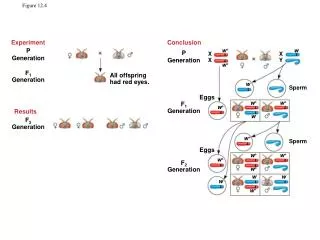
Figure 12.4 Experiment Conclusion P Generation w w P Generation X X X Y w F1 Generation All offspring had red eyes. w Sperm Eggs w w F1 Generation w Results w F2 Generation w Sperm Eggs w w w F2 Generation w w w w w
X = orange • X = black • MALES: • XY = orange • XY = black • FEMALES: • XX = orange • X X = black • X X = orange or black patches
Figure 12.8 X chromosomes Allele for orange fur Early embryo: Allele for black fur Cell division and X chromosome inactivation Two cell populations in adult cat: Active X Inactive X Active X Black fur Orange fur
Anhydrotic dysplasia X-linked sweat gland problem • X = normal sweat glands X' = absence of sweat glands. • XY….would be? • Normal male • X’Y…would be? • No sweat glands male • XX….. • Normal female • X'X' do not have sweat glands • XX' ….. • Heterozygous females have patches of skin with sweat glands and patches of skin without sweat glands. So swaths or populations of cells that have one X turned on and other patches with a different X on.
What do you know about colorblindness? Suppose: X = color vision X’ = colorblind The retina of a heterozygous (XX’) female will have some cells with the X inactivated and other cells with the X’ inactivated. A heterozygous carrier of red-green colorblindness has some colorblind cells in her retina. The non-colorblind cells enable her to see color.
Figure 12.10b F1 dihybrid testcross bvg b vg+ Homozygous recessive (black body, vestigial wings) Wild-type F1 dihybrid (gray body, normal wings) bvg bvg b vg+ bvg b vg+ bvg bvg bvg bvg bvg Meiosis I b vg+ Meiosis I and II b vg bvg Recombinant chromosomes bvg Meiosis II b+ vg+ b+ vg bvg bvg+ bvg Eggs Sperm
Figure 12.10c Recombinant chromosomes b vg+ b vg bvg bvg Eggs 965 Wild type (gray-normal) 944 Black- vestigial 206 Gray- vestigial 185 Black- normal Testcross offspring bvg b vg bvg b vg bvg bvg bvg bvg bvg Sperm Recombinant offspring Parental-type offspring Recombination frequency 391 recombinants 100 17% 2,300 total offspring
Figure 12.12 Mutant phenotypes Black body Brown eyes Short aristae Cinnabar eyes Vestigial wings 0 48.5 57.5 67.0 104.5 Gray body Long aristae (appendages on head) Red eyes Normal wings Red eyes Wild-type phenotypes
1. What kind of sex determination did our ancestors have and when did the y chrosome evolve? 2. What do they mean SRY evolved from a related gene?? 3. The chapter talks about SRY, what does it stand for? 4. Why do you think the Y lost its ability to recombine (other than at the tips)?? 5. Why would the Y lose genes? What kinds of genes would it be unlikely to lose and why?