Download
1 / 15
160 likes | 286 Vues
This study investigates pulsating pre-main sequence (PMS) stars in various young open clusters, focusing on their unique characteristics such as high activity levels, photometric and spectroscopic variabilities, and emission lines. We present observations from the CTIO and OSN telescopes that reveal new pulsators, including NGC 6383 and IC 4996. Our findings also explore the evolutionary stages of these stars and their proximity to the instability strip. These insights enhance our understanding of stellar evolution and the diverse behaviors of PMS stars.

E N D
Pulsating Pre-Main Sequence Stars in Young Open Clusters K. Zwintz Institute of Astronomy, Univ. Vienna, Austria zwintz@astro.univie.ac.at M. Marconi (INAF Astr. Observatory of Capodimonte, Naples) T. Kallinger (Inst. of Astronomy, Univ. Vienna) W. W. Weiss(Inst. of Astronomy, Univ. Vienna) Pulsating PMS stars
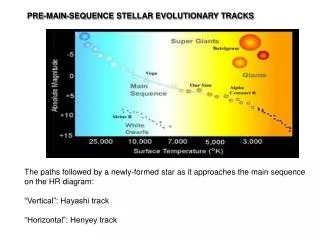
Pre-main Sequence Stars • birthline ZAMS • high degree of activity • photometric & spectroscopic variabilities • interaction with stellar environment • strong IR and/or UV excess • emission lines • part of activity due to pulsation: A-F stars • 24 PMS pulsators known • Periods: 18 min … 6 h • short time in instability strip • ambiguous determination of evolutionary stage for field stars! Pulsating PMS stars
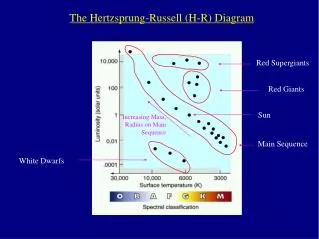
log L/Lsun log Teff PMS evolutionary stage (Breger & Pamyatnykh, 1998) • 1.6, 2.0 and 2.5 Msun • MS & post-MS evolution • PMS tracks by D’Antona & Mazzitelli (1994) • BE / BEF: blue edge for radial overtones / fundamental mode • REobs: empirical red edge • similar envelope properties differences in interior Pulsating PMS stars
Young Open Clusters • Cluster Properties • same age and distance • age < few 107 yr • main sequence till ~ B9 • A-F members lie above ZAMS • Observed Clusters • NGC 6383 new pulsators! • IC 4996 new pulsators! • NGC 2264 • first detection of period changes Pulsating PMS stars
13.5’ NGC 6383 • Observations • CTIO 0.9m telescope • Johnson B & V • CCD time series photometry • 9 nights Pulsating PMS stars
2 PMS pulsating cluster members: NGC 6383 170 & 198 NGC 6383 (Zwintz et al., 2004) • Observations • CTIO 0.9m telescope • Johnson B & V • CCD time series photometry • 9 nights • NGC 6383 • Sgr OB1 association • age ~ 1.7 Myr • PMS A-F members • diameter = 20' 170 198 Pulsating PMS stars
NGC 6383 170 V = 12.61 mag A5 IIIp (van den Ancker et al. 2000) Ha in emission IR excess 5 frequencies 8.3 … 19.4 c/d V filter V filter • NGC 6383 198 • V = 12.83 mag • no spectral type • f = 19.024 c/dP ~ 1.26 h PMS Pulsators in NGC 6383 Pulsating PMS stars
NGC 6383: Radial Pulsation Models • NGC 6383 170 log L/Lsun • NGC 6383 198 log Teff 170 f1: 3rd overtone & f2: 5th overtone 198 3rd overtone Pulsating PMS stars
6' IC 4996 • Observations • OSN 1.5m telescope • Johnson B & V • CCD time series photometry • 10 nights Pulsating PMS stars
40 37 2 PMS pulsating cluster members: IC 4996 37 & 40 IC 4996 • Observations • OSN 1.5m telescope • Johnson B & V • CCD time series photometry • 10 nights • IC 4996 • Cygnus SFR • age ~ 7.5 Myr • PMS A-F members • diameter = 6' Pulsating PMS stars
IC 4996 40 V = 15.03 mag A4 (Delgado et al. 1999) P ~ 42.9 min 5th radial overtone IC 4996 37 V = 15.30 mag A5 (Delgado et al. 1999) P ~ 45.2 min 4th radial overtone V filter V filter PMS Pulsators in IC 4996 Pulsating PMS stars
Power [mmag2] frequency [c/d] NGC 2264 • NGC 2264 • age ~ 8 Myr • known PMS pulsators: • V588 Mon • V589 Mon • multi-site campaign • Detection of Period Changes • Breger (1972) • Peña et al. (2002) • observations from 1986 (Kallinger, 2004, priv. comm.) Pulsating PMS stars
log g Factor 35-40 higher log Teff V589 Mon – Period Change • predictions for PMS d Scuti stars(Breger & Pamyatnykh, 1998) • P-change = 75…100·10-8 yr-1 • measurements for V589 Mon • P-change = 3625·10-8 yr-1 more rapid evolution than expected ? (Pamyatnykh & Kallinger, 2004, priv. comm.) Pulsating PMS stars
PMS Instability Strip REPMS total 24 stars no stars ? Pulsating PMS stars
Conclusion • additional PMS pulsators needed • empirical definition of PMS instability strip • observed lack of stars near red edge • poor number statistics ? • evolutionary effect ? • overlap with T Tauri stars ? • period changes & stellar evolution • radial and non-radial PMS pulsation models • Organisation of PMS working group • contact: zwintz@astro.univie.ac.at Pulsating PMS stars