Understanding the Integumentary System: Skin Structure and Functions
The integumentary system, primarily comprising the skin, plays crucial roles in protecting the body, regulating temperature, and providing sensory information. This system includes various types of epithelial membranes, such as cutaneous, serous, and mucous membranes, each serving specific functions. The skin itself has multiple layers, including the avascular epidermis and the dense connective tissue of the dermis. Skin appendages like hair and glands contribute to its multifunctionality, while common disorders such as acne, herpes simplex, and skin cancer highlight its vulnerability.


Understanding the Integumentary System: Skin Structure and Functions
E N D
Presentation Transcript
Integumentary System Read pp 96-111: HW: pp113-114 S/A #1, 4, 7, 9, 12, 13, 14 Clinic ?’s: #3, 4, 5
137.222.110.150/calnet/cellbio/page8.htm Classification of Body Membranes • Epithelial membranes • all of these contain an epithelial sheet, always combined with connective tissue
www.acponline.org Epithelial tissue con’t: • Cutaneous—skin • exposed to air = dry membrane
Epithelial tissue con’t: • Serous— • line internal cavities • serous fluid (excreted by both epithelial and connective tissues), lets organs slide cross cavity walls and each other
Epithelial tissue con’t: • Parietal—lines a specific wall of ventral body cavity. • Visceral—covers the outside of the organs of the ventral body cavity.
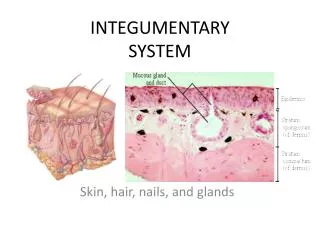
www.hopkinsmedicine.org Epithelial tissue con’t: • Mucous • lines all body cavities that open to exterior = wet membranes
www.pennhealth.com Connective Tissue Membranes • Aka Synovial • line area surround joints, bursae (sacs of connective tissue) & tendon sheaths.
Basic Skin Functions • Protects deeper tissues from • mechanical damage • chemical damage • bacterial damage • UV radiation • thermal damage • dessication
Basic Skin Functions • Temperature regulation • Aids in excretion of urea and uric acid • Synthesizes vitamin D • Sensory input
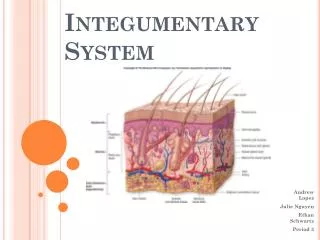
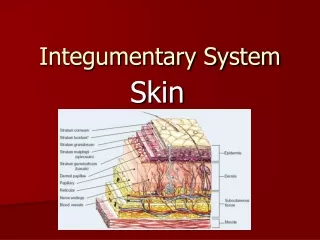
The Skin—Integumentary System • Epidermis—outer five layers—avascular • Melanin—pigment responsible for reducing skin damage from UV • Dermis—made up of dense connective tissue, “hide”, firmly connected to epidermal layer. Thickness varies
www.mc.vanderbilt.edu Appendages of the skin • Hair—guard head, eyes, respiratory tract, insulation • Receptors • Nails—scale-like modification of epidermis; transparent
www.scf-online.com Appendages of the skin • Skin glands • Sweat/sudoriferous glands-- > 2.5 million! • eccrine—produce sweat, found all over • apocrine—usually found in axillary and genital areas; milky secretions; precise function is unknown.
www.acne-resource.org Appendages of the skin • Sebaceous glands—oil glands • not on palms or soles of feet, ducts usually empty into a hair follicle.
www.mummila.net www.004.cz Skin Disorders or Problems • Herpes simplex • cold sores, fluid filled blisters
www.dartmouth.edu www.uzleuven.be Skin Disorders or Problems • Cyanosis • poor blood circulation; turning skin/blood bluish
www.myzeno.com Skin Disorders or Problems • Acne—infection of sebaceous glands
www.pueblo.gsa.gov www.cbc.ca Skin Disorders or Problems • Skin cancer • most common cancer
www.helenafamilypodiatry.com www.cmsp.com Skin Disorders or Problems • Athlete’s foot • itchy, red, peeling condition between toes; fungal infection
bms.brown.edu corpreform.typepad.com Skin Disorders or Problems • Third degree burns • body loses fluid, destroys entire thickness of skin, can lead to infection.
www.parktrust.org Skin Disorders or Problems • Blister • friction between epidermis and dermis causes separation of the layers.