Download
1 / 11
110 likes | 229 Vues
This overview delves into the intricate pathways of the respiratory and digestive systems. It highlights the role of various structures in the respiratory system, including the external nares, nasal cavity, trachea, and alveoli, showcasing how air is processed in the body. Similarly, it explores the digestive system's function in breaking down food through the alimentary canal and accessory organs like the liver and pancreas, illustrating the process of nutrient absorption and waste elimination. Understanding these systems is crucial for appreciating human physiology.

E N D
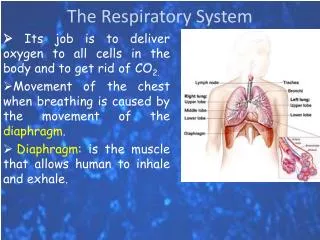
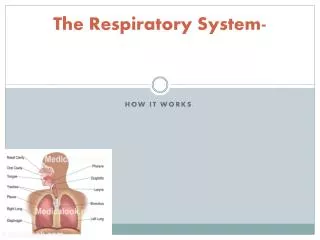
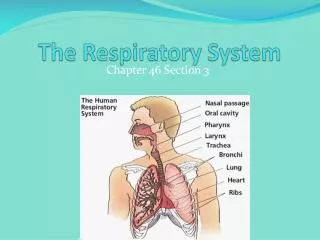
Airflow Into The Body: 2 Passageways External Nares Nasal Cavity Nasopharynx Trachea Primary Bronchi Lobar Bronchi Bronchioles Alveoli (air sacs) Mouth Opening Oral Cavity Oropharynx Trachea Primary Bronchi Lobar Bronchi Bronchioles Alveoli (air sacs)
larynx - voice box, supported by thyroid cartilage(adam's apple) + cricoid cartilage epiglottis - tongue-like structure that closes off larynx when we swallow trachea - "windpipe", supported by thoracic rings thoracic rings - "c" shaped cartilagenous rings, not completely circular to allow esophagus (located behind trachea) to expand when we swallow food, but enough stability to maintain an open passageway of the trachea regardless of pressure change during breathing
The Digestive System Function: To mechanically + chemically process the foods we eat by breaking down food, absorbing the nutrients contained therein, + eliminating undigested food as waste
Two primary sections: Digestive tract, alimentary canal or gastrointestinal (GI) tract - a muscular tube that extends from the mouth to the anus (~30ft long) Accessory organs - manufacture, store, or secrete fluids that contain water, enzymes, buffers, and other components that assist in preparing nutrients for absorption
Digestive Tract: oral cavity oropharynx esophogus stomach small intestines large intestines rectum
Accessory Organs salivary glands - produce saliva, which contains digestive enzymes that begin the chemical breakdown of food
Pancreas -contains exocrine cells that secrete buffers +digestive enzymes (also makes insulin)
Liver - secretesbile (required for digestion of fats), stores nutrients and vitamins, and has many metabolic and regulatory functions
Gall bladder - stores and concentrates bile received from the liver until needed in the small intestines (helps digest fat).