

SlideServe
Menu
Préférences
© SlideServe · v2026

Tidal Environments

walter avatar
14 diapositives · 491 Views · Jul 13, 2014

Tidal Environments. I. Affects of Turbulence. A. Turbulence - wave action B. Keeps inshore waters from stratifying (layering) C. Causes substrate particles (sand) to remain suspended. II. Substrate.
Tidal Environments - slide 1
01 / 14Tidal Environments
1 / 17

Télécharger la présentation

Tidal Environments
Une image / un lien ci-dessous est fourni (tel quel) pour télécharger la présentation

Politique de téléchargement : le contenu du site vous est fourni TEL QUEL pour votre information et votre usage personnel ; il ne peut être vendu, concédé sous licence ni partagé sur d’autres sites sans l’accord de son auteur.Le contenu vous est fourni TEL QUEL, pour votre information et votre usage personnel uniquement. Téléchargez la présentation en cliquant sur ce lien. Lors du téléchargement, si vous ne parvenez pas à télécharger une présentation, l’éditeur a peut-être supprimé le fichier de son serveur.Pendant le téléchargement, si vous ne parvenez pas à obtenir une présentation, le fichier a peut-être été supprimé par l’éditeur.

F I N

Plus de contenu associé

Transcription de la présentation
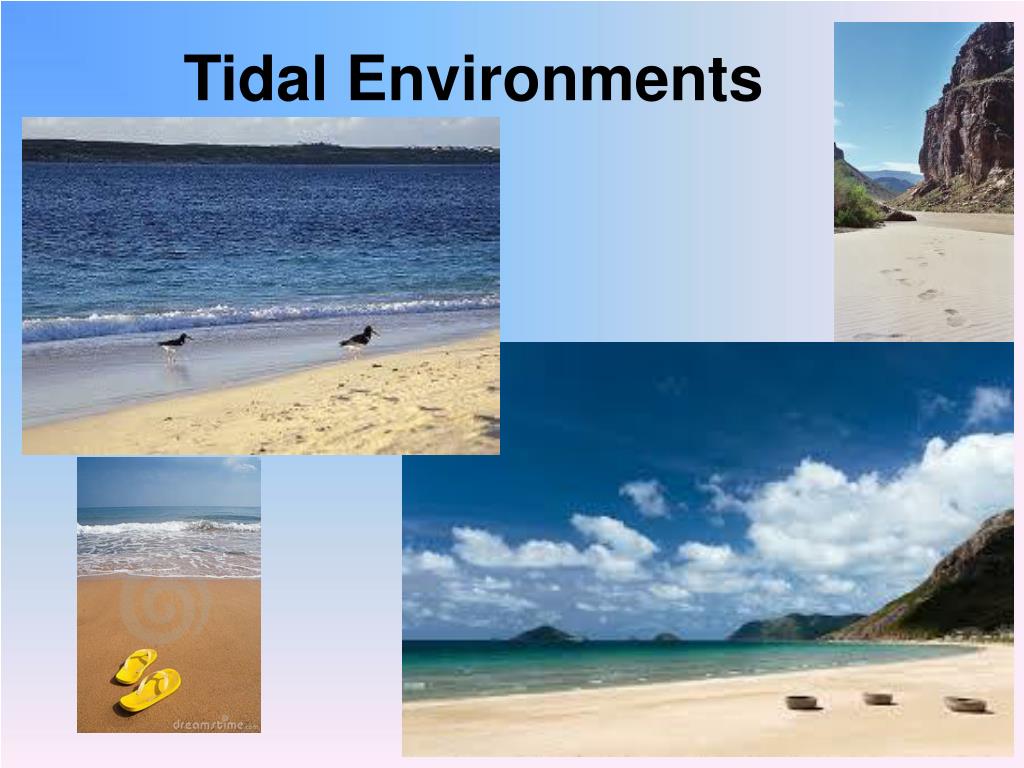
  1. Tidal Environments

  2. I. Affects of Turbulence A. Turbulence - wave action B. Keeps inshore waters from stratifying (layering) C. Causes substrate particles (sand) to remain suspended.

  3. II. Substrate A. Definition - material an organism lives in or on, including sand and rocks.

  4. III. Tidal Zonation

  5. A. Low-Tide Conditions 1. Epifauna – organisms living onsubstrate surface (intertidal zone organisms) 2. High stress for sessile organisms due to exposure of the elements. A. Desiccation – drying out B. Predation C. Temperature & Salinity changes 3. Survival Method A. Motile Organisms-Run & hide B. Sessile organisms-Clam up method

  6. B. High Tide Conditions 1. Once Exposed Now Submerged 2. Force of crashing-in waves 3. Wave Intensity varies due to the bending of the waves

  7. IV. Causes of Zonation A. Physical factors: Alternation between submersion and exposure to air B. Biological factors: 1. competition and predation 2. grazing-affects algal distribution 3. offspring reproduction-variable due to water conditions/weather and adult reproduction

  8. V. Types of Tidal Zones • Sandy Beach • Rocky Shore

  9. A. Sandy Beach • Composed of loose sediment • that’s easily shifted by wind and • waves. • 2. Zones easily recognized • Sandy beaches are the most • familiar of tidal zones.

  10. B. ROCKY SHORE 1. Occur on steep coasts (West Coast of America). 2. Formed from uplifts on tectonic plates or rising coasts from melting ice. 3. Lacking large amounts of sediment.

  11. 4. Rocky Shore Zones Supralittoral zone Littoral zone Infralittoral zone

  12. 5. Upper intertidal(Supralittoral zone) a. Conditions as terrestrial as they are marine b. Infrequent wetting by high tides and waves c. Sparsely inhabited by marine organisms

  13. 6. Middle Intertidal (littoral zone) a. Frequently submerged by tides and waves; b. Abundance of plant nutrients, oxygen, and planktonic food c. Barnacle and Mussel habitation

  14. 7. Lower intertidal (Infralittoral zone) a. Submerged most of the time b. Organisms tolerate only brief exposure to air c. Numerous seaweed species; algae – more red and brown than green d. Animals: anemones, snails, sea spiders, hydroids, sea stars, sea urchins, brittle stars, and sea cucumbers .