Comprehensive Conditioning Programs for Optimal Horse Performance
This guide focuses on developing effective conditioning programs for horses, targeting key physiological areas such as cardiovascular health, muscular strength, and thermoregulation. It details the principles of short- and long-term responses to training, the importance of tailored programs for individual horses based on breed, age, and fitness levels, and specific training stages to enhance performance. Strategies include managing exercise intensity, recovering appropriately, and monitoring progress to reduce injury risks while promoting optimal athletic performance.

Comprehensive Conditioning Programs for Optimal Horse Performance
E N D
Presentation Transcript
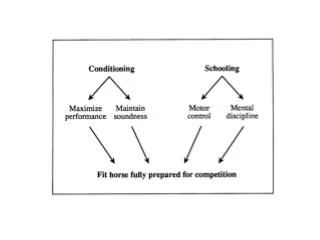
Conditioning Programs are Directed Towards: • cardiovascular • lungs • muscular • bone and tendon • thermoregulation • nervous system • better integration for improved co-ordination in events involving skill • faster firing of nervous impulses • psychological familiarity
Types of Conditioning • cardiovascular conditioning • respiratory • cardiovascular • muscular • strength training • increase power or endurance of muscle groups (sport specific) • suppling exercises • increase range of motion • more athletic and reduce risk of injury
Short Term Response • use of glycogen reserves • lactate accumulation • torn muscle fibers, tissue damage • excessive loss of fluids • repetitive cycle • destruction and repair essential part of conditioning • rebuilding phase strengthens tissues • repair time - 2-3 days • don’t need complete rest • intense exercise affects immune system • respiratory illnesses
Long Term Response • cardiovascular and muscular system • 3-5 weeks • increase maximum oxygen consumption • improved O2 delivery • increased O2 utilization • ligament and tendon conditioning • bone conditioning
Principles • related to the type of competition • every animal is different • training program has to be adjusted to the individual horse • need to assess when an animal is overstressed
Designing a Conditioning Program • horse • breed/type (temperament) • age • conditioning history • present level of fitness • previous injuries • sport • type of sport • level of competition • timing of competition during the season
rider • time schedule • competitive objectives • environment • weather • terrain • facilities
Training for Optimum Performance • early stages • low intensity exercise of moderate duration • improve suppleness and joint mobility • adaptations to the saddle and weight of rider • harder stages • development of muscles and cardiovascular systems • maintenance • allows horse to maintain peak fitness
peak • taper work load last few days before a competition • 5-10 days for long events • 3-5 days for smaller stresses • after performance • decrease work load 20 % until midway between peaks ( repair and restore) • seasonal break • monitor progress
intensity • HR easy measurement of intensity • increase speed • advance impulsion, gradients, add dead weight, work in loose, deep surface, temperature/humidity are high • duration • low intensity exercise , with increasing duration • maintain or reduce duration, with increased intensity • final stage, sport specific • frequency • varies with stage of training • improve fitness - 3 days/week • maintain fitness - 2 days/week
progressive loading • need gradual increase in workload • maintain new workload until adapted • increase workload again • overloading • too much stress - too little recovery time • aerobic • poor performance, increase PCV, • strength training • muscle strains, ligament and bone injuries • avoid excessive repetition