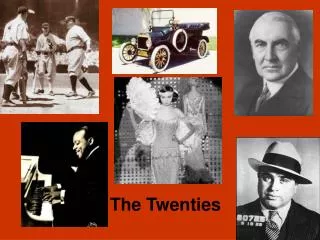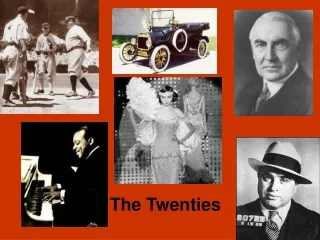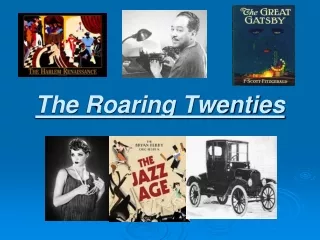
The Twenties
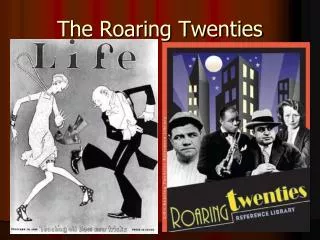
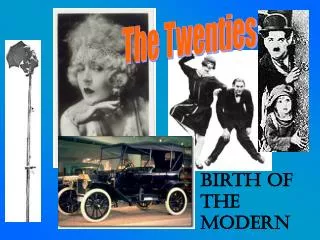
The Roaring Twenties marked a transformative period in American life, characterized by a surge in new ideas, consumer culture, and mass media. Innovations in household products, automobiles, and aviation reshaped everyday life, while advertising employed psychological insights to drive sales. The era saw the rise of mass entertainment with radio and film, connecting Americans like never before. However, this prosperity was not shared by all, as economic disparities persisted alongside women's empowerment movements and the Harlem Renaissance, highlighting both progress and ongoing challenges.
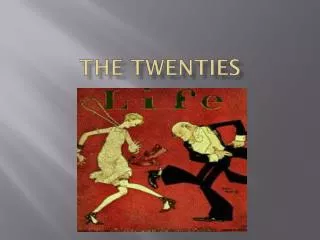

The Twenties
E N D
Presentation Transcript
Roaring Twenties • A Time of new ideas and prosperity that brought change to popular culture and contritubed to new directions in American life
A new Consumer Culture New products make life easier • Listerine, Toaster, Vacums , washing machines, irons, refrigerators
Advertising Grows • Focus on buying the next best thing • Used psychologists to figure out people’s desires and behaviors • Bruce Barton • Print and radio
Buy now / Pay later • Credit • Installment buying • 15% of all retail sales were on installment plans
Airplanes • Charles Lindbergh flies across the Atlantic • U.S post office uses surplus military planes • First transcontinental mail route in 1920 from NY to San Francisco • Ford produces an all metal airplane that carried 10 passenders
Automotible • Henry Ford’s Model T • Allowed people to live outside of cities (suburbs) • Building of Federal Highways • Gas stations, diners, motels spring up • Automobile accidents rise
Radio • KDKA in Pittsburgh broadcasts the 1920 Presidential election • David Sarnoff broadcasts the sinking of the Titanic. • RCA (Radio Corporation of America) and Sarnoff create NBC radio • Broadcast news, sports, music, drama, and comedy across the nation • Brings Americans closer together
Motion Pictures • 50 million movie goers in 1920 rises to 90 million by 1929 • The Jazz Singer first “Talkie” • Charlie Chaplin and Rudolph Valentino
Sports • Spectator Sports like Boxing, wresting and Baseball emerge • Jack Dempsey fight earns $2.6 million dollars • Radio spreads the popularity • Babe Ruth in Baseball and Jim Thorpe Football became national heroes.
Henry Ford Pioneers a New Age • By 1929 half of americanfamlies owned a car • Assembly line helped Ford cut the price of the car from $950 to $290 • Doubled pay from $2.40 an hour to $5.00 • By 1930 Ford produced 20 Million cars
Innovations give Birth to New industries • 1 of every 8 workers had a job related to the auto industry • By 1930 – 38 domestic and five international airlines • Plastics Craze, Synthetic fibers changed clothing, cellophane
Big Businesses Get even Bigger • Consolidation of businesses grew as Presidents ignored anti-trust laws • Three big auto makers - GM, Ford, Chrysler • A&P Grocery Store Chain drives small businesses out.
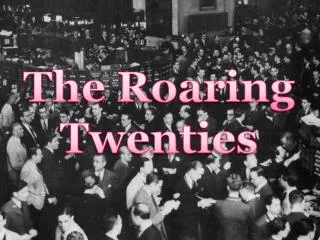
Speculators Aim to Get Rich Quick • Ponzi Scheme and Florida Land Boom led to speculators losing everything • Stock Market investment become commonplace for housewives, barbers, taxi drivers and other middle class workers. • DOW Jones Industrial Average doubled between 1928 and 1929
Left Out of the Boom: Enduring Poverty • Gross national produce rose by 40% between 1921-1929 • Half of American families earned $1500 a year or less. ($2500 was decent) • Farmers remained in debt after the war. Surplus crops caused farm prices to drop. • Farmworkers earned low wages • Workers in old industries struggled (coal miners, textile factory workers,) • African Americans paid less than whites, barred from unions.
A whole new way of life for Women • 19th Amendment grants suffrage • WWI jobs inspired women to do more • Flappers – rebellious women who wore short skirts • Birth Control – Margaret Singer • Makeup, cigarettes
Harlem Renaissance The outpouring of creativity among African American writers, artists and musicians who gathered in Harlem in the 1920’s
I Am I am the darker brother.They send me to eat in the kitchenWhen company comes,But I laugh,And eat well,And grow strong.
Tomorrow,I'll be at the tableWhen company comes.Nobody'll dareSay to me,"Eat in the kitchen,"Then.They'll see how beautiful I amAnd be ashamed—I, too, am America. - Langston Hughes
The Jazz Age • Grew from African rhythms, European Harmonies African American folk music • Improvisation • Born in New Orleans • Spread to Chicago, New York, St. Louis as musicians traveled north • Duke Ellington
Jazz clubs in Harlem (Cotton Club) had mostly white patrons but black entertainers • Radio Stations catch on • Louis Armstrong, Duke Ellington • Led to new dance called the Charleston • Traditionalists felt that jazz was leading to immoral behavior
Prohibition • 18th Amendment Prohibited the sale and/or use of alcohol
The Good • The use of alcohol declined under the 18th • Fewer workers especially poor and working class ethnic groups spent their wages at saloons
The Bad • The gov’t did not provide enough funding for men or supplies • People sold alcohol illegally in speakeasies • People brewed their own “bath tub” gin • People bought bootlegged alcohol smuggled in from Canada
The Bad • Sale of alcohol was a multibillion dollar business for gangsters like Al Capone • Al Capone bribed judges, politicians and police and was blamed for hundreds of murders