Discovering Komodo Dragons: The Giant Reptiles of Earth
Komodo Dragons are the largest carnivorous reptiles on Earth, reaching lengths of up to 3 meters and weighing 70 kilograms. These magnificent creatures can live for over 30 years and are primarily found on Komodo, Rinca, Gili Dasami, and Gili Montang islands. Some consider them the last dinosaurs due to their size and behavior. Their life cycle includes unique mating rituals, with females laying up to 20 eggs after a fierce competition among males. Young hatchlings face numerous threats as they grow in a challenging environment, spending their early years in trees to evade predators.


Discovering Komodo Dragons: The Giant Reptiles of Earth
E N D
Presentation Transcript
Komodo Dragons By Patrick Lee
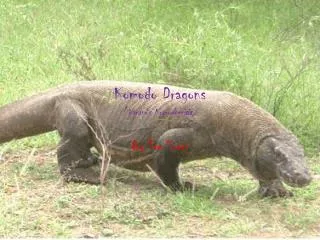
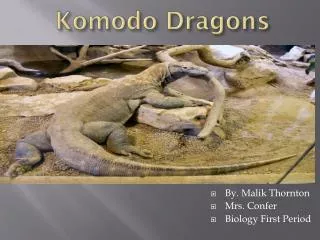
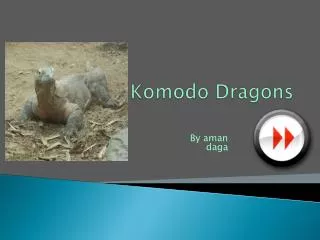
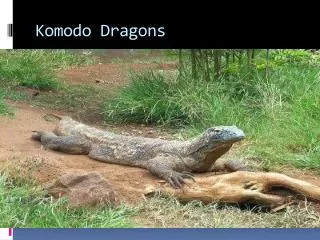
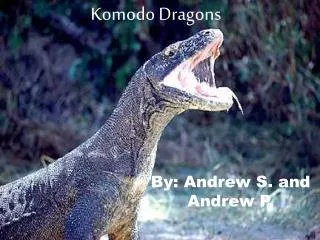
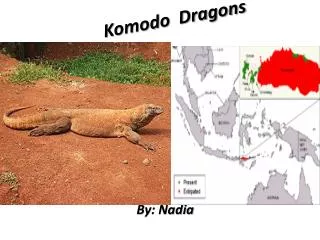
Komodo Dragons Komodo Dragons are practically the largest carnivore reptiles living on earth. They can grow to 3 meters and weigh 70 kilograms! These giant lizards can live to 30 years old. Komodo Dragons are found in Komodo island, Rinca island, GiliDasamiisland and GiliMontang island. Some people say that Komodo Dragons are the last dinosaurs on earth, others say it is just a large lizard. But some say that they can be both.
Life Cycle • This is a simple life cycle of a Komodo Dragon. Komodo Dragon hatch. Mates and lay eggs Starts to grow
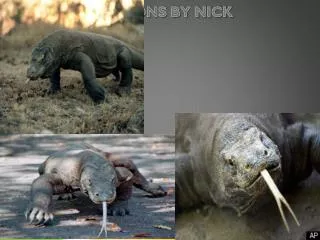
Mating and Eggs • Komodo Dragons starts to g mate in May and August, and lays the eggs in September. At this stage males fight over each other till one it’s enemy is pinned to the ground. The winner will then flick it’s tongue to gain information about the female’s receptivity. After the mating the female will go and lay her eggs in a burrow cut in the hill and lay her eggs. The females can lay to 20 eggs! After 7~8 months of incubation the young Komodo Dragons are ready to hatch. But when they hatch, they can’t go down because they will fall of and die, so they have to wait several hours to get down. At this time, lots of the young get eaten by predators. When the young komodo dragons get down, they spend the first few years on a tree, away from the adult komodo dragons because they make 10% of their diet eating young komodo dragons.