
SlideServe
Menu
Préférences
© SlideServe · v2026

Prokaryotes

wilda avatar
8 diapositives · 307 Views · Jul 19, 2014

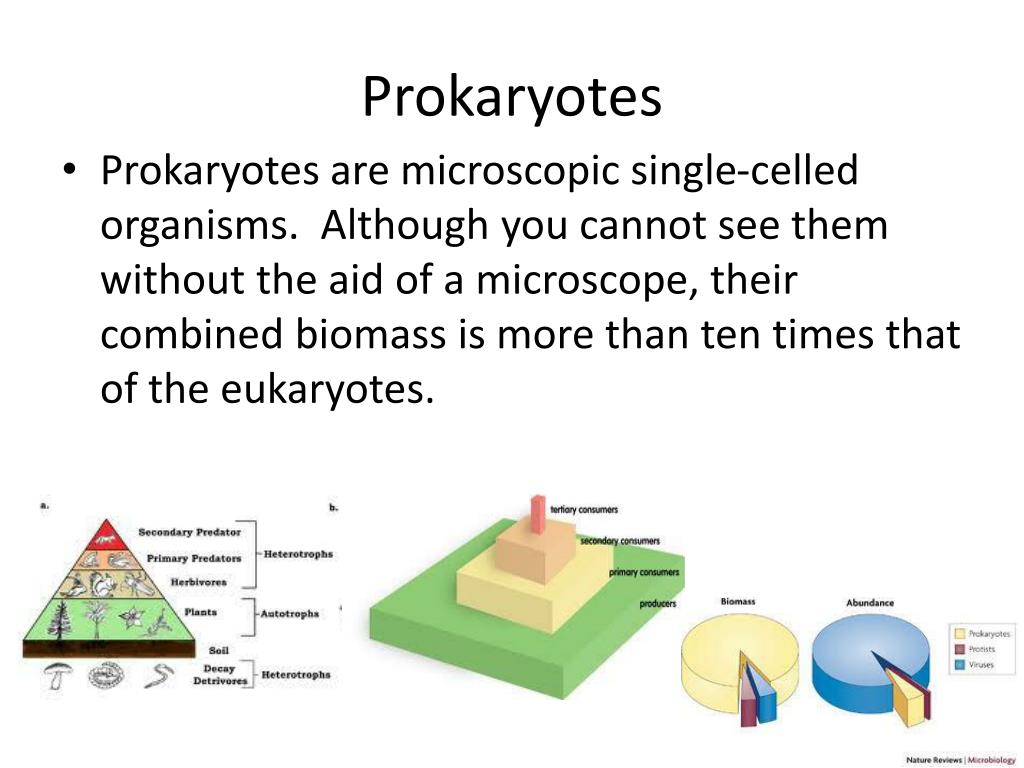
Prokaryotes. Prokaryotes are microscopic single-celled organisms. Although you cannot see them without the aid of a microscope, their combined biomass is more than ten times that of the eukaryotes. Prokaryotic Structure. size1-5 m m (resolution of the human eye ~750 m m) Cell wall
Prokaryotes - slide 1
01 / 8Prokaryotes
1 / 17

Télécharger la présentation

Prokaryotes
Une image / un lien ci-dessous est fourni (tel quel) pour télécharger la présentation

Politique de téléchargement : le contenu du site vous est fourni TEL QUEL pour votre information et votre usage personnel ; il ne peut être vendu, concédé sous licence ni partagé sur d’autres sites sans l’accord de son auteur.Le contenu vous est fourni TEL QUEL, pour votre information et votre usage personnel uniquement. Téléchargez la présentation en cliquant sur ce lien. Lors du téléchargement, si vous ne parvenez pas à télécharger une présentation, l’éditeur a peut-être supprimé le fichier de son serveur.Pendant le téléchargement, si vous ne parvenez pas à obtenir une présentation, le fichier a peut-être été supprimé par l’éditeur.

F I N

Plus de contenu associé

Transcription de la présentation
  1. Prokaryotes • Prokaryotes are microscopic single-celled organisms. Although you cannot see them without the aid of a microscope, their combined biomass is more than ten times that of the eukaryotes.

  2. Prokaryotic Structure • size1-5mm (resolution of the human eye ~750mm) • Cell wall • main component is peptidoglycan (modified sugar polymers) • can be further differentiated performing a gram stain • positive – More peptidoglycan • negative – Less peptidoglycan • more often pathogenic • liposaccharides of the cell surface are often toxic to the host • more resistant to antibiotics • Bacteria from Achaea lack peptidoglycan but have other polysaccharides

  3. Prokaryotic Structure • May contain a capsule • protects against the hosts defenses • helps it adhere to substances or to others in the colony • may also adhere to surfaces using fimbriae (tiny hair-like structures) or pili (cytoplasmic extension used to attach during conjugation)

  4. Motility • flagella • hair-like structure • Most common mode of locomotion • Movement by a whip-like motion • cilia • many shorthair-like structures covering entire organism • Movement by oar-like motion • taxis -movement toward a particular stimuli • chemotaxis- toward a substrate • phototaxis- toward light • thermotaxis- toward heat

  5. Internal organization of genome • lack compartmentalization • DNA located in nucleoid region • single stranded ring of DNA • may have a smaller ring called a plasmid • contains specialized genes that help it survive under other than normal conditions • example: antibiotic resistance, digestion of a special substrate, ... • Replicate independently of the DNA • can be transferred between bacteria • Ribosomes are slightly smaller that in eukaryotes • Free floating and not attached to an ER • certain antibiotics bind to them and render them useless • erythromycin & tetracyclin

  6. Reproduction and Adaptation • Reproduction via binary fission • can pass characteristics via conjugation • rapidly reproduce aiding in adaptation • increases mutation rate for adaptation • slowed by lack of nutrients, poisoning by waste, competition by other microorganisms and defenses of host • presence of endospores helps them survive in harsh conditions • copy of DNA surrounded by a thick wall • Contents are dehydrated • can last centuries • Rehydration activates the endospore to become bacteria

  7. Nutritional requirements • Photoautotrophs- use the sun's energy to produce energy. • need CO2 as a substrate • cyanobacteria • Chemoautotrophs- make own energy from other chemicals • may use NH3, H2S, or Fe2+as energy source • methanogens • Photoheterotrophs - use light for the production of energy but must obtain carbon from an organic source • Chemoheterotrophs - must consume organic molecules for both energy and carbon • Most prokaryotes

  8. Metabolism • aerobes -use oxygen for cellular respiration • Facultative - make energy best in the presence of oxygen but can do fermentation if oxygen is not present • anaerobes- use fermentation for the production of energy • Obligate anaerobes - poisoned be oxygen and grow exclusively be fermentation • May extract energy anaerobically by the reduction of other molecules (NO3, SO4) • Nitrogen is incorporated into the organism through the process of nitrogen fixation • Some colonies may work under metabolic cooperation where organisms produce products that are in turn used by a neighboring colony • Nitrogen fixaton