

SlideServe
Menu
Préférences
© SlideServe · v2026

Mechanisms

willem avatar
17 diapositives · 369 Views · Sep 30, 2014

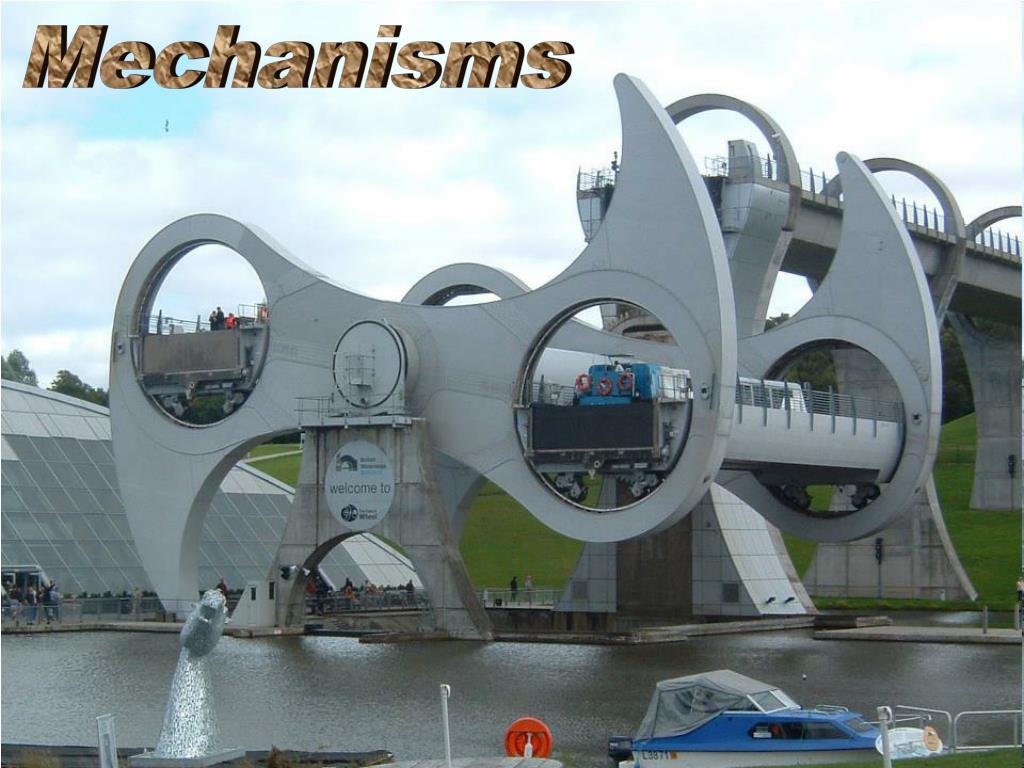
Mechanisms. The Mechanisms. All mechanisms have some things in common: They involve some kind of motion . They involve some kind of force . They make a job easier to do. They need some kind of input to make them work. They produce some kind of output. The Levers.
Mechanisms - slide 1
01 / 17Mechanisms
1 / 17

Télécharger la présentation

Mechanisms
Une image / un lien ci-dessous est fourni (tel quel) pour télécharger la présentation

Politique de téléchargement : le contenu du site vous est fourni TEL QUEL pour votre information et votre usage personnel ; il ne peut être vendu, concédé sous licence ni partagé sur d’autres sites sans l’accord de son auteur.Le contenu vous est fourni TEL QUEL, pour votre information et votre usage personnel uniquement. Téléchargez la présentation en cliquant sur ce lien. Lors du téléchargement, si vous ne parvenez pas à télécharger une présentation, l’éditeur a peut-être supprimé le fichier de son serveur.Pendant le téléchargement, si vous ne parvenez pas à obtenir une présentation, le fichier a peut-être été supprimé par l’éditeur.

F I N

Plus de contenu associé

Transcription de la présentation
  1. Mechanisms

  2. The Mechanisms • All mechanisms have some things in common: • They involve some kind of motion. • They involve some kind of force. • They make a job easier to do. • They need some kind of input to make them work. • They produce some kind of output

  3. The Levers It´s probably the first machine to be used by humans. It´s a simple machine, because you only need a stick (bar, rigid beam)

  4. The Levers The Lever is a bar with 3 components: LOAD FULCRUM EFFORT

  5. The Levers. Types of levers • There are three types of levers. See what element is in the middle: effort, fulcrum or load. • Class 1. • The fulcrum is in the middle • Class 2. • The load is in the middle • Class 3. • The effort is in the middle

  6. Law of the Lever The Levers. Law of the Lever Archimedes’ Law of the Lever W1 is the value of effort. d1 is the distance between effort and fulcrum. W2 is the value of load. d2 is the distance between load and fulcrum.

  7. The Levers Archimedes of Syracuse (c. 287 BC – c. 212 BC) “Give me a place to stand on, and I will move the earth.”

  8. The Pulley

  9. The Pulley • There are 2 kinds of pulley: • No mechanical advantage: • single pulley • With mechanical advantage: • system pulley

  10. The Single Pulley • To make the job of lifting large weights easier. • You can’t lift more weight than your own weight. (Limit, Maximun) pulley rope Effort Load

  11. The System Pulley Advantage 2:1 • To make the job of lifting large weights easier. • The effort is less than the charge: this is the mechanical advantage. Advantage 4:1

  12. The End

  13. The basic kinds of motion. Rotary, going round and round

  14. The basic kinds of motion. Oscillating, swinging backwards and forwards

  15. The basic kinds of motion. Linear, in a straight line

  16. Return The basic kinds of motion. Reciprocating, backwards and forwards, in a straight line

  17. The End