Download
1 / 6
60 likes | 182 Vues
This article explores the crucial factors influencing American voters' decisions, including party identification, candidate evaluation, and policy voting. It explains how these elements intertwine to shape electoral outcomes. Key theories such as the Mandate Theory and Policy Voting are examined, highlighting the importance of voters' preferences and candidate positions. Additionally, the article addresses historical changes in party allegiance and the impact of media on voters’ perceptions. Understanding these dynamics is vital for grasping contemporary electoral behavior in the United States.

E N D
How American’s Vote: Explaining Citizens’ Decisions By Ha Mai, Donald White, Katelyn Escalante, Emily Sharp, Maddy Whitlock, Gabby Andrade, Blaize Condon, Oshada Silva
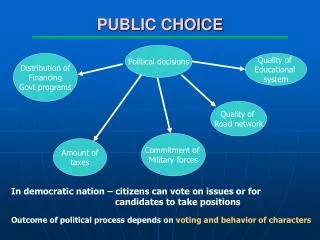
Citizens’ Decisions • Three Major Elements of Voter decisions: • Voters’ party identification • Voters’ evaluation of the candidates • Match between voters’ policy positions and those of the candidates and parties “policy voting” • Mandate Theory of elections – Idea that the winning candidate has a mandate from the people to carry out his or her platforms and politics. • Policy Voting – Electoral choices that are made on the basis of the voters’ policy preferences and on the basis of where the candidates stand on policy issues.
Party Identification • Crucial for many voters because they provide a regular perspective through which voters can view the political world. • Parties tend to rely on groups that lean heavily in their favor to form their basic coalition. • With the emergence of television and candidate-centered politics, the parties’ hold on voters eroded substantially during the 1960s and 1970s and then stabilized at a new and lower level. • Young people are particularly likely to be up for grabs and open to the possibility of voting for candidates who are neither Democratic nor Republican.
Candidate Evaluations: How Americans See The Candidates • All candidates try to present a favorable personal image. • Consultants need to know what sort of candidate qualities voters are most attuned to. • In 2000, a quality that helped George W. Bush greatly was that he was rated fairly positively on integrity.
Policy Voting • Four conditions for policy voting to take place • Voters must clearly understand their own positions on policy • Voters must know policies of candidates • Voters must see policy differences between candidates • Voters must actually vote for a candidate that aligns with their policies • Obstacles to policy voting • Many candidates purposely cloud position on controversial issues • Media focuses on “horse race” not positions of candidates • Policy voting today • In 1960’s a candidate could win an election through party bosses • Today candidates often take clear stances in order to gain support from issue-oriented people
Stolen From: • Government in America • (AP GOV BOOK) • GG