Exploring the Silk Road: The Ancient Trade Route That Shaped Civilizations
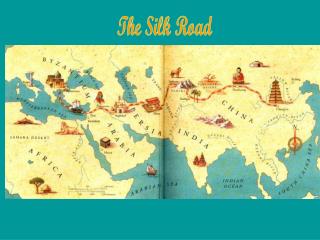
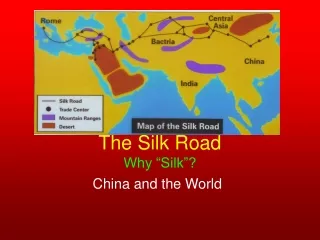
The Silk Road was a network of trade routes that facilitated the exchange of goods, ideas, and cultures across Asia and Europe for nearly 6,000 years. Named for the lucrative silk trade during the Han Dynasty, it connected diverse civilizations, including China, India, Persia, and the Mediterranean. This ancient highway allowed for the movement of silk, spices, knowledge, religions, and technologies. People migrated and traded along the route, employing animals and transport methods to exchange a wide variety of goods, laying the foundation for modern civilizations.

Exploring the Silk Road: The Ancient Trade Route That Shaped Civilizations
E N D
Presentation Transcript
Introduction ancient highways • 1) The trade routes were the ________________________________________ of the ancient world! • 2) New _____________________, ______________________ beliefs, artistic ________________, foreign ________________________, and social _______________________, as well as goods and ______________________________ materials. • 3) ALL of these things were transmitted by people ___________________ from one place to another to conduct ________________________. • 4) People ___________________________, used __________________ ,(camels, oxen, etc) _________________ and _______________________ to transport their goods to trade. ideas religious styles languages cultures and customs natural resources migrating trade walked animals carts boats
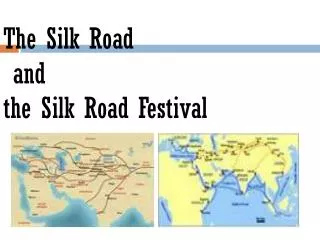
Major Trade Route = The Silk Road silk • 1) It gets its name from the lucrativeChinese ____________ trade, which began during the ____________ Dynasty. • 2) From Ancient ________________________, Ancient____________________, Ancient ______________, the Persian Empire and Mediterranean countries for almost ___________________ years. • 3) The Silk Road were important paths for cultural, commercial and technological exchange between _________________, _________________________, ________________________ (such as _____________,) __________________________, _____________________, ________________________and urban dwellers. Han China India Europe 6,000 E. Countries W. Countries cities different civilizations Mecca people Country/ rural
5,000 • 4) Extending ______________ miles, the routes enabled people to transport goods, slaves and luxuries such as silk, satin,hemp and other fine fabrics, musk, other perfumes, spices, medicines, jewels, glassware and even rhubarb. • 5) It also served as a highway for the spread of knowledge, ideas, ____________________, ______________________, _____________________ and ________________________ between Ancient China, Ancient India, the Ancient Middle East and the Mediterranean. religions technology goods disease
6) Trade on the Silk Road was a significant factor in the _____________________ of the great _____________________ of India, China, Persia (Ancient Iran,) Rome, Arabia and Egypt, and in several respects helped lay the foundations for the __________________ world. GROWTH civilizations modern
7) Although the term the Silk Road implies a continuous journey, very few who traveled the route took it from end to end. For the most part, goods were transported by a series of _____________ on varying routes and were traded in the bustling markets of the oasis towns. trade posts