Download
1 / 15
150 likes | 263 Vues
Dive into the fascinating world of light, its properties, and forms of energy. Discover how light travels, reflects, refracts, and its sources. Explore the colors of light and how it interacts with different mediums. Engage in hands-on experiments to understand light's behavior.

E N D
Big Idea 10: Forms of Energy Light and Its Properties Grade 3 Benchmarks • SC.3.P.10.3 - Demonstrate that light travels in a straight line until it strikes an object or travels from one medium to another. • SC.3.P.10.4 - Demonstrate that light can be reflected, refracted, and absorbed. • SC.3.P.11.1 - Investigate, observe, and explain that things that give off light often also give off heat. • SC.3.P.11.2 - Investigate, observe, and explain that heat is produced when one object rubs against another, such as rubbing one's hands together. • SC.3.E.6.1 - Demonstrate that radiant energy from the sun can heat objects and when the sun is not present, heat may be lost.
Light Resources • AIMS Gr. 3 Physical Science: Energy Match-up p. 151 Light Essentials p. 175 Light Rays Slow Down p. 205 Just Passing Through p. 183
Discovery Light Resources • Exploration: Light Energy • Reading Passage: Seeing in the Dark • Video: Light: A Visible Form of Energy • Exploration: Reflection • Video: Light Reflection: Dependent on Surface • Video: Light Sources and Observations Exploration: Refraction • Video: Refraction • Video: The Visible Spectrum
What is light? • Light is something that allows us to see objects. • Light is a form of energy. • Light is produced by the vibrations of electrically charged particles.
Sources of Light Sun Ceiling Lights Light bulbs/lamps Flashlight Candle flame Produced By Nuclear reactions Electricity Electricity Chemical reactions & Electricity Chemical energy Where Does Light Come From?
Properties of Light • Light travels in a straight path. • Light doesn’t travel through all objects. These are defined as opaque. • Light can be absorbed and changed to heat.
Properties of Light Continued • Light bounces off or is reflected from some kinds of opaque objects. • Light travels in waves. Angles of Reflection
Light doesn’t pass through – opaque dull dark absorbs light Light doesn’t pass through – opaque shiny smooth reflects light Compare and ContrastCardboard VS A Mirror
Properties of Light • Some objects let all light pass through them are known as: transparent • Some objects let some light pass through them are known as: translucent
Bending Light LabWrite down responses on your note page. • Problem: What does light do when it travels from one medium or state of matter (air) through another medium (water)? • Hypothesis: • Test and Observe: Follow steps from the lab sheet. • Conclusion:
Light Changes Direction • Light bends or refracts as it passes from one medium (form of matter: solid, liquid or gas) to another. • Refraction of Light Virtual Tutorial
What Color is Light?Write down responses on your note page. • Problem: What happens when we shine a flashlight on a CD? • Hypothesis: • Test and Observe: • Conclusion:
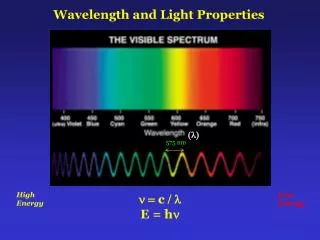
More on Bending Light White light includes all the colors of the rainbow - ROY G BIV. How a Prism Works
TAG Reflections • Tell a fact you learned about light. • Ask a question about something you don’t understand about light. • Give another idea that was addressed in our study of energy.