
280 likes | 400 Vues
This chapter delves into the fascinating world of protists, the first eukaryotes on Earth. Exploring their origins through the endosymbiosis theory, it explains how protists evolved complex organelles like mitochondria and chloroplasts. The chapter classifies protists into three main groups: animal-like (heterotrophs), plant-like (autotrophs), and fungus-like (saprotrophs), detailing their nutritional methods, reproduction, and examples. It also highlights the ecological roles of protists and their impact on human health, illustrating their significance with diseases such as malaria and amoebic dysentery.
E N D
Protists Chapter 19 19.1 Introduction to Protists Endosymbiosis • Theory believed to explain origin of eukaryotes and complex organelles like mitochondria & chloroplast • Large prokaryotes engulfed a smaller prokaryote and lived symbiotically • Eventually evolved into a single organism
Protists Chapter 19 19.1 Introduction to Protists Protists • All protists are eukaryotes. • Some reproduce asexually by mitosis while others exchange genetic material. • Most are single celled • First Eukaryotes on Earth • Must have moisture
Protists Chapter 19 19.1 Introduction to Protists Classifying Protists • Some scientists classify protists by their methods of obtaining nutrition. • Animal-like protists- Heterotroph • Plantlike protists- Autotroph • Funguslikeprotists-Saprotroph
Animal-like protists • Heterotrophs • Single-celled • Eat algea, bacteria or other protists • “protozoans” = “pre” animals • 4 phyla (groups) based on mode of movement
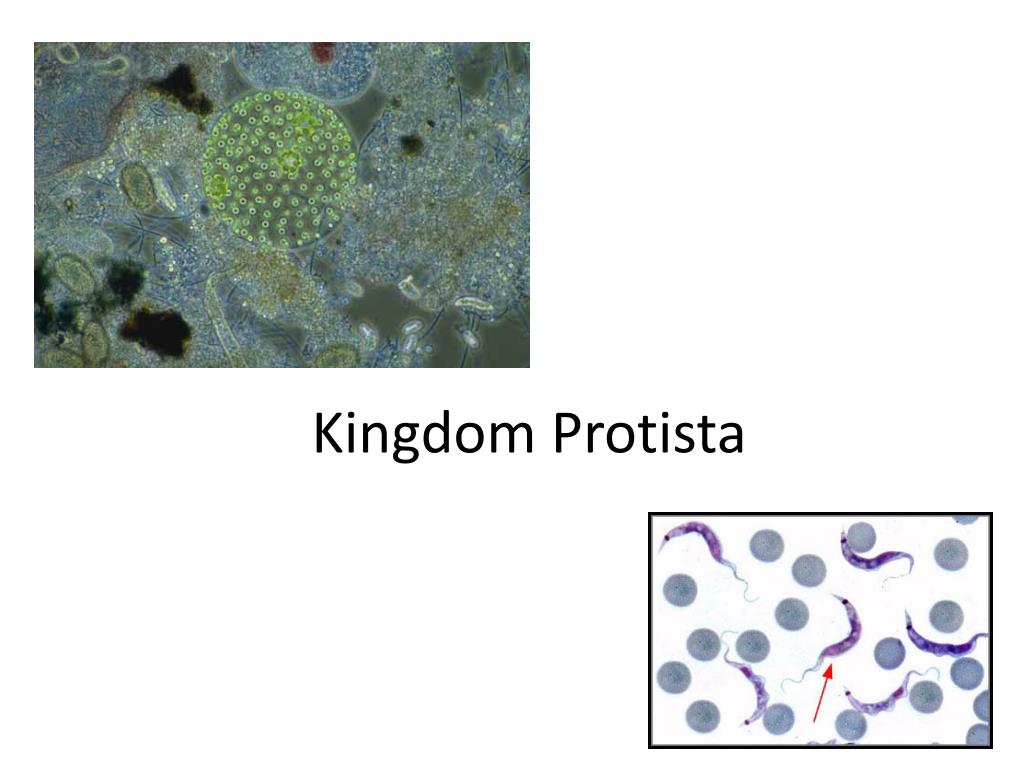
Phylum Zoomastigina - flagellates Trypanasoma: Giardia: Causes African sleeping sickness Causes intestinal infections
More Zoomastigina – Trichonympha – digests cellulose in termites
Phylum Sarcodina • Move and feed through use of pseudopods • Pseudopod – temporary projection of the cytoplasm • i.e. Amoebas • When feeding, they surround food and bring into cell in the form of a food vacuole by endocytosis
Phylum Ciliophora • Use cilia for feeding and movement • Cilia: hair-like projections that flow back and forth like ores • Example: Paramecium • Contain macro (working copy) and micronucleus (reserve copy of genetic info) • Contactile vacuole removes excess water • Reproduce by conjugation or binary fission
Ciliophora • Stentor • Largest known protozoan
Phylum Apicomplexa • Parasites • Move through blood of host organisms • Reproduce through spores • Ex: Plasmodium causes malaria. Malaria sporozoite
Protozoa Structures • Pellicle – A rigid, but flexible structure of microtubules that underlies the plasma membrane of many protozoans.
Trichocysts – Some pellicular structures are used for protection. These “threads” cover the body of the protozoan.
Protists and Disease • Malaria – effects 300-500 million people • Caused by the sporozoan Plasmodium carried by mosquitoe • African sleeping sickness • Caused by zooflagellateTrypanosoma • Spread by the bite of the Tsetse fly • Amoebic dysentery • Caused by amoeba in contaminated water • Giardia • Intestinal infection; ingested from infected waters
Plant-like ProtistsAKA: Algae • Autotrophs • phytoplankton • Contain chlorophyll and other pigments • Produce 70% of earth’s oxygen • 6 phyla • Classified by pigment and structure
Algae • Green • Brown • Red • Dinoflagellates • Diatom • Euglenoid
Phylum Chlorophyta – Green Algae • Contain chlorophyll as main pigment
Phylum Phaeophyta – Brown algae • Contain brown photosynthetic pigment • Include Kelp
Phylum Rodophyta – red algae • Contain red photosynthetic pigments • Carrageenan used in ice cream and other yummy foods
Phylum Pyrrophyta - Dinoflagellates • Two flagella around “equator” to spin • One flagellum on end to propel forward
dinoflagellate Cause red tides
Phylum Bacillariophyta - Diatoms • Pill-box shape • Hard outer sheel • You brush your teeth with these
Diatoms • You brush your teeth with these
Phylum Euglenozoa (Euglenoids) • Swim with flagella • Live in lakes and streams • Can also be heterotrophs! • Use eye-spot to detect light • Can reproduce asexually through binary fission • Example: euglena
Fungus-like Protists • Feed on decaying matter and absorb nutrients- saprophyte • Cell wall with cellulose • Slime molds and Water molds