Understanding Aristotle's Tragic Hero: Definition, Characteristics, and Impact in Drama
130 likes | 259 Vues
Aristotle defined tragedy as a serious drama showcasing the conflict between a heroic protagonist and greater forces, culminating in a sorrowful conclusion. The tragic hero is an admirable figure, endowed with greatness but flawed, whose downfall evokes pity and fear in the audience. Key elements include the tragic flaw, reversal of fortune, catharsis, and societal restoration. A tragic hero’s journey highlights human suffering and the bittersweet nature of existence, leaving an indelible impact on the viewer, culminating in a profound emotional experience.


Understanding Aristotle's Tragic Hero: Definition, Characteristics, and Impact in Drama
E N D
Presentation Transcript
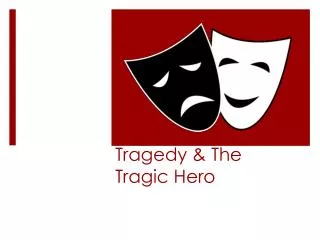
Tragedy • Aristotle first defined tragedy in his book Poetics written in about 330 BC: “an imitation of an action that is serious, complete, and of a certain magnitude; in language embellished with each kind of artistic ornament, the several kinds being found in separate parts of the play; in the form of action, not of narrative; through pity and fear affecting the proper purgation of these emotions”
OR in Plain English… • Tragedy is any serious and dignified drama that describes a conflict between the hero (protagonist) and a superior force (destiny, chance, society, god) and reaches a sorrowful conclusion that arouses pity or fear in the audience.
Tragedy • Tragedy deals with life’s bitterness and defeat • Involved the fall of a great man from glory to utter defeat, disgrace, and death (king, national leader, brave warrior, hero) • The suffering in these plays is largely physical and psychological
What defines a Shakespearean Tragedy • A Tragic Hero • The Tragic Flaw • Reversal of Fortune • Catharsis • Restoration of Social Order
The Tragic Hero • Someone we look up to – someone superior • Nearly perfect and we identify with him/her
Tragic Flaw • The hero is nearly perfect • The hero has one flaw or weakness
Reversal of Fortune • The fatal flaw brings the hero down from his elevated state • Renaissance audiences were familiar with the ‘wheel of fortune’ – what goes up must come down
Catharsis • The audience’s purging of emotions through pity and fear
Restoration of Social Order • The play cannot end until society is, once again, at peace.
The Tragic Hero • Tragic hero must be a person who is great and admirable in both his abilities and opportunities • He is a person so highly placed in society that his actions involve the well-being of all its members.
Characteristics the Tragic Hero • Capacity for suffering • Suffers because he believes in what he is doing • Justifies his actions even if he’s not sure if they are just • Strength to endure pain inflicted • No fear of death • A sense of commitment • Once the forces of the conflict are set in motion, he is committed • Vigorous protest • Doesn’t accept fate meekly • Cries out against the gods, his own weakness, the world, and the forces that placed him in jeopardy.
Characteristics the Tragic Hero • Always capable of heroic greatness • Has a tragic flaw – an interest or habit of mind that is all-absorbing and predisposes him/her in one particular direction. • The hero is placed in circumstances in which his/her tragic flaw is fatal. It eventually leads to disaster. • The hero does not fall (die) alone. • The hero’s fall makes us conscious of a feeling of waste. (What “might-have-been”) • The hero gains our sympathy and admiration, pity, awe, and terror. (catharsis)