Download
1 / 20
210 likes | 327 Vues
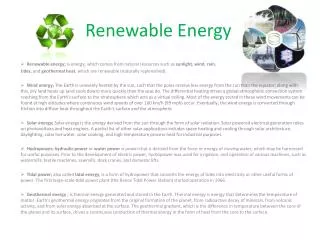
This presentation by Tim Weis, Alberta Regional Director and Professional Engineer, explores the critical role of renewable energy in combating pollution and climate change. It highlights the harmful impacts of greenhouse gas emissions and air pollutants from traditional electricity generation methods, emphasizing the cost-effectiveness and efficiency of wind energy. By showcasing successful cases like Denmark's ambitious renewable energy goals, the presentation underscores the urgency and feasibility of transitioning to renewable sources to improve air quality and public health while addressing global climate challenges.

E N D
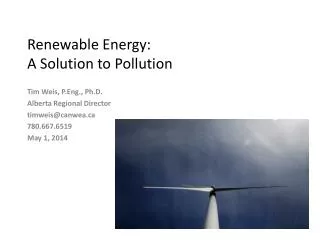
Renewable Energy: A Solution to Pollution Tim Weis, P.Eng., Ph.D. Alberta Regional Director timweis@canwea.ca 780.667.6519 May 1, 2014
About Tim • Alberta Regional Director • Professional Engineer • M.Sc. research on ice adhesion to wind turbine blades in subarctic • Ph.D. research on off-grid renewable energy
Climate change “….could be the biggest global health threat of the 21st century” The Lancet
Canada’s greenhouse gas emissions Source: Environment Canada, National GHG Inventory Report 2009
PM formation - Edmonton Source: Clean Air Strategic Alliance. Fine particulate matter in the capital region (2010)
Costs of air pollution from electricity generation • USA - National Research Council at request of 2005 Energy Policy Act • Effects of air pollution on human health, grain crop and timber yields, building materials, recreation, and visibility of outdoor vistas • Average damages: 3.2 ¢/kWh (2008) • Greenstone and Looney: • 3.4 ¢/kWh for non-climate damage (2010)
So why wind? • Efficiency • Electrify • Renewables • Heat + Power 9
Wind is a cost effective option New Electricity Supply Costs in Alberta Source: Solas Energy Consulting
Integrating Renewables (NREL study) Net: CO2 ↓ 31.5% Net: NOx ↓ 19.5% Net: SO2 ↓ 18.5%
Denmark update • 52% wind by 2020 • 100% renewable electricity by 2035 • 100% renewable energy by 2050 • 171 Parliamentarians voted for 8 against. • “The conclusion being it has a cost to make a green transformation, but it also has a cost not to do it. I think this will work out to be the best insurance Denmark has ever (bought).” • Energy Minister Lidegaard
Ross Island Wind/Diesel • 60Hz • 60Hz • 50Hz Courtesy of Powercorp, Australia
Conclusion • Renewables can significantly reduce air pollution • We have working examples of renewables being deployed quickly and at high levels • Challenges remain – policy drives energy decision
Thanks Tim Weis timweis@canwea.ca 780.667.6519