Download
1 / 9
110 likes | 246 Vues
Hydroelectricity harnesses the power of flowing water to generate electricity, presenting both advantages and challenges. Key downsides include the high costs of dam construction and maintenance, ecological impacts on fish migration, and greenhouse gas emissions from decaying organic material. Moreover, large dams can disrupt local ecosystems, flood valleys, and threaten communities. Despite these drawbacks, hydroelectric power is a significant energy source in many countries. This overview explores how hydroelectricity works, its implications, and the efforts to balance energy needs with environmental conservation.

E N D
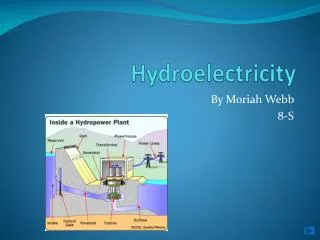
Hydroelectricity By Moriah Webb 8-S
HydroelectricityWater producing electricity. • Cons • Important Cons • #1 • #2 • #3 • Other Cons • What countries produce it? • How does it work?
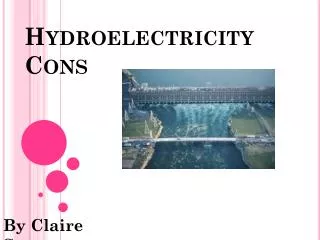
Con #1 • Dams are expensive to build, and can take many years to build. • Ex: Mansfield Dam, Austin, Texas • Took five years to build • Cost $30,000,00o • Cost $15,000 to maintain each year
Con #2 • Fish cannot swim upstream for spawning, or go downstream without the chance they will be killed by the turbines.
Con #3 • Plant decay washed downstream clogs at major dams producing as many greenhouse gasses as more conventional methods of producing electricity.
Other Cons • Hydroelectric power production requires flooding of entire valleys and scenic areas. • Disrupts natural seasonal changes in the river, and ecosystems can be destroyed. • Stop flooding that help to clean out the silt in rivers, causing turbines to flood to clog.
Other Cons • Dams can break in a massive flash flood. • Flooding takes away scenic and agricultural areas • Can take away many animal homes and even take peoples homes away.