Decoding Cellular Respiration: Energy Production from Glucose
Cellular respiration is the process of converting food into usable energy (ATP) through aerobic and anaerobic pathways. Aerobic respiration involves glycolysis, Krebs Cycle, and oxidative phosphorylation, while anaerobic respiration relies on glycolysis only. In aerobic respiration, glucose is broken down to produce carbon dioxide, water, and a significant amount of ATP. Without oxygen, cells resort to fermentation to sustain glycolysis. Understanding these processes is key to comprehending how energy is generated in living organisms.

Decoding Cellular Respiration: Energy Production from Glucose
E N D
Presentation Transcript
Cellular Respiration In a Nutshell
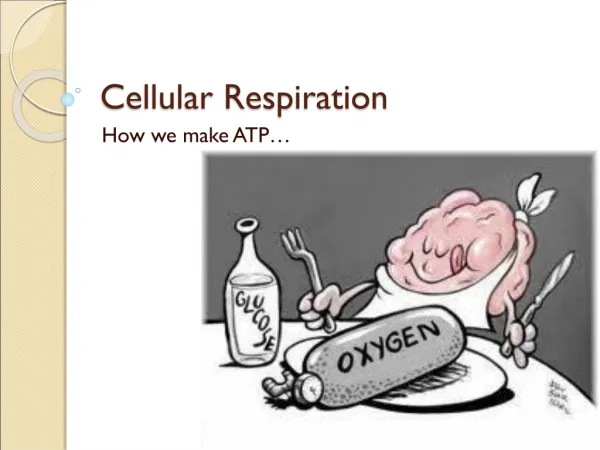
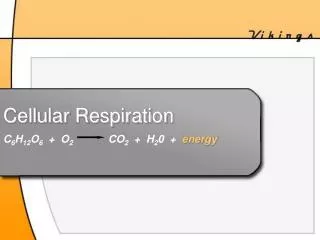
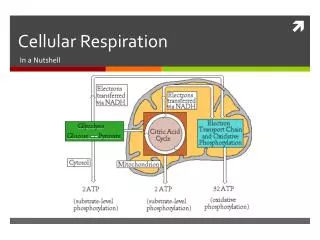
Overall • Food ATP Glucose + O2 +ADP + P CO2 + H2O + ATP
2 Types Aerobic Anaerobic Without oxygen Produces a little ATP • With oxygen • Produces a lot of ATP
Aerobic Respiration • Glycolysis • Krebs Cycle • Oxidative Phosphorylation
Glycolysis • Occurs in all cells ever studied. • No oxygen required, no mitochondria • Probably evolved in the earliest forms of life
Glycolysis • Sugar is split into pyruvate • 2 ATP are made • Some electrons passed to NAD+ to form NADH
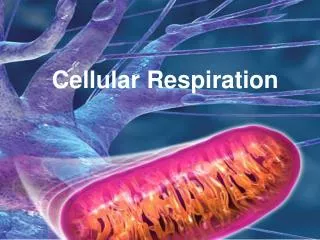
Krebs Cycle • If oxygen present, the pyruvate heads into the Mitochondria • Series of enzyme-catalyzed reactions
Krebs Cycle • Rest of sugar broken into Carbon Dioxide • 2 more ATP made • Some electrons donated to NAD+ to form NADH (and another electron carrier)
So Far • Some ATP made (4), but we have a lot of electron carriers (NADH and others) which possess energy
Oxidative Phosphorylation • LOTS of ATP made (about 34) as electrons are passed from NADH through a series of proteins to O2 to form water
With No Oxygen • No Oxidative phosphorylation • No Krebs Cycle • Only source of ATP is glycolysis No O2, No problem Well for like a minute
BUT… • Glycolysis needs NAD+, and with no Ox. Phos the cell runs out of NAD+ • So fermentation must occur to remake NAD+ and allow glycolysis to continue
Review • Aerobic
Review • Anerobic