Download

1 / 15
150 likes | 291 Vues
The immune system is the body's defense mechanism against diseases, recognizing and destroying foreign invaders like bacteria and viruses. Key organs include the tonsils, thymus, lymph nodes, spleen, and bone marrow, all contributing to the production and activation of white blood cells. The integumentary system, primarily the skin, regulates body temperature, protects against germs, and senses environmental changes. It consists of specialized cells in the epidermis and dermis, playing a vital role in overall health and protection.

E N D
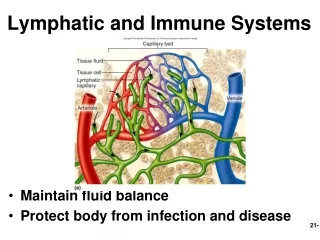
Functions • The immune system defends against disease. • It recognizes, attacks, and destroys foreign invaders such as bacteria and viruses.
Organs • Tonsils – lymph nodes in the throat • Thymus – T-Cells made in the bone are matured here. • Lymph Nodes – small bean-shaped masses • Spleen – filters blood for foreign particles carried by the white blood cells. • Bone Marrow – makes white blood cells.
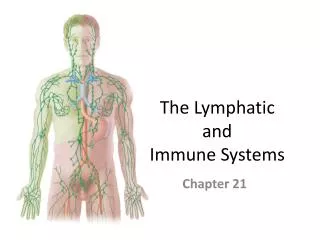
Immune System Tonsils Thymus Lymph node Spleen Lymphatic vessel Bone marrow
Tissues • White Blood Cells – blood cells whose main function is to defend the body against disease. • Lymphocytes – white blood cells. • T-Cells – lymphocytes made in the bone marrow and mature in the Thymus gland whose function is to attack cells that have been invaded by viruses. • B-Cells – lymphocytes made in the bone marrow that make antibodies to attack viruses in the blood.
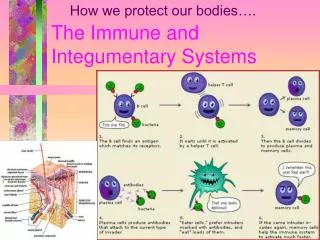
Recognition – White Blood Cells identify the antigens that do not belong in the body. (viruses & bacteria) • Activation – White Blood Cells attach to the foreign cells or viruses and destroy them. • Disposal – foreign cells and viruses are filtered out of the blood in the spleen.
Functions • Regulates body temperature • Keeps germs out of the body • Senses temperature, texture, pressure, and pain. • Releases oil, waste and salt in sweat. • Shields body from UV rays • Produces vitamin D from UV rays. • Provides waterproof covering that prevents dehydration.
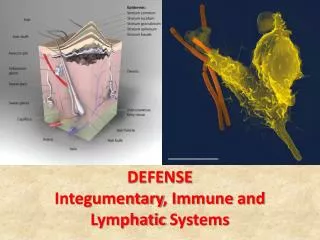
Specialized Cells • Epidermis – outer layer of skin mostly made up of dead cells. • Dermis – functional layer of skin below the epidermis.
Epidermis • Keratin – strong flexible protein that make skin tough and waterproof. • Melanin – pigment that gives skin its color and shields the body from UV rays.
Dermis • Contains – blood vessels, nerves, sweat glands, oil glands, and hair follicles. • Collagen – protein fibers that make skin flexible.