Download
1 / 9
90 likes | 211 Vues
This overview explores the transformative potential of wind and biomass energy. Wind energy, characterized by its cost-effectiveness and easy installation, has seen a fourfold increase in global use from 1985 to 2000. Wind farms offer large arrays of turbines, enabling off-grid living and underutilized resources for hydrogen production. Biomass conversion utilizes organic materials like agricultural waste to generate energy, producing clean-burning methane and ethanol. These renewable sources are vital for reducing pollution and combating climate change.

E N D
Convection currents • Warm air ________, while cool air _______. • The Earth’s surface heats unevenly causing air masses to _________ in the atmosphere.
Wind turbines • Cost effective • Easy to install • Worldwide use quadrupled 1985-2000
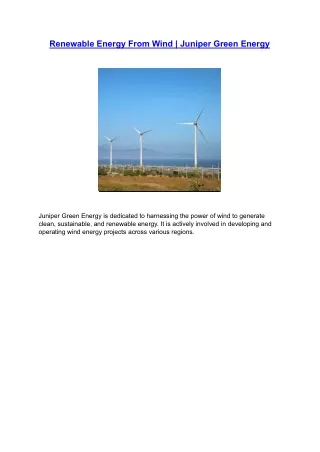
Wind Farms • Large arrays of turbines • Used on farms and ranches • Allows some people to live “off the grid” • Underdeveloped resource – could be used to turn water into hydrogen Tehachapi wind farm
Biomass conversion • Organic materials such as wood, agricultural waste and dung can be used directly or can be converted to another energy source
Methane • Bacterial decomposition of organic waste produces methane • Clean burning – produces Carbon dioxide and water • Methane is a powerful greenhouse gas
Alcohol • Ethanol can be produced by fermenting fruit or agricultural waste • Corn • Gasohol produces less pollution than gas alone


![[PDF] DOWNLOAD Biomass to Renewable Energy Processes](https://cdn7.slideserve.com/12657097/pdf-download-biomass-to-renewable-energy-dt.jpg)