Understanding Metallic and Ionic Bonds: Properties and Examples of Metals and Salts
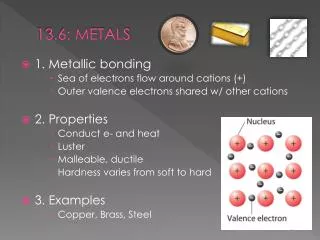
This overview explores the two main types of bonding in solids: metallic and ionic. Metallic bonding features a 'sea of electrons' that flow around positively charged cations, allowing metals to conduct electricity and heat, exhibit luster, and be malleable or ductile. Common examples include copper and brass. In contrast, ionic solids are formed through electrostatic interactions between cations and anions, leading to hard, brittle structures with high melting points. Sodium chloride (NaCl) and magnesium oxide (MgO) are key examples of ionic compounds.

Understanding Metallic and Ionic Bonds: Properties and Examples of Metals and Salts
E N D
Presentation Transcript
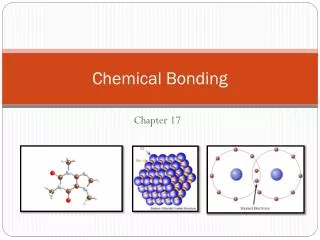
13.6: METALS • 1. Metallic bonding • Sea of electrons flow around cations (+) • Outer valence electrons shared w/ other cations • 2. Properties • Conduct e- and heat • Luster • Malleable, ductile • Hardness varies from soft to hard • 3. Examples • Copper, Brass, Steel
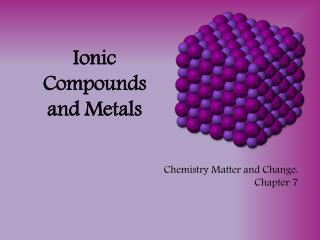
13.7: IONIC SOLIDS • 1. IMFs • electrostatic interactions: cations (+) & anions (-) • Repeating Structure (lattice) • 2. Properties • Hard, brittle • High melting point • Soluble in H2O, • Conduct electricity as liquids • 3. Examples • NaCl, Ca(OH) 2, MgO