Ergonomics and Your Back: Preventing Musculoskeletal Injuries in the Workplace
100 likes | 252 Vues
Understanding ergonomics is crucial for preventing musculoskeletal injuries, particularly back injuries, at work. This guide covers essential anatomy, including bones, discs, ligaments, muscles, tendons, and nerves, to highlight how they function together. Key ergonomic risk factors such as posture, repetition, force, and environmental aspects are discussed. Learn the major risks associated with back injury, good posture techniques, and five steps to achieve it. Regular position changes and stretching can significantly reduce injury risk.


Ergonomics and Your Back: Preventing Musculoskeletal Injuries in the Workplace
E N D
Presentation Transcript
Ergonomics and Your Back Preventing Musculo-skeletal Injuries in the Workplace Ongwanada OHS
Quick Anatomy Lesson • BONES (solid matter > gives structure) • DISCS (gel-like substance > shock absorbers) • LIGAMENTS (tough fibrous matter > connect & hold bones) • MUSCLES & TENDONS (softer tissue > for movement) • NERVES (sensorytissue > send messages …e.g.pain) Ongwanada OHS
Ergonomic Risk Factors 1. Posture 2. Repetition 3. Force 4. Environmental 5. Psychophysical Ongwanada OHS
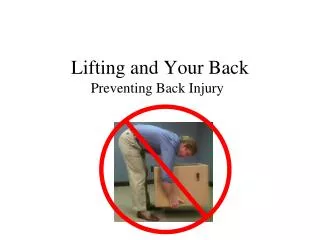
Major Risks for Back Injury • Poor posture & sitting • Poor physical conditioning • Personal stress, tension • Poor body mechanics • Examples: • - using your back as a crane • - lifting & twisting, reaching Ongwanada OHS
Good Posture • improves muscle tone & circulation • makes breathing easier • affects the way you look • takes the strain off the back Ongwanada OHS
Workstation Seated Posture Ongwanada OHS
Standing Work Posture Ongwanada OHS
Five Steps to Good Posture • Balance your weight evenly over area occupied by feet (base) • Tuck in buttocks to help straighten spine • Pull stomach in • Hold head high as though suspended from ceiling • Arms should be relaxed by your sides Ongwanada OHS
Prevention • Avoid prolonged awkward postures. • Change position/Stretch muscles hourly. • Maintain a regular exercise program. Ongwanada OHS