Private Pilot Certificate
Embarking on your journey to obtaining a Private Pilot Certificate? This comprehensive guide covers everything you need to know—from the privileges you gain, such as flying VFR and carrying passengers, to the necessary ground and air training requirements. You'll learn about the hours needed for solo flights, cross-country experience, and the checkride process. Additionally, we break down the costs associated with training and provide tips for a successful flying experience in busy Boston airspace. Get ready to take to the skies!

Private Pilot Certificate
E N D
Presentation Transcript
What You Can Do • Fly in VFR weather conditions • Fly at any time, day or night • Fly without an instructor approving your flightplan • Fly into/out of any civil U.S. Airport • Carry passengers • Passengers can pay up to their equal share of the flight costs
Requirements on the Ground • Third Class Medical Certificate • Required for your first solo • Get this early in your training or before you begin • Valid for 3 years • 70% or better on written exam • Take the exam as early as you can • Exam cannot be taken without an instructor’s write-off.
Requirements in the Air • At least 40 hours of flight time (50-70 average) • 20 hours with instructor • 3 hours cross country • One flight over 100nm start to finish • 3 hours night • 3 hours instrument • 10 hours solo • 5 hours cross country • One flight over 150nm with three landings
A Typical Lesson • 2 hour block • 1 hour of maneuvers/skills practice near airport • Steep turns • Slow flight/stalls • Instrument flying • Emergency procedures • ½ hour of pattern work • Different types of takeoffs/landings • ½ hour to park plane, debrief lesson • Other lessons may be ground school or longer flights (ex: cross country)
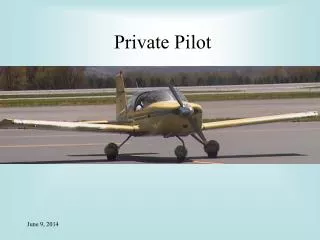
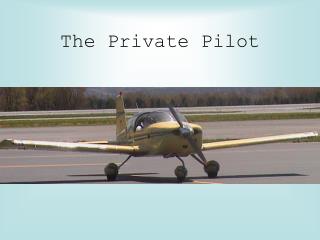
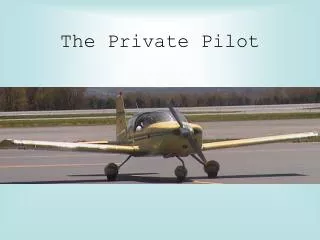
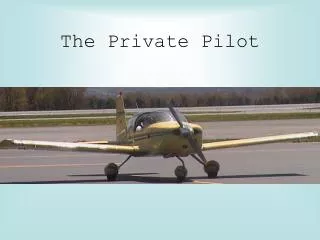
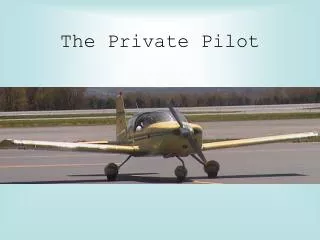
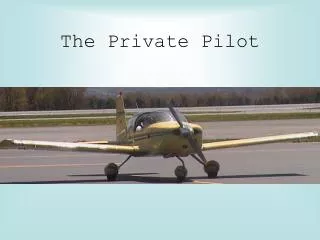
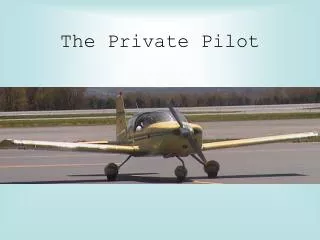
What You’ll Fly • 2 Seater: Piper Tomahawk, Cessna 150 • 4 Seater: Piper Warrior, Cessna 172
The Checkride • Two parts • Oral Exam cover flight planning, “what if” scenarios, aircraft systems • Flight Exam is just what it sounds like • Start a cross-country flight • Basic Flight Maneuvers • Pattern work • Must pass every part
Checkride Tips • Plan ahead • Do all of the flight planning (except for the weather) the day before the exam • Be professional from beginning to end • If you’re unsure of an instruction, ask • Take your time • Be calm • Your instructor signed you off; you’re prepared
Cost • 2-Seat Airplane ~$90/hr (60hr = $5400) • Instructor ~$50/hr (35hr = $1750) • Examiner ~$350 • Written Exam ~$80 • Supplies ~$400 • Total: $7980
Cost • My cost • 51 flight hours @ $85/hr ($4335) • 30.5 hours instruction @ $60/hr ($1830) • Checkride ($350) • Supplies (~$400) • Written Exam ($80) • Total: $6995
What You Should Buy • Headset • Review book/practice test • Charts, AFD • Log Book • Flight computer • Fuel tester • Gleim kit has most of the above
Training in Boston • Three main airports • Bedford • Can get very busy with jet and small aircraft traffic • Great practice talking with a tower • Lawrence • Beverly • Public Transportation • T runs to Bedford from Alewife (Red Line to #76)
Pros of Training in Boston • Busy airspace • Lots of communications practice • Lots of practice sharing airspace • Lots of airports for cross countries • Can train during the school year
Cons of Training in Boston • Busy airspace • Some flights may be delayed on the ground or in the traffic pattern • Expensive • Other locales will have less expensive aircraft
Suggestions • Keep a computer backup of your logbook • Ask lots of questions • Find a pilot friend to ask if you don’t want to ask your instructor • Prepare as much as possible before the lesson slot begins • Weather briefing • Flight Planning • Preflight (if plane is available)
More Suggestions • Armchair fly before and after each flight • Remember what you did well, and think about how to improve • If you’re tired or not feeling well, take a break • Don’t be afraid to cancel a lesson • Listen to liveatc.net • Get more familiar with ATC and airport procedures • Hear and critique yourself on the radio • Fly often • The more you fly, the less time it takes to get your license (calendar time and logged flight time)