IBM’s Quantum Leap in Computing
IBM has achieved a major milestone by running quantum algorithms on standard computer chips. This step brings quantum computing closer to real-world use and makes future systems more scalable and practical.

IBM’s Quantum Leap in Computing
E N D
Presentation Transcript
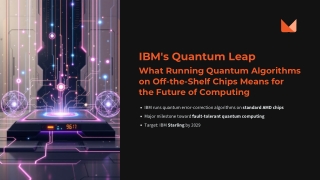
IBM's Quantum Leap What Running Quantum Algorithms on Off-the-Shelf Chips Means for the Future of Computing IBM runs quantum error-correction algorithms on standard AMD chips Major milestone toward fault-tolerant quantum computing Target: IBM Starling by 2029
Why This Matters Quantum computing promises breakthroughs in: AI & Optimization Climate & Scientific Modeling Drug Discovery Cryptography Biggest challenge: Quantum errors caused by unstable qubits
The Problem: Quantum Error Instability Qubits exist in superposition (0 & 1 simultaneously) Extremely sensitive to: Temperature fluctuations Electromagnetic noise Physical vibration Errors occur frequently, disrupting calculations
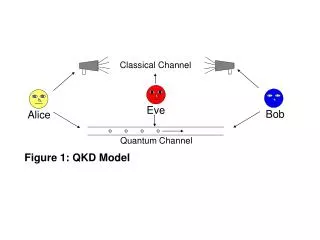
Error Correction: The Key to Useful Quantum Computing Quantum Error Correction (QEC) detects and fixes errors without collapsing qubit states Redundant encoding Classical decoding algorithms Essential for scalable and reliable quantum systems
IBM's Breakthrough IBM ran Relay-BP error-correction decoder on off-the- shelf AMD FPGA chips Algorithm ran 10× faster than required Eliminates need for expensive specialized hardware
Why Off-the-Shelf Chips Matter Advantage Impact Cost Efficiency Uses widely available chips, reduces R&D expense Scalability FPGA tech already used in global data centers Speed & Flexibility Reprogrammable for new quantum algorithms Quantum computing becomes industrially deployable, not just experimental
Quantum + Classical: A Hybrid Future Quantum computing depends on classical systems for: Control of qubits Decoding QEC algorithms Optimization via AI/ML Quantum computers will work with, not replace classical systems.
Implications for the Tech World Lower barrier to entry → more organizations can experiment Accelerated commercialization of quantum workloads Push for post-quantum cybersecurity Quantum-as-a-Service integration with cloud platforms
IBM's Path to 2029 IBM's Starling project: fault-tolerant quantum computer by 2029 Decoding bottleneck solved — hardware stability remains the next big challenge Experts agree: scalable qubit architecture is the decisive hurdle
Workfall Insight The future of computing is hybrid. Developers, engineers, and tech leaders must now prepare for a quantum- ready world, where: Cloud + AI + Quantum converge Software talent must understand classical-quantum interaction Early adoption will define the next generation of innovation Workfall empowers teams to build and scale advanced technology solutions — and hybrid quantum computing will soon be part of that frontier. contact@workfall.com www.workfall.com +1 415-234-2344