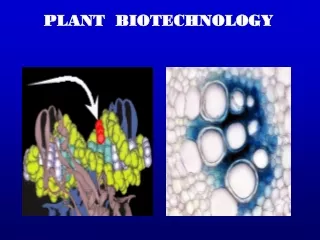
plant biotechnology
ABOUT BIOTECHNOLOGY IN PLANTS AND ENVIRONMENTS

plant biotechnology
E N D
Presentation Transcript
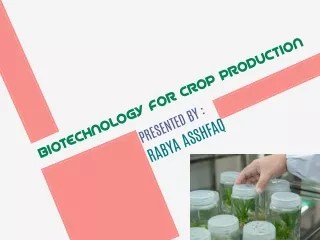
BIOTECHNOLOGY FOR CROP PRODUCTION PRESENTED BY : RABYA ASSHFAQ
LET’S DEFINE: PLANT BIOTECHNOLOGY: a rapidly expanding field within biotechnology that chiefly involves the introduction of foreign genes into economically important plant species, resulting in crop improvement and the production of novel products in plants
Timeline The genetic manipulation of plants has been going on since prehistoric times when early farmers began carefully selecting and maintaining seed from their best crop to plant for next season. Now genes from sexually incompatible plants, animals, bacteria and insects can be introduced into plants
Recent developments • Agricultural benefits • Vaccines • Pytoremediation
BENEFITS Small crops, big results: Arntzen estimates he could vaccinate all of China against Hepatitis B using 125 acres • No need for sterile injections or refrigerated vaccines • No need to worry about acquiring the disease from the vaccine: genetically engineered vaccines cannot cause the disease because the engineered bacteria cell or plant is just creating a protein that exists on the surface of a virus- not the whole virus
PHYTOREMEDIATION – THE USE OF PLANTS TO REMOVE POLLUTANTS FROM THE ENVIRONMENT AND RENDER THEM HARMLESS
PHYTOREMEDIATION Work on this began in the 1980s • Scientists noticed that some plants could take in toxic metals that would kill other plants • Scientist theorized that these plants could be used to clean contaminated land cheaply and more naturally
THE BASICS • Giant webs of roots act as a solar powered pump to withdraw, concentrate and transport essential elements and compounds from the soil and water • This also absorbs the contaminates • The pollutants are drawn up into the harvestable part of the plant • The plant is then harvested and disposed of • The land or aquifer will eventually become decontaminated
IT'S STUDY TIME Success is no accident. It is hard work. What can be taken in by the roots? The main thing about studying well is to first study smart.. Preparing for a test shouldn't involve staying up all night before an exam. Studying well requires preparation ahead of time. The trick to studying well is learning a few tricks as well as your own preferences. Studying depends on your commitment and what type of environment you strive in. Heavy metal concentrations of lead, uranium, and cadmium • Arsenic • Petroleum products • It can even be used to clean the urban city air Eat well, drink plenty of water Wake up early, meditate 20 mints exercise Stick to a schedule
ROOTS CAN CLEAN THE AIR YOU SAY? House plants foliage is capable of removing low levels of pollution • Plant roots, assisted by a carbon filter, are able to remove much higher concentration of pollution
They can remove: asbestos pesticides carbon dioxide carbon monoxide other gases chemicals from detergents, solvents, and cleaning fluids fibers released from clothing, furnishings, draperies, glass, carpets, and insulation fungi and bacteria tobacco smoke
OTHER BENEFITS PLANTS IN URBAN AREAS ABSORB THE EXTRA CARBON AND USE IT FOR PHOTOSYNTHESIS • LEAVES ALSO COLLECT DUST UNTIL IT IS WASHED OFF BY RAIN, BY ADDING MORE FOLIAGE DUST CAN BE REDUCED BY 75% • DURING PHOTOSYNTHESIS, TREE FOLIAGE ALSO REMOVES FROM THE ATMOSPHERE OTHER CHEMICALS, SUCH AS NITROGEN OXIDES, AIRBORNE AMMONIA, SOME SULFUR DIOXIDE, AND OZONE, THAT ARE PART OF THE SMOG AND GREENHOUSE EFFECT PROBLEMS
THANK YOU! ANY QUESTIONS