Download

1 / 19
0 likes | 3 Vues
On-page SEO is the process of optimizing individual web pages to rank higher and get more relevant traffic from search engines

E N D
ON PAGE SEARCH ENGINE OPTIMIZATION (SEO) By digital pundit
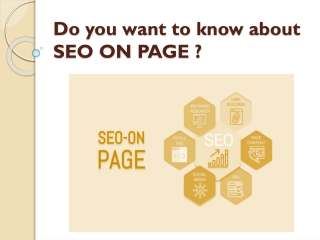
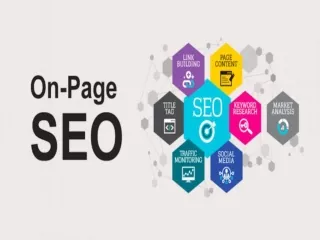
INDEX (CONTENTS) 1.Title 2.Description 3.H1 to h6 tags 4.Url optimization 5.Content optimization 6.Loading speed 7.Robot.txt 8.Sitemap.xml 9.Sitemap.html 10.Schema markup code 11.Anchor text
12. Image alt tag 13. 310 & 302 redirect 14. Responsive website design
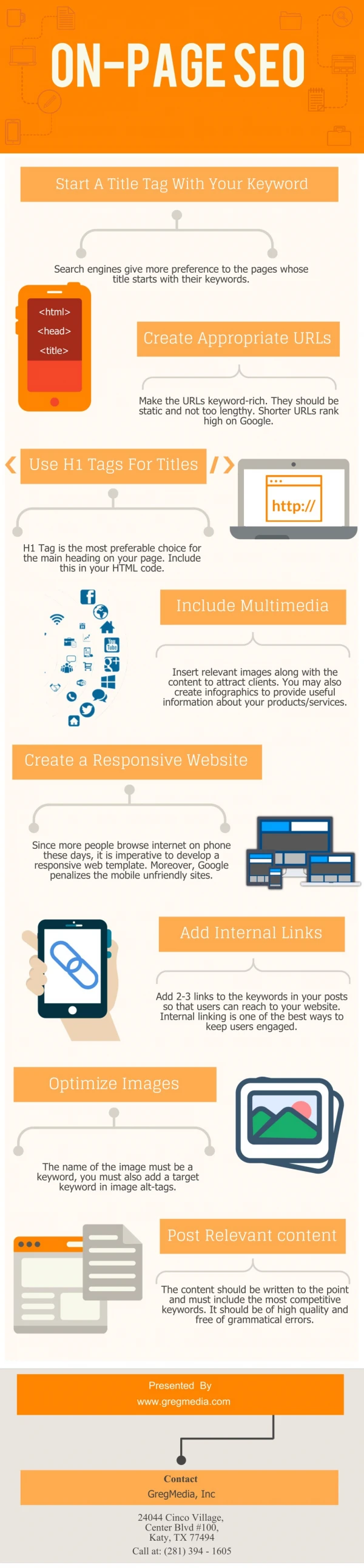
TITLE In SEO “Title” refer to the title tag and the html element that describe the content of the web page.
DESCRIPTION In SEO, the "description" is a short, HTML-based summary of a webpage's content called a description Key functions and importance Summarizes content: It provides a quick overview of what a user will find on a specific page Improves CTR: A compelling description acts as a mini-advertisement, convincing users to choose your page over others Influences user experience: It sets expectations for visitors, helping ensure they find what they're looking for, which improves their overall experience.
H1 to H6 TAGS H1 to H6 tags in HTML structure content hierarchy for SEO by indicating the importance of headings, with H1 being the most important main title and H6 the least important subheading What each tag is for <h1>: The main title for a page. There should only be one H1 per page. ● <h2>: Represents main sections or primary subtopics under the H1. ● <h3>: Used for subsections within H2 sections. ● <h4> to <h6>: Used for more granular divisions and sub-subsections. These are used less often than H2 and H3. ●
URL OPTIMIZATION URL optimization in SEO is the process of refining a web page's address to be more understandable for both users and search engines Key aspects of URL optimization ● Descriptive and relevant: URLs should clearly indicate the page's content. A good URL gives both users and search engines a hint of what to expect. Use keywords: Incorporate relevant keywords naturally into the URL, but avoid keyword stuffing. Place the main keyword as close to the beginning as possible. Keep it short: Aim for concise URLs to improve readability and make them easier to share. A length of under 60 characters is often recommended.
Content optimization Content optimization is the process of improving website content to increase its visibility in search engine results and better serve the target audience Key aspects of content optimization Keywords: Strategically incorporate relevant keywords that users search for, including semantic and long-tail ● keywords, into headings, body text, and metadata. Readability and structure: Make content easy to scan and understand by using clear headings (H1, H2, etc.), ● shorter paragraphs, active voice, and bullet points.
LOADING SPEED Loading speed is crucial for SEO as it is a ranking factor and directly impacts user experience faster pages leads to lower bounce rate higher engagement and better conversion while slower page can result in penalties for search engine and drive user to the competitors Key aspects of loading speed in SEO Ranking factor: Google considers pagespeed a ranking signal, particularly for mobile searches. Extremely slow pages are ● less likely to rank well. User experience (UX): A slow website provides a poor user experience, which increases bounce rates (the percentage of ● users who leave a site after viewing only one page). Google wants to provide users with fast, high-quality results. Conversion rates: Speed is directly linked to conversions. A site that loads slowly is more likely to lose visitors, leading to a ● decrease in sales and other desired actions. Crawl budget: Faster sites allow search engines to crawl more pages within a given crawl budget, which can positively ● affect a site's indexation and visibility.
Robot.txt A robots.txt file is a text file on a website that instructs search engine crawlers which pages or sections they should not crawl. It helps manage crawl budget by preventing bots from accessing non-essential pages, but it does not block indexing and is not a security measure How robots.txt works Location: It is located in the root directory of a website (e.g., example.com/robots.txt). Instructions: It contains rules that specify which parts of a site bots are allowed or disallowed to access. Crawl behavior: When a crawler like Googlebot visits a site, it first checks this file to see what it should avoid. Sitemap location: You can also use it to provide the URL of your XML sitemap, which helps search engines discover and crawl your site's pages more efficiently.
Sitemap.xml An sitemap.xml is a file that provides search engines with a roadmap of a website's pages, making it easier for them to crawl and index the site's content efficiently. It lists all important URLs and can include additional data like the last modified date How it helps SEO Faster discovery: Helps search engines find and index your content, even if your internal linking is poor or pages are hard ● to find. Improved crawl efficiency: Gives search engines a structured list, allowing them to crawl and index your site more ● efficiently. Provides metadata: Can include extra information about each URL, such as when it was last updated or how frequently it ● changes. Supports rich media: Can provide details about images, videos, and news content to help search engines understand and ● index them properly. Essential for certain sites: It is particularly recommended for new websites, those with deep structures, or those with ● frequent content changes.
Sitemap.html An HTML sitemap is a web page that lists all the important pages of a website in a user-friendly format, like a table of contents, which improves navigation for visitors and helps search engines find and index pages How it works An HTML sitemap is essentially a webpage with a list of hyperlinks to all the main pages of a website, often organized hierarchically. ● ● It is designed for human visitors, unlike an XML sitemap, which is specifically formatted for search engine crawlers. ● ● A common practice is to include a link to the HTML sitemap in the website's footer so it's visible on every page. ● ● While large websites often use them for usability, they can also help smaller sites improve their overall site structure and navigation ●
Schema markup code Schema markup is code added to a webpage's HTML to help search engines understand its content and context more effectively This "structured data" allows search engines to display rich snippets in search results Benefits for SEO Increased visibility: Rich snippets make your pages stand out in search results, increasing their visibility. ● Higher click-through rates (CTR): Having more informative listings can encourage users to click on your result over a ● competitor's. Improved understanding for AI: Proper schema is crucial for modern AI-powered search to understand, interpret, and ● retrieve content correctly. Better indexing and ranking potential: By making it easier for search engines to understand your content, you give ● your pages the best chance of being interpreted correctly and ranked well.
Anchor text Anchor text is the visible, clickable text in a hyperlink that links to another page. For SEO, it's crucial because it gives both users and search engines context about the content on the linked page How anchor text works for SEO Provides context: Anchor text tells users and search engines what the linked page is about before they click the link. ● Helps rankings: Keyword-rich anchor text pointing to a page can help that page rank for those specific terms. ● Impacts link equity: Anchor text is part of a hyperlink and can pass link equity (or PageRank) between pages, especially for ● outbound links to different sites. Improves user experience: Good anchor text is descriptive, helping users understand what they'll find by clicking. ●
Image alt tag The image alt tag gives search engines and other bots context for your image. This tag helps search engines understand the meaning of your image and is also used by screen readers, so it serves both SEO and accessibility functions.
310 & 302 redirect A 301 redirect is a permanent redirect that tells search engines and browsers a page has moved for good, passing along its ranking signals (like link equity), while a 302 redirect is a temporary redirect that signals a page has moved for a limited time and keeps the original URL indexed 301 redirect (Moved Permanently) ● Purpose: Signals a permanent move of a URL to a new one. ● SEO impact: Transfers link equity and PageRank from the old URL to the new one, which search engines then index as the ● primary destination. 302 redirect (Found) ● Purpose: Signals a temporary move of a URL to a new one. ● SEO impact: Keeps the original URL in the search engine index while the redirect is in place, as search engines ● expect the original page to return. While it passes some ranking signals, it is not ideal for permanent moves. ● ●
Responsive website design Responsive website design is an approach to web design that makes a website's pages render well on a variety of devices and screen sizes by automatically adjusting its layout to fit the user's device. For SEO, it is crucial because Google uses mobile-first indexing, meaning it prioritizes the mobile version of a site for ranking. A responsive site provides a better user experience, which leads to improved usability, lower bounce rates, and can lead to higher search engine rankings. How responsive design works Uses flexible layouts: It employs flexible grids, fluid images, and CSS media queries to adapt content for different screen ● sizes. Single URL: It uses one set of code and one unique domain name for all devices, eliminating the need for separate mobile ● and desktop sites. Adapts content: Elements like images, text, and layouts are designed to automatically resize, shrink, or enlarge, or be ● hidden behind gestures like drop-down menus, depending on the screen size. ●
Conclusion In conclusion, Search Engine Optimization (SEO) plays a vital role in enhancing the visibility, credibility, and overall performance of online content. Through the effective use of keyword research, on-page optimization, technical improvements, and high-quality backlinks, businesses and creators can significantly improve their search engine rankings. SEO is not a one-time task but an ongoing process that requires continuous monitoring, analysis, and adaptation to changing algorithms and user behavior. By applying strategic SEO practices, organizations can attract more organic traffic, reach their target audience more efficiently, and build a sustainable digital presence. Ultimately, a strong SEO foundation is essential for long-term online success.
DIGITAL PUNDIT https://digitalpundit.in/