Understanding Plate Tectonics and the Theory of Continental Drift
Explore the fascinating concept of plate tectonics, first proposed by Alfred Wegener in 1915. Learn how the supercontinent Pangaea began to break apart around 200 million years ago, leading to the continents drifting to their current locations. The evidence for this theory includes matching coastlines, fossil similarities across oceans, and shared rock types and structures. Discover the different types of plate boundaries—convergent, divergent, and transform—and their geological impacts, including earthquakes, volcanic activity, and mountain formation.

Understanding Plate Tectonics and the Theory of Continental Drift
E N D
Presentation Transcript
Plate Tectonics Spectra of Science Amole 2013
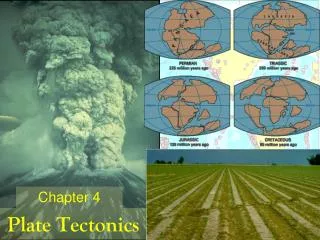
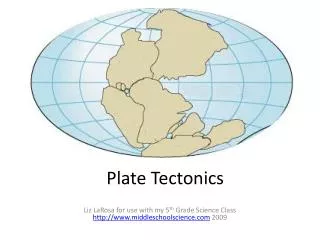
Continental Drift • Proposed by Alfred Wegener in 1915. • Supercontinent Pangaea started to break up about 200 million years ago. • Continents "drifted" to their present positions.
Evidence • Some continents coastlines seem to “fit” together • Fossils match across oceans • Rock types and structures match across oceans • Ancient glacial features
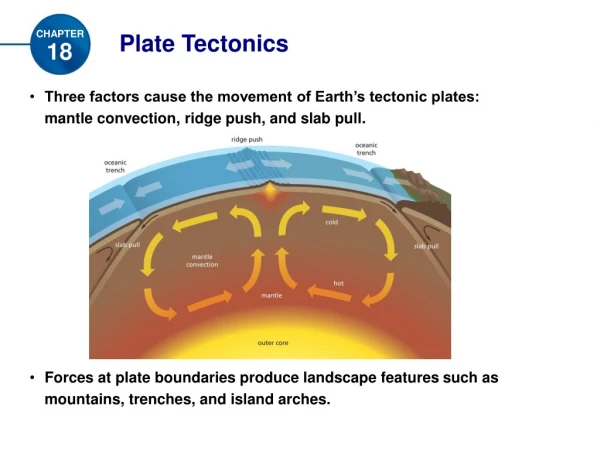
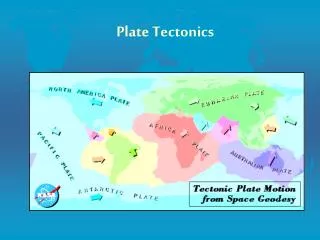
Plate Tectonics • In 1965, J. Wilson • Earth’s lithosphere is broken into sections called plates. • Plates are always shifting and moving. • Movement is driven by convection currents in the mantle.
Types of Plate Boundaries • Convergent • Push together • Divergent • Pull apart • Transform • Slide past one another
Convergent Boundaries • Oceanic- Continental • Oceanic is denser and sinks below continental • Creates a subduction zone • Creates trenches, volcanic mountain arc
Convergent Boundaries • Oceanic- Oceanic • Oceanic being of equal densities both “sink” • Creates a subduction zone • Creates trenches, island arc
Convergent Boundaries • Continental- Continental • Continentals being of equal densities both “push up” • Creates folded mountains
Divergent Boundaries • Plates move away from each other • Create gaps that new magma rises through making new crust • Cause of sea-floor spreading • Creates rift valleys and the Mid-Oceanic Ridge
Transform Boundaries • Plates slide past each other • Creates earthquakes
Animations • http://www.seed.slb.com/flash/science/features/earth/livingplanet/plate_boundaries/en/index.html?width=570&height=475&popup=true