The Fascinating World of Protists: Diversity, Movement, and Reproduction
110 likes | 254 Vues
Dive into the intriguing kingdom of Protista, where eukaryotic organisms thrive in various forms, both unicellular and multicellular. Protists include photosynthetic algae, heterotrophic forms, and even parasitic species. They are known for unique movement abilities, such as amoeboid movement, cilia, and flagella. Their reproductive strategies range from asexual mitosis to complex sexual cycles with alternation of generations. Discover the vital roles these microorganisms play in ecosystem nutrient recycling and the complexities of their life processes.


The Fascinating World of Protists: Diversity, Movement, and Reproduction
E N D
Presentation Transcript
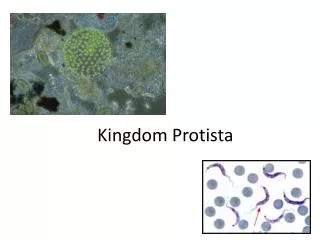
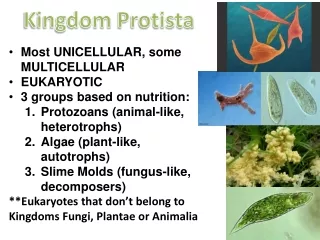
Protists • Eukaryotes • Unicellular/multicellular • Some photosynthetic • Some Heterotrophic • Some are parasitic/other mutualistic • Appeared over 1 billion years ago
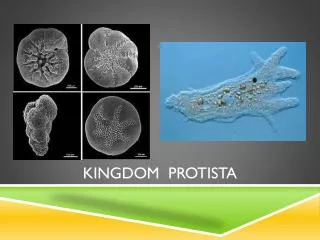
Amoeboid Movement • Many unicellular protists move by changing their shape, a process that makes use of cytoplasmic projections known as pseudopods. • Ex: Amoeba • called amoeboid movement • powered by protein called actin
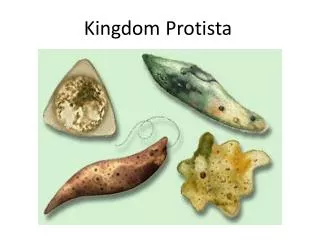
Cilia and Flagella Ciliates – have cilia Flagellates – have flagella Flagella are relatively long and usually number only one or two per cell Ex: euglena • Cilia are short and numerous • ex: paramecium
Ciliates • Paramecium and other ciliates use their cilia to sweep food particles into the gullet, an indentation in one side of the organism. • The particles are trapped in the gullet and forced into food vacuoles that form at its base.
Passive Movement • Some protists are nonmotile—they depend on air or water currents and other organisms to carry them around. • form reproductive cells called spores • live as parasites • Ex: Plasmodium, which is carried by mosquitoes and causes malaria
Slime Molds • A slime mold is a heterotrophic protist that thrives on decaying organic matter. • Slime molds are found in places that are damp and rich in organic matter—on the floor of a forest or a backyard compost pile, for example. • Slime molds play key roles in recycling nutrients in an ecosystem.
Cell Division • Amoebas, and many other protists, reproduce by mitosis: • They duplicate their genetic material and then divide into two genetically identical cells. • enables protists to reproduce rapidly • produces cells that are genetically identical • limits the development of genetic diversity
Conjugation • Paramecia and most ciliates reproduce asexually by mitotic cell division. • under stress, paramecia can remake themselves through conjugation—a process in which two organisms exchange genetic material • After conjugating, the cells then reproduce by mitosis.
Sexual Reproduction • Many protists have complex sexual life cycles in which they alternate between a diploid and a haploid phase, a process known as alternation of generations.