Download
1 / 8
80 likes | 196 Vues
The periodic table is a systematic way of organizing and classifying elements based on their properties. It consists of vertical columns known as groups or families, which contain elements with similar characteristics. There are 18 groups, while the horizontal rows, called periods, display elements that vary significantly in properties. The first element of a period is often a reactive solid, while the last is an inactive gas. Atomic size, mass, and properties such as ionization energy and electronegativity change across periods, highlighting the periodic trends associated with the arrangement of elements.

E N D
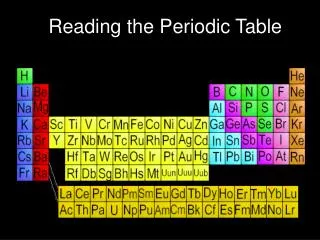
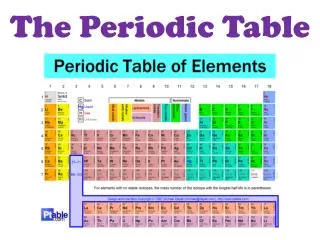
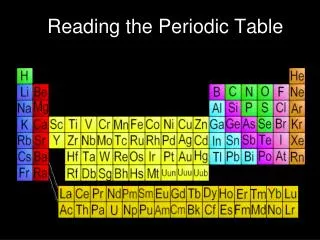
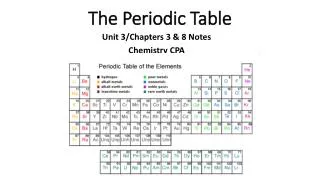
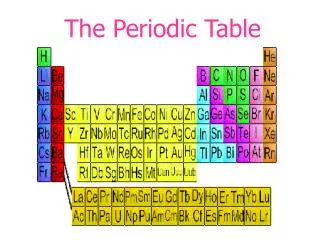
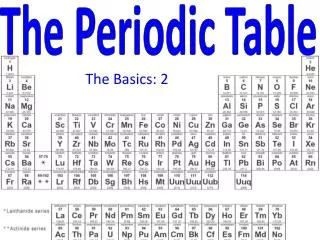
A way of organizing & classifying elements according to their PROPERTIES • Arranged in rows and columns
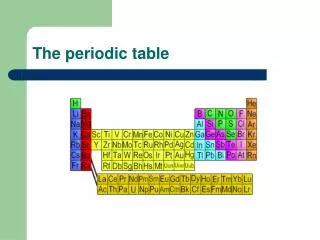
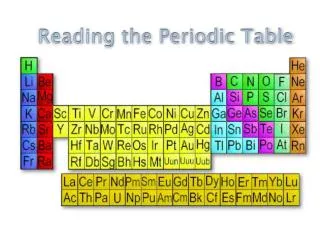
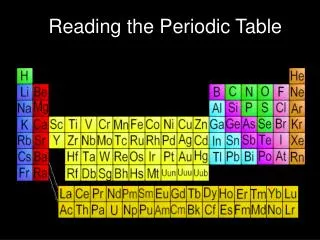
Columns • The vertical (up and down) columns of the periodic table (there are 18) are called groups or families. • Elements in the same group or family have similar characteristics or properties.
Rows • The horizontal rows of the periodic table are called periods. • Elements in a period are not alike in properties. • The first element in a period is usually an active solid, and the last element in a period is always an inactive gas.
Rows • Atomic size (number of protons) decreases from left to right across a period. • Atomic mass (number of protons) increases from left to right across a period.
Rows • Electrons are added one at a time moving from left to right across a period • The electrons of the outermost shell have increasingly strong nuclear attraction, so the electrons become closer to the nucleus • Ionization energy increases • Electronegativity increases
Quick Review of electron shells Valence electrons are the outermost electrons in an atom.
Rows • Metals are on the left • Non-metals are on the right