
SlideServe
Menu
Préférences
© SlideServe · v2026

Analog Signal VS Digital Signal

alana-cervantes avatar
46 diapositives · 770 Views · Oct 25, 2014

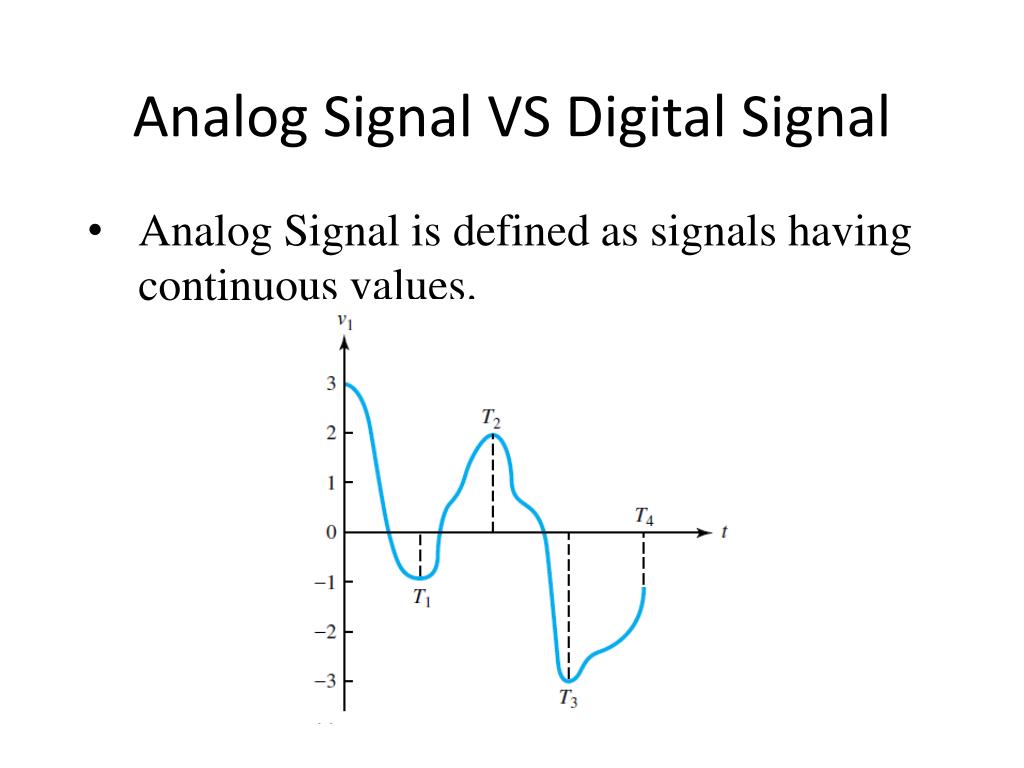
Analog Signal VS Digital Signal. Analog Signal is defined as signals having continuous values. Digital Signal is defined as signals which is having finite number of discrete values. Common Number Systems. Conversion Among Bases. The possibilities:. Decimal. Octal. Binary. Hexadecimal.
Analog Signal VS Digital Signal - slide 1
01 / 46Analog Signal VS Digital Signal
1 / 17

Télécharger la présentation

Analog Signal VS Digital Signal
Une image / un lien ci-dessous est fourni (tel quel) pour télécharger la présentation

Politique de téléchargement : le contenu du site vous est fourni TEL QUEL pour votre information et votre usage personnel ; il ne peut être vendu, concédé sous licence ni partagé sur d’autres sites sans l’accord de son auteur.Le contenu vous est fourni TEL QUEL, pour votre information et votre usage personnel uniquement. Téléchargez la présentation en cliquant sur ce lien. Lors du téléchargement, si vous ne parvenez pas à télécharger une présentation, l’éditeur a peut-être supprimé le fichier de son serveur.Pendant le téléchargement, si vous ne parvenez pas à obtenir une présentation, le fichier a peut-être été supprimé par l’éditeur.

F I N

Plus de contenu associé

Transcription de la présentation
  1. Analog Signal VS Digital Signal Analog Signal is defined as signals having continuous values.

  2. Digital Signal is defined as signals which is having finite number of discrete values.

  3. Common Number Systems

  4. Conversion Among Bases • The possibilities: Decimal Octal Binary Hexadecimal

  5. Decimal to Decimal (just for fun) Decimal Octal Binary Hexadecimal

  6. Weight 12510 => 5 x 100 = 5 2 x 101 = 20 1 x 102 = 100 125 Base

  7. 1)Decimal to Binary Decimal Octal Binary Hexadecimal

  8. Decimal to Binary • Technique • Divide by two, keep track of the remainder • First remainder is bit 0 (LSB, least-significant bit) • Second remainder is bit 1 • Etc.

  9. 2 125 62 1 2 31 0 2 15 1 2 3 1 2 7 1 2 0 1 2 1 1 Example 12510 = ?2 12510 = 11111012

  10. Fractions .14579x 20.29158x 20.58316x 21.16632x 20.33264x 20.66528x 21.33056 etc. • Decimal to binary 3.14579 11.001001...

  11. 2)Binary to Decimal Decimal Octal Binary Hexadecimal

  12. Binary to Decimal • Technique • Multiply each bit by 2n, where n is the “weight” of the bit • The weight is the position of the bit, starting from 0 on the right • Add the results

  13. Example Bit “0” 1010112 => 1 x 20 = 1 1 x 21 = 2 0 x 22 = 0 1 x 23 = 8 0 x 24 = 0 1 x 25 = 32 4310

  14. Fractions • Binary to decimal 10.1011 => 1 x 2-4 = 0.0625 1 x 2-3 = 0.125 0 x 2-2 = 0.0 1 x 2-1 = 0.5 0 x 20 = 0.0 1 x 21 = 2.0 2.6875

  15. 3)Decimal to Octal Decimal Octal Binary Hexadecimal

  16. Decimal to Octal • Technique • Divide by 8 • Keep track of the remainder

  17. 8 19 2 8 2 3 8 0 2 Example 123410 = ?8 8 1234 154 2 123410 = 23228

  18. 4)Octal to Decimal Decimal Octal Binary Hexadecimal

  19. Octal to Decimal • Technique • Multiply each bit by 8n, where n is the “weight” of the bit • The weight is the position of the bit, starting from 0 on the right • Add the results

  20. Example 7248 => 4 x 80 = 4 2 x 81 = 16 7 x 82 = 448 46810

  21. 5)Decimal to Hexadecimal Decimal Octal Binary Hexadecimal

  22. Decimal to Hexadecimal • Technique • Divide by 16 • Keep track of the remainder

  23. 16 1234 77 2 16 4 13 = D 16 0 4 Example 123410 = ?16 123410 = 4D216

  24. 6)Hexadecimal to Decimal Decimal Octal Binary Hexadecimal

  25. Hexadecimal to Decimal • Technique • Multiply each bit by 16n, where n is the “weight” of the bit • The weight is the position of the bit, starting from 0 on the right • Add the results

  26. Example ABC16 => C x 160 = 12 x 1 = 12 B x 161 = 11 x 16 = 176 A x 162 = 10 x 256 = 2560 274810

  27. Binary to Octal , Octal to BinaryUse Below Table

  28. 7)Octal to Binary Decimal Octal Binary Hexadecimal

  29. Octal to Binary • Technique • Convert each octal digit to a 3-bit equivalent binary representation

  30. 7 0 5 111 000 101 Example 7058 = ?2 7058 = 1110001012

  31. 8)Binary to Octal Decimal Octal Binary Hexadecimal

  32. Binary to Octal • Technique • Group bits in threes, starting on right • Convert to octal digits

  33. 1 011 010 111 1 3 2 7 Example 10110101112 = ?8 10110101112 = 13278

  34. Hexadecimal to Binary, Binary to Hexadecimal Use this Table

  35. 9)Hexadecimal to Binary Decimal Octal Binary Hexadecimal

  36. Hexadecimal to Binary • Technique • Convert each hexadecimal digit to a 4-bit equivalent binary representation

  37. 1 0 A F 0001 0000 1010 1111 Example 10AF16 = ?2 10AF16 = 00010000101011112

  38. 10)Binary to Hexadecimal Decimal Octal Binary Hexadecimal

  39. Binary to Hexadecimal • Technique • Group bits in fours, starting on right • Convert to hexadecimal digits

  40. Example 10101110112 = ?16 • 10 1011 1011 • B B 10101110112 = 2BB16

  41. 11)Octal to Hexadecimal Decimal Octal Binary Hexadecimal

  42. Octal to Hexadecimal • Technique • Use binary as an intermediary

  43. 1 0 7 6 • 001 000 111 110 2 3 E Example 10768 = ?16 10768 = 23E16

  44. 12)Hexadecimal to Octal Decimal Octal Binary Hexadecimal

  45. Hexadecimal to Octal • Technique • Use binary as an intermediary

  46. 1 F 0 C • 0001 1111 0000 1100 1 7 4 1 4 Example 1F0C16 = ?8 1F0C16 = 174148