

SlideServe
Menu
Préférences
© SlideServe · v2026

The Inuit

aldon avatar
10 diapositives · 1.2K Views · Aug 01, 2014

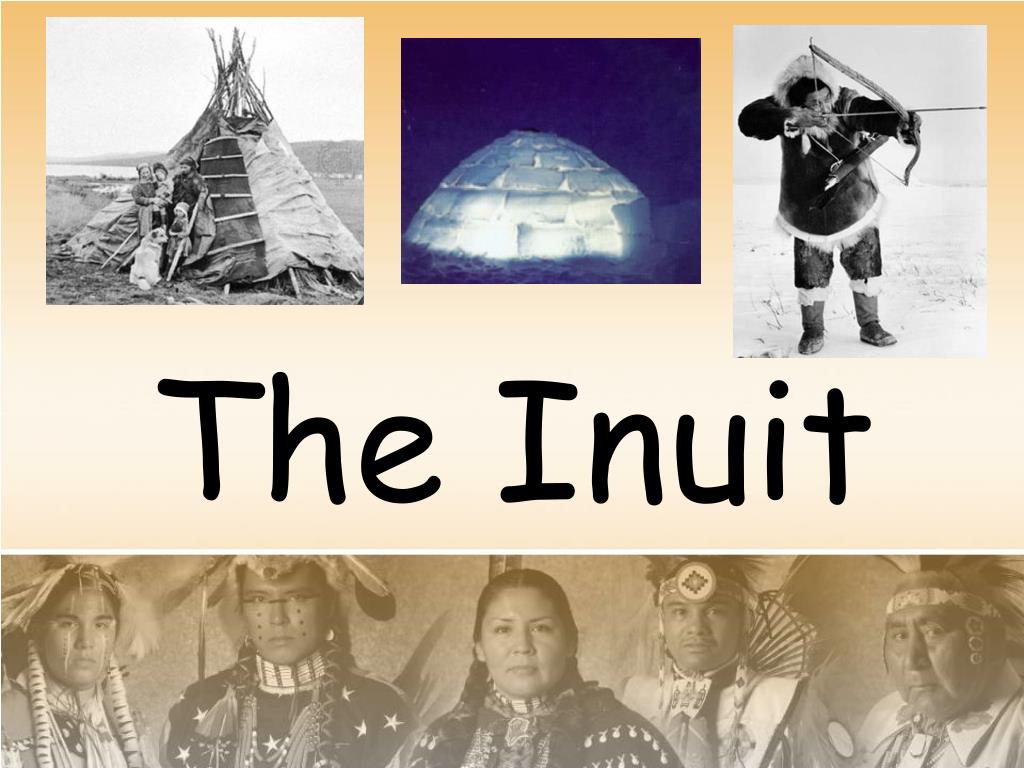
The Inuit. Location. The Inuit occupy much of Northern Canada, and are comprised of many different groups: Labrador Inuit Quebec Inuit Baffin Island Inuit Igloolik - “there is an igloo here” Caribou Inuit Netsilik - “people of the place where there is seal” Copper Inuit
The Inuit - slide 1
01 / 10The Inuit
1 / 17

Télécharger la présentation

The Inuit
Une image / un lien ci-dessous est fourni (tel quel) pour télécharger la présentation

Politique de téléchargement : le contenu du site vous est fourni TEL QUEL pour votre information et votre usage personnel ; il ne peut être vendu, concédé sous licence ni partagé sur d’autres sites sans l’accord de son auteur.Le contenu vous est fourni TEL QUEL, pour votre information et votre usage personnel uniquement. Téléchargez la présentation en cliquant sur ce lien. Lors du téléchargement, si vous ne parvenez pas à télécharger une présentation, l’éditeur a peut-être supprimé le fichier de son serveur.Pendant le téléchargement, si vous ne parvenez pas à obtenir une présentation, le fichier a peut-être été supprimé par l’éditeur.

F I N

Plus de contenu associé

Transcription de la présentation
  1. The Inuit

  2. Location • The Inuit occupy much of Northern Canada, and are comprised of many different groups: • Labrador Inuit • Quebec Inuit • Baffin Island Inuit • Igloolik- “there is an igloo here” • Caribou Inuit • Netsilik- “people of the place where there is seal” • Copper Inuit • Western Arctic Inuit • http://firstpeoplesofcanada.com/fp_groups/fp_inuit1.html

  3. Location http://www.thecanadianencyclopedia.com/articles/native-people-arctic

  4. Languages & Population Language • The Inuit have many separate languages, however, all of them derive from one language: Inuit-Aleut. • Some of the separate dialects include: Western Branch: • Central Alaskan Yupik • Pacific Gulf Yupik (Alaska) • Siberian Yupik (Canada and Alaska) Population It is very difficult to estimate Inuit population pre-contact, because they were so isolated, and had very little contact with Europeans. Currenetly, thereare 50,485 Inuit. That makes up about 4% of the total native population of 1,172,790. http://www12.statcan.ca/census-recensement/2006/as-sa/97-558/p6-eng.cfm • Eastern Branch: • Inuktitut (in Canada) • Inupiaq (in Alaska) • Kalaallisut(in Greenland)

  5. Economy • Based on customs and traditions. • For example, traditionally the economy was based on the changing of the seasons and which animals could be successfully hunted during those seasons. • After a successful hunt, the hunters would share there hunted game with the community. • Inuit parents have taught their children the survival skills needed to survive in the Arctic Circle's severe climate. The children are taught to fish, hunt, and make effective tools. http://www.econedlink.org/lessons/index.php?lid=795&type=educator

  6. Political Organization • The Inuit lived in smaller family groups with no real leader or Chief, besides the shaman were thought to have special abilities relating to supernatural powers. • Loose alliances would occur between different families, forming larger groups. • Disputes between two members of a tribe were mainly settled quietly among the families. http://ksuanth.wetpaint.com/page/Inuit+%2B+Politics

  7. Inuit Rules All Inuits follow three rules: Maligait- refers to what has to be followed. Piqujait- refers to what has to be done. Tirigusuusiit- refers to what has to be avoided. http://ksuanth.wetpaint.com/page/Inuit+%2B+Politics

  8. Diet Since very little vegetation could survive in the Arctic climate, the Inuit could not depend solely on plants for food. The Inuit were mainly hunters, and relied heavily on the animals of the Arctic as their main source of food. http://firstpeoplesofcanada.com/fp_groups/fp_inuit3.html

  9. Hunted Animals

  10. Housing • The Inuits were always on the move for multiple reasons, therefore their housing was not to complex to build. • They had multiple forms of housing: Summer Inuit TentIgloo An igloo was a temporary, dome-shaped shelter made out of snow blocks. Inuit built tents out of driftwood which was covered by animal skin and held down by rocks. http://firstpeoplesofcanada.com/fp_groups/fp_inuit2.html