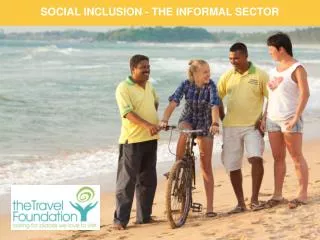
SOCIAL INCLUSION - THE INFORMAL SECTOR
60 likes | 197 Vues
The informal sector in tourism faces significant obstacles, such as limited market access and social tensions, impacting visitor experiences and safety. This report highlights the need for collective ownership and effective public-private collaborations. Evidence shows improvements, with a 27% rise in hotel staff's favorable views on beach operators and a 9% increase in holidaymaker satisfaction. Our approach focuses on empowering the informal sector while fostering long-term relationships to enhance tourism quality and promote a more inclusive and enjoyable environment for all stakeholders.


SOCIAL INCLUSION - THE INFORMAL SECTOR
E N D
Presentation Transcript
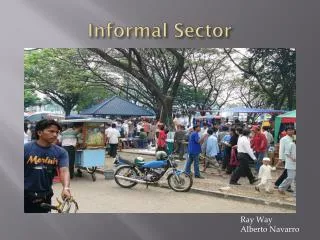
The Problem • Collective ownership of tourism product • Development/planning becomes disconnected • Informal sector has limited access to the tourism market • Alternative ways to engage holidaymakers are sought • Result – social tensions, tourist crime, decline in tourists
The Impact • “I have just returned from 2 weeks here, first and last time in turkey and have to say it was the worst holiday I ever had. Forget having a peaceful stroll around town, you can’t walk more than 5 metres without someone hassling you to go in their bar, restaurant, shop etc. and they're persistent and aggressive with it....Don't waste your money! Personally I’ve learnt my lesson about Turkey and will be back in lovely chilled out Greece next year.”
Our Core Approach • Building capacity of the informal sector is only one part of the solution • Effective public/private collaborative schemes are essential • A framework for solid, long term relationships must be created at the beginning
Results • 27% improvement in the hotel staff’s view of beach operators • 28% reduction in negative beach operator issues reported by hotel staff • 9% increase in holidaymaker enjoyment of services provided by beach operators • Visitors are also more likely to recommend the services of beach operators – 55% saying they would recommend compared to 22% th year before