Why Modernization Matters
Legacy systems create security risks and slow growth. Learn why modernizing legacy systems is a smart business modernization strategy today.

Why Modernization Matters
E N D
Presentation Transcript
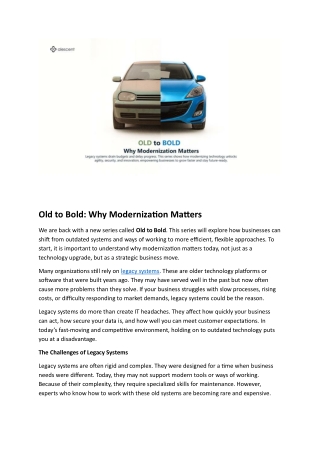
Old to Bold: Why Modernization Matters We are back with a new series called Old to Bold. This series will explore how businesses can shift from outdated systems and ways of working to more efficient, flexible approaches. To start, it is important to understand why modernization matters today, not just as a technology upgrade, but as a strategic business move. Many organizations still rely on legacy systems. These are older technology platforms or software that were built years ago. They may have served well in the past but now often cause more problems than they solve. If your business struggles with slow processes, rising costs, or difficulty responding to market demands, legacy systems could be the reason. Legacy systems do more than create IT headaches. They affect how quickly your business can act, how secure your data is, and how well you can meet customer expectations. In today’s fast-moving and competitive environment, holding on to outdated technology puts you at a disadvantage. The Challenges of Legacy Systems Legacy systems are often rigid and complex. They were designed for a time when business needs were different. Today, they may not support modern tools or ways of working. Because of their complexity, they require specialized skills for maintenance. However, experts who know how to work with these old systems are becoming rare and expensive.
Maintaining legacy systems consumes a large portion of IT budgets, which means fewer resources are available for innovation or growth initiatives. Fixing bugs or making changes can take a long time, slowing down the business overall. This leads to delays in launching new products or services and reduces the ability to respond to customer needs quickly. Security is also a serious concern. Many legacy systems no longer receive security updates or patches. This makes them vulnerable to cyberattacks. With data breaches becoming more common and costly, these vulnerabilities pose significant risks to businesses. Beyond the financial cost, a breach can damage a company’s reputation and customer trust. Why Modernization Is Essential for Business Modernization means updating or replacing legacy systems with technology that aligns better with current and future business requirements. It is more than a technical change; it is a strategic step that can improve overall business performance. Here are some key reasons why modernization is essential: •Improved Security: Newer systems include advanced security features and regular updates to protect sensitive data and comply with regulations. This reduces the risk of costly cyber incidents. •Greater Flexibility: Modern systems are designed to adapt. They allow businesses to scale operations smoothly as demand grows or changes. •Faster Time to Market: Agile and flexible technology enables faster development and delivery of products and services, helping businesses stay competitive. •Reduced Costs: While modernization involves investment, it often leads to lower maintenance and operational costs over time. It frees up budget that can be used for innovation. •Enable Innovation: Modern platforms can integrate with emerging technologies such as artificial intelligence, machine learning, and data analytics. This opens new possibilities for improving customer experiences and operational efficiency. The Business Impact of Modernization Modernization supports business resilience. In a world of constant change, businesses need to be able to adapt quickly. Legacy systems make this difficult by slowing down processes and limiting the ability to respond to market opportunities or challenges. By modernizing, businesses improve their ability to innovate and compete. They can launch new products faster, improve service quality, and better meet customer expectations. This builds stronger customer relationships and supports growth.
Furthermore, modernization helps control risks. By improving security and compliance, businesses protect themselves against financial losses and damage to their brand reputation. Making Modernization Practical The idea of modernizing can sound overwhelming. Many organizations worry about the cost, complexity, or downtime involved. But modernization does not have to be a massive, all-at- once project. It can begin with small, manageable steps tailored to the business’s priorities. Starting with critical systems or processes that cause the most pain can deliver quick wins and build momentum. A phased approach helps control risks and allows teams to learn and adapt as they go. Choosing the right technology partner and planning carefully are also essential. Modernization should align with business goals and support long-term growth. Legacy systems can hold businesses back by increasing costs, slowing down operations, and exposing data to risks. Modernization is essential for companies that want to be agile, secure, and ready for the future. Making this shift may feel challenging, but the benefits are clear. It enables businesses to operate more efficiently, respond faster to customer needs, and innovate with confidence. We are here to help you understand this journey and why going from old to bold is critical. Stay tuned for the next article of this series to better understand the journey of old to bold. #DigitalTransformation #BusinessModernization #LegacySystems #EnterpriseIT #OldToBold