Henry Ford's Opposition to War: Economic Changes and Anti-German Sentiment in WWI
This section explores Henry Ford's anti-war stance during World War I, where he was compelled to produce military equipment like tanks and tractors. It discusses the financing of the war through Liberty Bonds and government price controls as well as the impacts of rationing. Additionally, it delves into anti-German sentiments, including changes in language education and cultural references, such as renaming foods and dog breeds. The passage also highlights the Espionage and Sedition Acts of 1917, which limited dissent and encouraged vigilantism among citizens.

Henry Ford's Opposition to War: Economic Changes and Anti-German Sentiment in WWI
E N D
Presentation Transcript
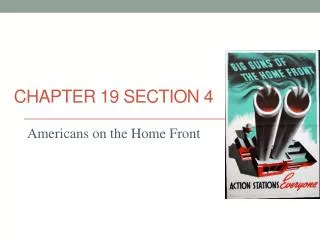
Chapter 19 Section 4 Henry Ford- against the war- Ordered to build tanks and tractors
Chapter 19 Section 4 continued • Financing the war- Liberty Bonds- special war bonds to support the Allied cause • Price controls- system of pricing determined by the government • Rationing- distributing goods to consumers in a fixed amount • Daylight saving time- turning clocks ahead one hour for the summer
Chapter 19 Section 4 continued • Germans- “Hate the Hun!” • High schools stopped teaching German • German measles- Liberty measles • Hamburger- Salisbury steak • German shepherds- “police dogs” • 1917- Congress passed the Espionage Act • Amended by the Sedition Act • Sedition- any speech or action that encourages rebellion
Chapter 19 Section 4 continued • Vigilantes- citizens who take the law into their own hands