SUCCESSION
This overview explores ecological succession, a gradual process involving sequential changes in communities. Disturbances, both natural and human-induced, can significantly alter resources and the organisms present. Stability in communities is often linked to biodiversity; the greater the diversity, the greater the stability. The text discusses primary succession—initiated in lifeless areas like new islands or volcanic landscapes—and secondary succession, which occurs after disturbances where soil and some species remain. Climax communities represent the stable endpoint of these ecological transitions.

SUCCESSION
E N D
Presentation Transcript
SUCCESSION Changes in the environment
Disturbances: • Events that change a community • Can alter resources • Can destroy or remove organisms
Stability: • The ability of a community to resist disturbances • The greater the biodiversity, the greater the stability
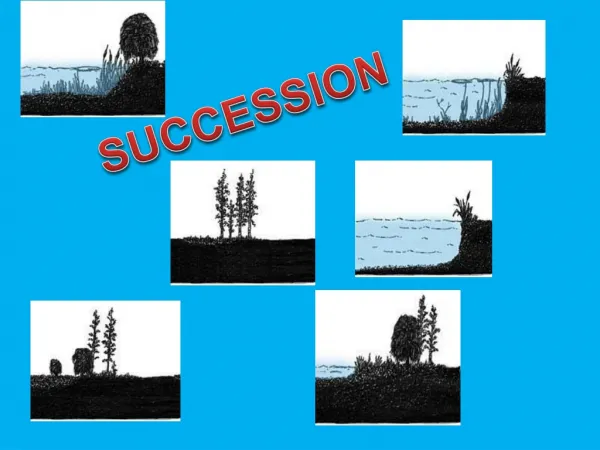
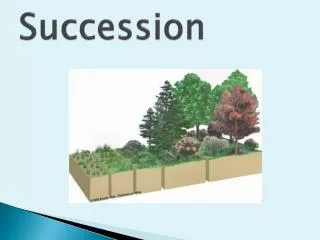
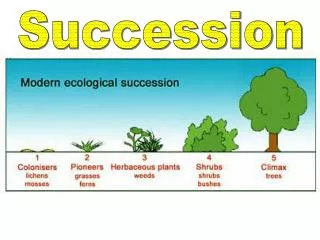
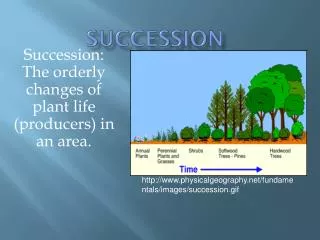
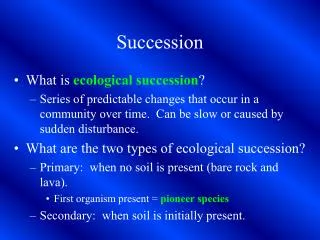
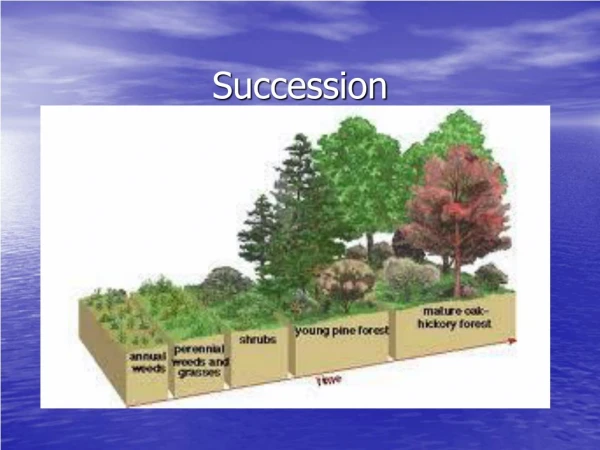
Ecological Succession: • Gradual sequential changes of a community • Can be primary or secondary
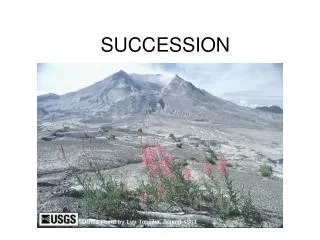
Primary Succession: • The start of a community in a place where there was no life • Examples: a new island forms or a volcanic eruption covers a community with lava
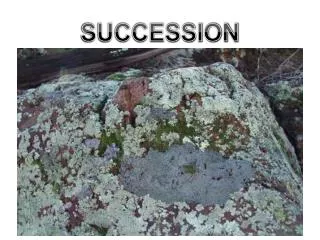
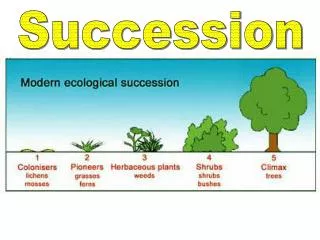
Pioneer species are the first organisms to live in a new area Pioneer species are small, hardy, and grow quickly Primary succession is a very slow process!
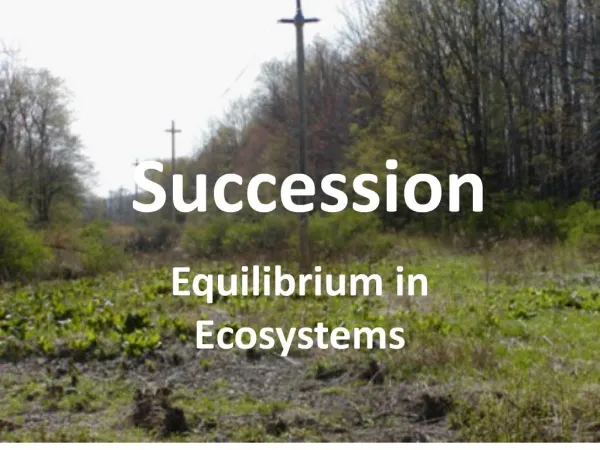
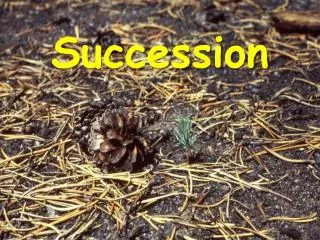
Secondary Succession: • Occurs after a disturbance, either natural or man-made
In secondary succession, soil remains and some species are able to survive. This type of succession is much faster. It may only take 100 years in some cases.
Climax Communities: • The stable endpoint of succession • There is very little change