

SlideServe
Menu
Préférences
© SlideServe · v2026

Wheat Scab

aram avatar
17 diapositives · 513 Views · Aug 24, 2014

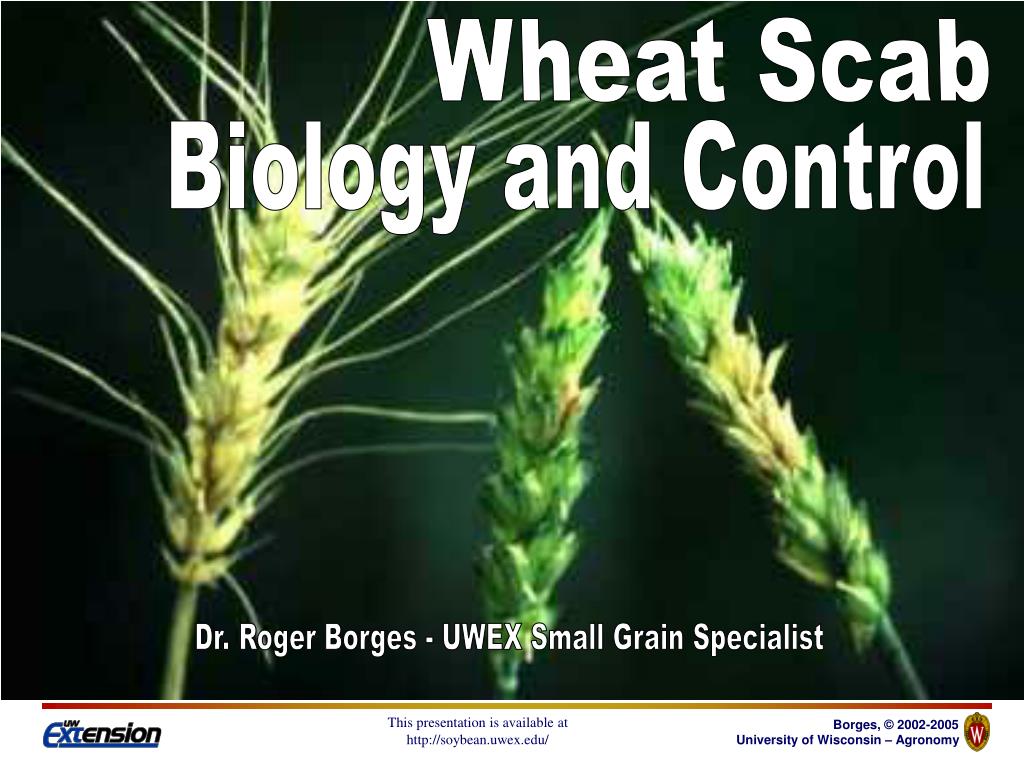
Wheat Scab. Biology and Control. Dr. Roger Borges - UWEX Small Grain Specialist. SCAB (HEAD BLIGHT). Pathogen: Fusarium spp. Mostly Fusarium graminearum Symptoms: Usually first detected soon after flowering White head, while leaves and stems may remain green
Wheat Scab - slide 1
01 / 17Wheat Scab
1 / 17

Télécharger la présentation

Wheat Scab
Une image / un lien ci-dessous est fourni (tel quel) pour télécharger la présentation

Politique de téléchargement : le contenu du site vous est fourni TEL QUEL pour votre information et votre usage personnel ; il ne peut être vendu, concédé sous licence ni partagé sur d’autres sites sans l’accord de son auteur.Le contenu vous est fourni TEL QUEL, pour votre information et votre usage personnel uniquement. Téléchargez la présentation en cliquant sur ce lien. Lors du téléchargement, si vous ne parvenez pas à télécharger une présentation, l’éditeur a peut-être supprimé le fichier de son serveur.Pendant le téléchargement, si vous ne parvenez pas à obtenir une présentation, le fichier a peut-être été supprimé par l’éditeur.

F I N

Plus de contenu associé

Transcription de la présentation
  1. Wheat Scab Biology and Control Dr. Roger Borges - UWEX Small Grain Specialist This presentation is available at http://soybean.uwex.edu/

  2. SCAB (HEAD BLIGHT) Pathogen: Fusarium spp. Mostly Fusarium graminearumSymptoms: • Usually first detected soon after flowering • White head, while leaves and stems may remain green • Often, only part of the head is attacked • Bleached Spikelets often with a salmon-pink tint • Stem directly below the head may turn to chocolate brown color • Kernels above the infected spikelets may be shriveled • Kernels are shrunken and chalky or pink in color • Tombstone or light weight kernels • Barren spikelets • Mycotoxin This presentation is available at http://soybean.uwex.edu/

  3. SCAB SEVERITY AND FREQUENCY • Very erratic • Depends on wet weather conditions at flowering • Happened once every six or seven years in Wisconsin This presentation is available at http://soybean.uwex.edu/

  4. ALTERNATIVE HOSTS • Corn, oats, barley, sorghum, and other grasses • On corn, it causes root, stalk, and ear rot (giberela) • On sorghum, it causes stalk rot • May cause root rot in small grains This presentation is available at http://soybean.uwex.edu/

  5. ALTERNATIVE HOSTS • Mainly crop residue of small grains and corn • During moist weather, spores of the fungi are windblown or splashed onto the heads • Seed borne Fusarium spp may cause seedling blight This presentation is available at http://soybean.uwex.edu/

  6. INFECTION • From flowering to soft dough stage. • Mainly through anthers (flowers). Then grow into the kernels, glumes, or other parts of the head. • Favored by prolonged periods (48-72 hs) of high humidity and warm temperatures of 75-85 0F. This presentation is available at http://soybean.uwex.edu/

  7. HEAD EMERGENCE This presentation is available at http://soybean.uwex.edu/

  8. This presentation is available at http://soybean.uwex.edu/

  9. Flower Spikelets, row, or mesh This presentation is available at http://soybean.uwex.edu/

  10. This presentation is available at http://soybean.uwex.edu/

  11. This presentation is available at http://soybean.uwex.edu/

  12. This presentation is available at http://soybean.uwex.edu/

  13. This presentation is available at http://soybean.uwex.edu/

  14. This presentation is available at http://soybean.uwex.edu/

  15. SCAB MANAGEMENT • Variety selection: • Some varieties are extremely susceptible • No variety is considered highly resistant • Choose varieties based on scab ratings from multi-location! • Spread risk by choosing varieties with different maturities. • Crop rotation with non-host crops (i.e. soybeans) • Chop, bury, or remove crop residue This presentation is available at http://soybean.uwex.edu/

  16. SCAB MANAGEMENT • Seed treatments: • Help raise seed germination • May prevent or reduce seedling blight • DO NOT CONTROL HEAD BLIGHT • Seed cleaning • Set combine fans higher during harvest • Foliar fungicides • Not cost effective in Wisconsin This presentation is available at http://soybean.uwex.edu/

  17. THANK YOU! QUESTIONS? COMMENTS? This presentation is available at http://soybean.uwex.edu/