Development of Continental Drift
360 likes | 496 Vues
This comprehensive overview explores the foundational concepts of continental drift and plate tectonics, tracing the historical contributions of Frank Taylor and Alfred Wegener. From the recognition of the Mid-Atlantic Ridge to the role of sea-floor spreading, the text examines evidence for plate movements and how they shape Earth’s geophysical landscape. It discusses divergent, convergent, and transform plate boundaries, the geological processes that drive them, and their implications, including earthquakes and volcanic activity. The journey from early theories to modern understanding highlights key scientific advancements.


Development of Continental Drift
E N D
Presentation Transcript
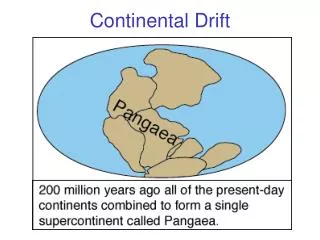
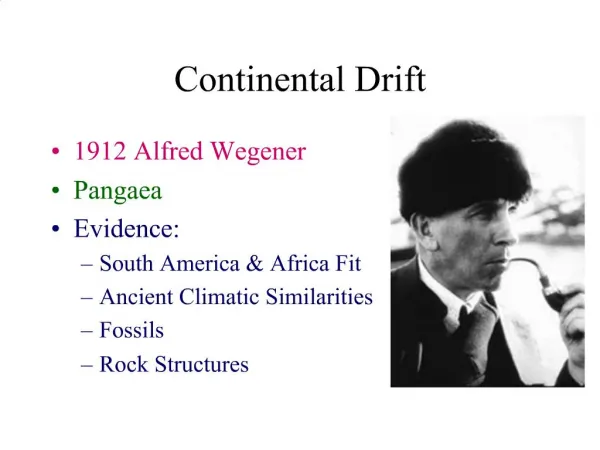
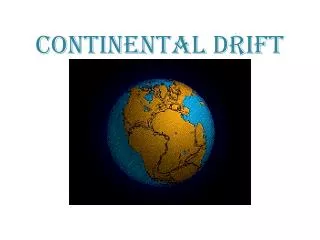
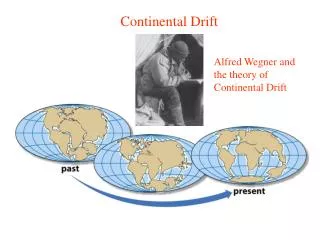
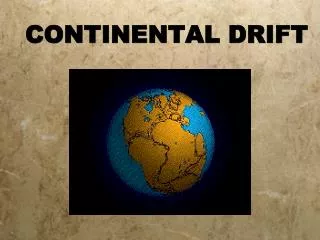
Development of Continental Drift • Frank Taylor (1910) • Alfred Wegener (1912) Die Entstehung Der Kontinente Und Ozeane
Plate Tectonics • Continental Drift • Evidence of Plate Tectonics • Earth’s Structure • Plate Boundaries • Hot Spots
Frank Taylor • Recognized role of Mid-Atlantic Ridge • Never reconstructed the continents like Wegener did
Confirmation of Continental Drift • World War II technology • International Geophysical Year (IGY) 1957-58 • Worldwide Standardized Seismic Network 1963-
The Geomagnetic Reversal Time Scale-Do Compass and Magnet Experiment
Where Does Ocean Crust Go? Hugo Benioff, 1954
Plate Boundaries • Divergent • Can create volcanoes, earthquakes, and mountains • Examples: Mid-Atlantic ridge, East Pacific Rise • Convergent • Can create volcanoes (continental and island arc), earthquakes, and mountains • Examples: Juan De Fuca Plate and North America Plate • Transform • Can create strong shallow earthquakes and folded mountains • Examples: San Andreas Fault