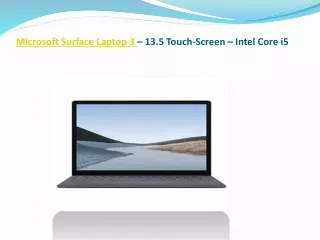
About Microsoft Surface
Discover the differences between Microsoft Surface and PixelSense technology. The Surface offers multi-touch capabilities, enabling up to 50 simultaneous touch events, and allows for collaborative work as two users can interact on the device. PixelSense extends this experience by integrating built-in cameras, allowing the screen to recognize objects placed on it, fostering unique interactions. Learn how to design programs for PixelSense using Windows Presentation Foundation (WPF) and the essential principles of hierarchical thinking with XAML that separate appearance and behavior in your applications.

About Microsoft Surface
E N D
Presentation Transcript
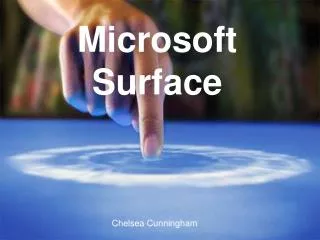
Multi-Touch • Multiple touch events • up to 50 • Multi-user • 2 people can work together
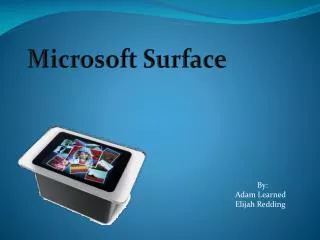
Microsoft PixelSense • The screen has camera’s built in • Can see what you place on it • Use objects to interact with program
Designing for PixelSense • Think about Touching, not Clicking • Planning is key • Goals • Design • Interaction • Remember to think MVC
Windows Presentation Foundation(WPF) • PixelSense programs use WPF to build the View of the program • Separates the appearance from behavior • XAML used for appearance • Managed language (like C#) used for behavior • Does this sound familiar?
XAML • Extensible Application Markup Language • Similar to HTML or XML • XAML based on Hierarchical structures • What’s hierarchical mean?
Hierarchical Thinking • What elements are inside other elements? • What elements are grouped, and what are independent?
Hierarchical Example <ScatterView> <StackPanel> <Button>A</Button> <Button>B</Button> </StackPanel> <StackPanel> <Button>C</Button> <Button>D</Button> </StackPanel> </ScatterView>
Installing Surface SDK • Install XNA Games Studio • Install Surface Runtime • Install Surface SDK