
SlideServe
Menu
Préférences
© SlideServe · v2026

WLE Engagement, Communication and Knowledge Management Strategy 2013-2015

arthur-espinoza avatar
9 diapositives · 263 Views · Oct 31, 2014

WLE Engagement, Communication and Knowledge Management Strategy 2013-2015. Moving to new types of communication processes. What is different in this Strategy. Ensuring Comms is linked to TOC and Impact pathway Engagement with partners is a key way to integrate and ensure impact
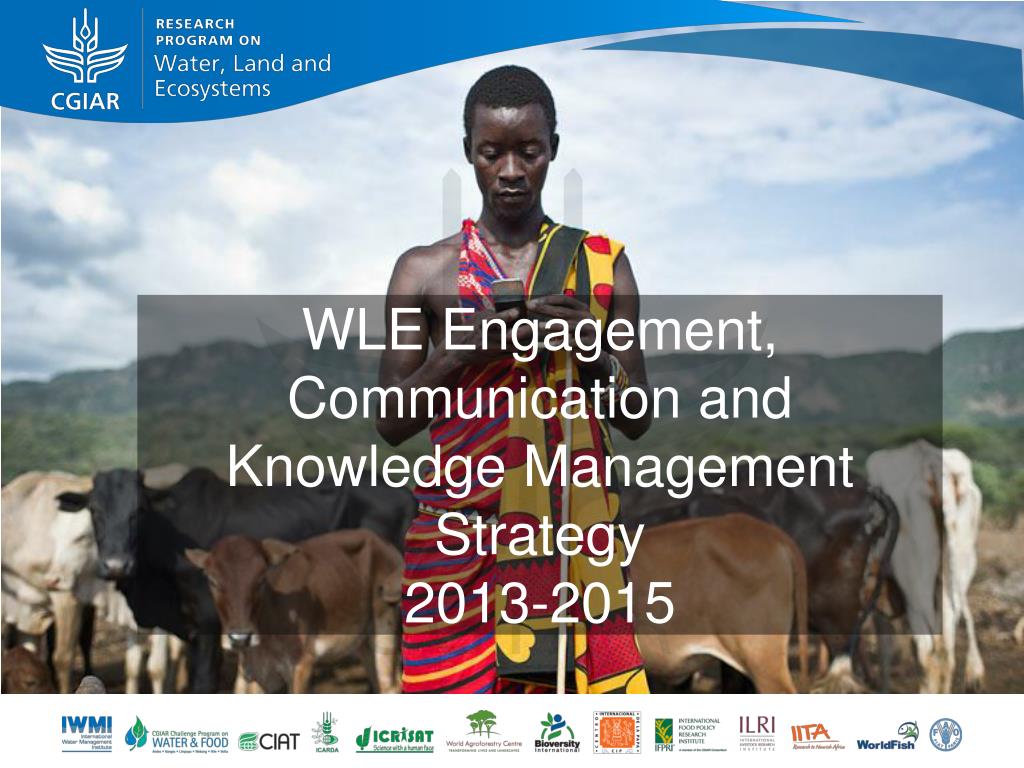
WLE Engagement, Communication and Knowledge Management Strategy 2013-2015 - slide 1
01 / 9WLE Engagement, Communication and Knowledge Management Strategy 2013-2015
1 / 17

Télécharger la présentation

WLE Engagement, Communication and Knowledge Management Strategy 2013-2015
Une image / un lien ci-dessous est fourni (tel quel) pour télécharger la présentation

Politique de téléchargement : le contenu du site vous est fourni TEL QUEL pour votre information et votre usage personnel ; il ne peut être vendu, concédé sous licence ni partagé sur d’autres sites sans l’accord de son auteur.Le contenu vous est fourni TEL QUEL, pour votre information et votre usage personnel uniquement. Téléchargez la présentation en cliquant sur ce lien. Lors du téléchargement, si vous ne parvenez pas à télécharger une présentation, l’éditeur a peut-être supprimé le fichier de son serveur.Pendant le téléchargement, si vous ne parvenez pas à obtenir une présentation, le fichier a peut-être été supprimé par l’éditeur.

F I N

Plus de contenu associé

Transcription de la présentation
  1. WLE Engagement, Communication and Knowledge Management Strategy 2013-2015

  2. Moving to new types of communication processes

  3. What is different in this Strategy • Ensuring Comms is linked to TOC and Impact pathway • Engagement with partners is a key way to integrate and ensure impact • Focus on knowledge management and capacity not just one-way communication • Commitment to opening discourse

  4. Actors and audiences • Decision makers at the national, regional and global level • Development practitioners • Donor – Partners • Strategic – Partners • Private sector • Researchers and research institutions • WLE Core Partners • WLE Managers and implementers

  5. WLE Principles • Engagement and communication linked to impact pathways and behavior change • Build upon partners’ knowledge and skills • Integrated engagement and co-creation of knowledge • Access to information • Repackaging and repurposing knowledge for different target groups

  6. Areas of intervention

  7. Organizing WLE Comms: Principles • Build upon the potential of 11 partners: their capacities knowledge and experience • WLE Engagement, Communication & KM work with IWMI IKG and Uptake • Use WLE comms as a testing ground for IWMI - institutionalize what works • Use distributed/decentralized system with small, focused team at central level

  8. Organization • Overall Coordination • Impact Pathway, TOC & engagement strategies • Support global impact pathway • Website & Information Systems • Publications • Repackaging Program Level Operations Team + IWMI IKG + Core Partners input SRP Level • Support to SRP communication • Knowledge sharing between teams • Engagement with events • Stories and content development Identified new staff need Focal Regios • Engagement and facilitation • Policy Communication • Support to impact pathways • Repackaging/translation • Communication for impact

  9. Gaps/Challenges • Improving communication with partners – ideas for improvement include: • Carrying out partner analysis on current projects to see how are partners and what is role and how SRPs are engaging partners • Engaging in focal regions and embedding communication and hub staff there • Identifying partners and update more frequently (e-letter and face to face) • Opportunities for more partners to participate in communication activities • Defining success stories and how partnerships were included