Download
1 / 12
120 likes | 264 Vues
This chapter explores the fundamental concepts of chemistry, defining matter as anything with mass and volume, and outlining its properties. It distinguishes between physical (nonliving) and biological (living) sciences, emphasizing the interrelation among them. Key branches of chemistry include organic, inorganic, physical, analytical, biochemistry, and theoretical chemistry. Types of research such as basic, applied, and technological development are also discussed. Additionally, it introduces extensive and intensive properties of matter, providing insight into how chemists classify and differentiate substances.

E N D
Ch.1: Matter and Change 1.1 Chemistry
Sciences • used to be divided into strict categories • physical (nonliving) • biological (living) • Chemistry has parts that fall under both categories • many sciences are so interrelated that you can’t categorize them in those ways anymore.
Chemistry • study of matter and the changes it undergoes • chemists use instruments to improve their ability to observe and make measurements
Chemistry • chemists work with chemicals (any substance with definite composition) • all matter has chemical basis whether it is living or nonliving
Branches of Chemistry • organic- study of compounds containing carbon • inorganic- study of compounds that aren’t organic • physical- study of changes of matter and their energy
Branches of Chemistry • analytical- study of composition of materials • biochemistry- study of substances and processes in living things • theoretical- use of math and computers to understand chemical behaviors and design new compounds
Types of Research • Basic Research- done to increase knowledge • Applied Research- done to solve a problem • Technological Development- done to improve quality of life • technology – application of knowledge (usually scientific) for practical purposes
Ch. 1: Matter and Change 1.2 Matter and Its Properties
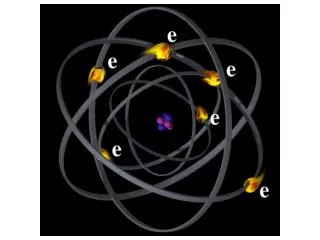
Terms • Matter- anything that has mass and volume • Atom- smallest unit of an element that keeps the properties of element • Element- pure substance made of only one type of atom • Compound- substance made of 2 or more types of atoms that are chemically bonded • Molecule- type of compound in which bonds are covalent bonds
Properties of Matter • chemists use characteristic properties to tell substances apart and to separate them • some properties define a group of substances
Types of Properties • Extensive- depend on the amount of matter • Ex: volume, mass, amount of energy • Intensive- do not depend on the amount • Ex: density, boiling point, ability to conduct
Physical- characteristics that can be observed or measured without changing the identity of a substance Chemical- relates to a substances ability to undergo changes that transform it into a different substance Easiest to see when a chemical is reacting Types of Properties